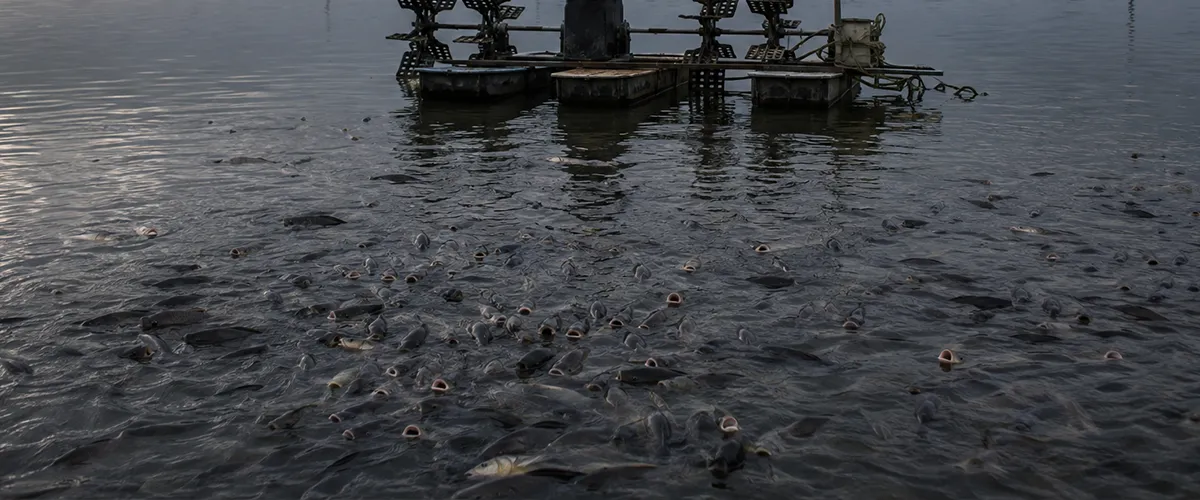
Introduction: When the Power Goes Out, What a Farm Needs Most Is to Know Something Went Wrong
The greatest fear in aquaculture is not whether equipment runs under normal conditions, but whether — when something goes wrong — any system on site can still tell the manager that something has happened.
In fish ponds, shrimp ponds, recirculating aquaculture systems, indoor farms, and high-density operations, many critical pieces of equipment depend on electricity: aerators, paddlewheel aerators, water pumps, intake and drainage equipment, circulation systems, monitoring hosts, and communication devices. When a power outage occurs, it is not just one machine that stops — the entire aquaculture safety system may fail at the same time.
The most dangerous consequences after an outage are:
- Aeration stops, and dissolved oxygen in the water may fall.
- Pumping and circulation systems stop, and water quality and flow conditions may deteriorate.
- Monitoring equipment loses power, cutting off on-site data.
- Communication devices shut down, so the owner receives no real-time alerts.
In other words, at the very moment the farm needs an alarm the most, the whole system may fall silent together.
Dissolved oxygen is one of the most important water quality parameters in aquaculture. In its chapter on pond aeration, the FAO notes that dissolved oxygen is among the most critical water quality parameters in fish ponds, because oxygen is essential for the survival of aerobic aquatic organisms. The FAO also explains that pond dissolved oxygen follows a 24-hour cycle tied to sunlight, photosynthesis, and respiration — which means oxygen risk deserves extra attention at night, in the early morning, and during unstable weather.
In the Taiwanese aquaculture context, Taiwan's Agriculture Knowledge Portal has noted that how quickly a power outage kills milkfish depends on pond conditions; in a typical intensive culture pond, under low light, nighttime, high air temperature, low atmospheric pressure, heavy stocking, dense water color, poor pond-bottom conditions, and no paddlewheel aerators, milkfish deaths can occur within 1 to 2 hours.
That is why power outage management in aquaculture cannot rely on someone happening to be on site, or on waiting for the morning pond rounds. What is really needed is a safety monitoring system independent of the main power supply — one that keeps basic power when the mains fail, continues to detect the outage, and sends an alert immediately.
YenProtek's Aquaculture Safety Monitoring System is designed precisely for these emergencies. When a power outage occurs on site, an aerator fails to start, or critical equipment behaves abnormally, the system keeps its alerting capability alive on independent backup power and notifies the owner; paired with the Smart Control Box, it can also — depending on site conditions — trigger backup power, generator start signals, standby aeration equipment, or other emergency response devices.
The value of this system is not just knowing the power went out. It gives the farm a last line of defense that can still detect, notify, and act at the most critical moment.
Why Are Power Outages Especially Dangerous for Aquaculture?
For most facilities, a power outage means paused equipment, lost data, or delayed work. For aquaculture, an outage can directly threaten the survival of fish and shrimp, because so much of the equipment on a fish farm is tied to water safety:
- Aerators stop, and dissolved oxygen may fall.
- Paddlewheel aerators stop, reducing water circulation and aeration.
- Water pumps stop, interrupting intake, drainage, and circulation.
- Monitoring hosts stop, so on-site data cannot be transmitted.
- Network equipment stops, so alerts cannot be sent.
The risk is amplified under high-density stocking, at night or in the early morning, in high heat and humid, stagnant weather, during drastic weather changes, or when the pond bottom carries a heavy organic load.
The FAO's pond water quality management materials likewise note that dissolved oxygen is essential for the respiration of most aquatic organisms, and that where electricity is available, mechanical equipment can provide emergency aeration. This underscores the critical relationship between electric power and aeration in aquaculture safety.
A power outage in aquaculture should therefore never be treated as a routine electrical fault — it should be treated as an aquaculture safety incident.
The Scariest Part of an Outage: Even the Alarms Go Silent
Many farms already have aerators, paddlewheel aerators, water pumps, or water quality monitoring equipment. The problem is that if all of it hangs off the same mains supply, one power failure can take everything down at once. That creates a very dangerous situation:
- The equipment stops.
- Water quality starts to change.
- Monitoring data is cut off.
- The system raises no alarm.
- The owner has no idea anything is wrong on site.
In other words, the real risk is not just the outage itself, but losing all visibility after the outage. Without a notification, the manager cannot decide whether to rush to the site, start the backup power, switch on standby aeration, or dispatch someone for emergency handling.
In aquaculture, time is risk. The later you learn of a problem, the fewer remedies remain. A proper aquaculture safety monitoring system must therefore answer three questions:
- First, has the main power supply failed?
- Second, is the critical equipment actually running?
- Third, when something goes wrong, will the owner be notified immediately?
What Is an Aquaculture Safety Monitoring System?
An aquaculture safety monitoring system is an anomaly detection and emergency notification system designed for fish farms, shrimp ponds, recirculating aquaculture systems, and other aquaculture sites. Its purpose is not to replace every water quality sensor, nor simply to switch power on and off, but to provide a safety line that keeps working when a high-risk anomaly strikes the farm.
Common monitoring and inspection items include:
- Whether the main power supply is normal.
- Whether the aerators have started.
- Whether the paddlewheel aerators are running.
- Whether the water pumps are operating.
- Whether the control panel has power.
- Whether the backup power has kicked in.
- Whether critical equipment has stopped abnormally.
- Whether the manager needs to be notified immediately.
Combined with water quality sensing, the system can also incorporate dissolved oxygen, water temperature, pH, water level, and other data to help gauge the level of risk.
But in an emergency outage scenario, the most important requirement is this: the system itself must have independent backup power, so it never loses electricity along with everything else.
Why Does a Safety Monitoring System Need Independent Backup Power?
A monitoring system that depends entirely on the site's mains supply loses its host, communications, and platform uploads the moment the power fails. For ordinary data logging, that is a gap in the records; for aquaculture, it can mean a dead alarm.
An aquaculture safety monitoring system must therefore have independent backup power. When the mains fail, the system keeps operating at a minimum working level, including:
- Detecting the outage.
- Determining equipment anomalies.
- Maintaining communications.
- Sending alerts.
- Logging event times.
- Outputting control signals when needed.
The design logic here is not to keep every aerator running on a small battery, but to keep the alerting and control hub alive after the mains fail. As long as the alarm system still has power, the owner still has a chance to respond; if even the alarm system loses power, the site becomes a completely invisible black box.
What Should the System Do During an Emergency Power Outage?
Step 1: Immediately Detect the Mains Anomaly
The system must determine whether the site's main power has failed, or whether critical equipment has lost its supply. For example:
- The control panel has lost power.
- An aerator has not started.
- A water pump has stopped.
- A paddlewheel aerator's power supply is abnormal.
- The equipment's start conditions have been met, but it is not actually running.
The system can detect these anomalies through multiple sensing methods; the actual approach is engineered as a whole around the site's equipment, electrical layout, and environmental conditions, so farmers never have to handle the technical details themselves.
Step 2: Maintain Communications and Send the Alert
Once an outage is detected, the system must keep its communications alive on backup power and send the alert out. Notification channels can be designed to suit your needs — APP push notifications, LINE messages, SMS, Email, platform alerts, or phone-call notification mechanisms.
For the farmer, the alert content should be clear, not just a generic "anomaly". A better alert should include:
- Which zone is affected.
- Which piece of equipment is abnormal.
- Whether it is a mains outage or equipment that failed to start.
- When the anomaly occurred.
- Whether backup equipment has already been triggered.
- Whether the system itself is still online.
This information helps the owner judge the urgency and decide whether to head to the site immediately.
Step 3: Trigger Backup Power or Emergency Equipment When Needed
If the site has backup power, a generator, automatic transfer equipment, standby aerators, or emergency water pumps, the safety monitoring system can work with the Smart Control Box to output control signals based on conditions. Possible applications include:
- Sending a backup power start signal.
- Starting standby aeration equipment.
- Switching over to an emergency power circuit.
- Activating warning lights or buzzers.
- Controlling emergency water pumps or paddlewheel aerators.
- Notifying personnel to perform a manual check.
That said, this kind of automation must be planned around the site's electrical design, equipment specifications, and safety requirements. Where generators, automatic transfer switches, or high-voltage equipment are involved, qualified electrical professionals should assess and carry out the installation, and manual override and safety protection mechanisms should be retained.
Step 4: Log the Event for Later Review
After an outage or equipment anomaly, the manager needs to know more than "the power went out at some point" — they need the full timeline of the event. The system should preserve, as far as possible:
- When the power failed.
- When the power was restored.
- When the alert was sent.
- When personnel confirmed it.
- Equipment start/stop records.
- Whether the backup power has kicked in.
- Whether data was interrupted during the anomaly.
- Follow-up handling records.
These records support equipment improvement, risk review, maintenance decisions, insurance documentation, and better farm management.
How Does a Safety Monitoring System Differ from Ordinary Water Quality Monitoring?
A water quality monitoring system mainly answers questions like:
- What is the water quality right now?
- How much dissolved oxygen is there?
- Is the pH abnormal?
- Is the water temperature changing?
- Is the water level normal?
A safety monitoring system focuses more on:
- Is the equipment still alive?
- Is the power supply normal?
- Can it notify anyone when something goes wrong?
- Can the backup equipment be started?
- Does the system itself keep working after a power outage?
The two do not replace each other — they should complement each other. Water quality monitoring helps managers understand the farming environment; the safety monitoring system ensures that when critical equipment or the power supply fails, the manager never completely loses their grip on the situation.
For high-density farms, sites with elevated nighttime risk, operations that depend heavily on equipment, or facilities where staff cannot remain on site for long stretches, a safety monitoring system is especially important.
Which Aquaculture Operations Especially Need Power Outage Safety Monitoring?
High-Density Farms
The higher the stocking density, the greater the dependence on aeration, circulation, and stable water quality. When aeration equipment stops, the window to react can be even shorter.
Sites with Elevated Nighttime or Early-Morning Risk
Pond dissolved oxygen follows a day–night cycle. At night there is no photosynthesis to supply oxygen while organisms in the water keep consuming it, which is why the early morning is often the period that demands the most careful oxygen management. The FAO's guidance on pond aeration likewise notes that dissolved oxygen varies over a 24-hour cycle with sunlight and photosynthesis.
Remote or Unattended Sites
If the farm is far from home, or the manager cannot stay on site for long periods, remote notification and emergency alerts become all the more essential.
Sites That Depend on Paddlewheel Aerators, Aerators, or Circulation Systems
If farm safety depends heavily on powered equipment, any outage should notify the manager immediately so the anomaly is never left to drag on.
Sites That Have Experienced Outages, Tripped Breakers, or Equipment That Failed to Start
A history of outages or equipment anomalies means the site carries a proven risk — and calls for a more proactive safety monitoring mechanism.
What Solutions Can YenProtek Provide?
YenProtek can help you build an aquaculture safety monitoring and emergency power outage alert system tailored to your site's conditions.
A Power Outage Alarm System with Independent Backup Power
Built on the Power Outage Alert Module product, the system can be designed so it does not depend entirely on the site's mains supply. When the mains fail, the alerting host keeps its basic functions running on backup power, detecting the outage and sending notifications. This prevents the scenario where every device fails together in an outage and the owner is left with no way of knowing something is wrong on site.
Critical Equipment Status Monitoring
The status of critical equipment can be monitored to suit the site — aerators, paddlewheel aerators, water pumps, control panels, backup power, generator start status, or other on-site equipment. With equipment status monitoring, the manager knows not only whether there is power, but whether the equipment that should be running is actually running.
Pair with the Smart Control Box to Trigger Backup Equipment
If the site has backup power, a generator, standby aerators, or emergency water pumps, the Smart Control Box can provide conditional control. For example:
- On detecting a mains failure, send the backup power start signal.
- On detecting that an aerator is not running, start the standby aeration equipment.
- On detecting an anomaly, send the alert and log the event simultaneously.
- After the anomaly clears, keep the event record for follow-up tracking.
The actual control scheme must be evaluated against the site's electrical layout, equipment models, safety requirements, and applicable regulations.
Add the AquaPack for Deeper Insight into Water Quality Risk
If the farm wants to go beyond outage detection and track water quality changes as well, the AquaPack can add monitoring of dissolved oxygen, pH, water temperature, EC, ammonia nitrogen, water level, and more. That gives the manager a simultaneous view of:
- Whether the power supply is normal.
- Whether the equipment is running.
- Whether water quality is deteriorating.
- Whether backup equipment needs to be started.
- Whether someone needs to go on site.
The power outage alarm system guards the first critical moments of an emergency; the water quality monitoring system helps the manager understand how the farming environment is changing. Together, they provide far more complete coverage than either one alone.
Which On-Site Conditions Should Be Confirmed Before Adoption?
First: Is the Main Risk a Full Outage, or Equipment That Fails to Start?
Some sites suffer whole-farm outages; others have individual paddlewheel aerators, aerators, or pumps that fail; and at some sites the control panel has power but the equipment never actually runs. Different risks call for different detection methods.
Second: Which Equipment Is Critical?
Before adoption, identify which equipment would put the stock at risk if it stopped. For example:
- Primary aerators.
- Nighttime paddlewheel aerators.
- Circulation pumps.
- Drainage or water replenishment equipment.
- Generators.
- Standby aeration equipment.
The system should prioritize the high-risk equipment rather than treating every device at the same level.
Third: Is the Backup Power Manual or Automatic?
Some farms have a generator that must be started manually on site; some have an ATS or automatic transfer equipment; others have only a backup outlet or an emergency paddlewheel aerator. If the system is to trigger backup power, you must confirm the site has a safe control interface, with wiring and protection mechanisms evaluated by qualified professionals.
Fourth: Who Should the Alerts Go To?
A power outage alert is not done once it is sent — someone must receive it and someone must act on it. We recommend confirming the owner, on-site manager, maintenance staff, electrical contractor, and a second-priority contact. High-risk sites should plan multi-level notifications, so a single unread or unavailable recipient never becomes the point of failure.
Fifth: How Long Can Communications and Backup Power Hold Out?
The alerting system needs to keep communicating for a period after the mains fail. Before adoption, confirm:
- Backup battery capacity.
- Expected standby time.
- Alert delivery methods.
- Communication module power draw.
- Signal conditions on site.
- Whether repeated notifications are needed during the outage.
The system does not have to keep all the equipment running — but it must at least sustain alerting and status reporting.
Benefits of Adopting an Aquaculture Safety Monitoring System
Know About Outages the Moment They Happen
The system notifies the owner in real time when the mains fail or equipment is not running, reducing the risk of an anomaly going undetected for too long.
Reduce Nighttime and Unattended Risk
Aquaculture problems do not keep office hours. At night, in the early morning, on holidays, or during sudden weather changes, remote alerts fill in where manual patrols cannot.
Faster Backup Equipment Activation
Paired with the Smart Control Box and on-site backup equipment, the system can output control signals as soon as conditions are met, shortening the gap between the anomaly and the response.
Keep Event Records for Follow-Up
Records of outages, power restoration, equipment starts and stops, and alerts serve as the basis for later reviews, maintenance, management improvements, and accountability.
More Stable Farm Management
A safety monitoring system is not meant to replace manual patrols — it fills the gap left by the fact that no one can stand watch 24 hours a day, so the farm keeps its alerting and response capability at the moments that matter most.
Conclusion: The Outage Isn't What's Frightening — It's Nobody Knowing
On an aquaculture site, a power outage is not merely an electrical problem — it is an emergency that can affect dissolved oxygen, water quality, equipment operation, and the safety of the fish and shrimp. The truly dangerous scenario is an outage where the aeration stops, the monitoring stops, the communications stop, and the owner has no idea anything is going wrong on site.
That is why a farm needs a safety monitoring system independent of the main power supply. It does not have to replace every other device, but it must keep its basic functions alive when the mains fail and carry out its most important mission: detect the anomaly, send the alert, keep the records, and — where conditions allow — trigger backup power or emergency equipment.
YenProtek's Aquaculture Safety Monitoring System can integrate the Power Outage Alert Module, equipment status monitoring, backup power, remote notifications, the Smart Control Box, and AquaPack water quality monitoring to fit your site — helping farmers buy the most precious response time when the power fails, a breaker trips, or the aeration never starts.
Because on an aquaculture site, what matters most is not scrambling to fix things after the fact — it is knowing the moment something has gone wrong. If you are evaluating a power outage alert and safety monitoring solution for your fish farm, get in touch with us and we will plan the system best suited to your site!
FAQ | Common Questions About Aquaculture Power Outage Alerts and Safety Monitoring
Q1: Why does aquaculture need a power outage alarm?
Because so much aquaculture equipment runs on electricity — aerators, paddlewheel aerators, water pumps, circulation systems, and monitoring devices. In an outage, the site can lose aeration, circulation, monitoring, and communications all at once. A power outage alarm notifies the owner the moment the mains fail, buying time for an emergency response.
Q2: How long after an outage are fish and shrimp in danger?
It depends on stocking density, water temperature, dissolved oxygen, weather, pond-bottom conditions, water color, species, and whether standby aeration exists. Taiwan's Agriculture Knowledge Portal has noted that in a typical intensive milkfish pond — at night, in high temperatures, under low atmospheric pressure, with heavy stocking, dense water color, poor pond-bottom conditions, and no paddlewheel aerators — deaths can occur within 1 to 2 hours, though the actual outcome always depends on site conditions.
Q3: Is a safety monitoring system the same as a UPS?
Not quite. A UPS mainly provides short-term backup power; a safety monitoring system focuses on outage detection, equipment status monitoring, remote alerts, event logging, and control actions when needed. The two can work together, but they serve different roles.
Q4: Can the system start a generator automatically?
It can be evaluated, but it depends on the site's generator, ATS, auto-start interface, control panel, and safety protection mechanisms. Where generators or power switching are involved, qualified electrical professionals should assess and carry out the work. YenProtek can pair the Smart Control Box to provide control signals and system integration planning, but the actual wiring and electrical safety must be designed around site conditions.
Q5: Is the system still worthwhile if the site has no backup power?
Yes. Even without backup power, the outage alert lets the owner know about the anomaly immediately — so they can send someone to the site, start a manual generator, deploy portable aeration equipment, or take other emergency measures. In aquaculture, knowing early is valuable in itself.
Q6: Can this system be combined with water quality monitoring?
Yes. The power outage alert and safety monitoring system can be paired with AquaPack water quality monitoring — dissolved oxygen, water temperature, pH, water level, EC, ammonia nitrogen, and more. That way the manager knows not only whether the power and equipment are normal, but also whether water quality is deteriorating.
Q7: Can the alerts notify multiple people?
Yes. Multi-level notifications can be planned to suit your needs — the owner, on-site staff, maintenance personnel, and a second-priority contact. For high-risk sites we recommend never relying on a single recipient, to avoid alerts going unread or unhandled.
Q8: What matters most before adoption?
The most important step is to confirm the site's high-risk equipment, power circuits, backup power, communication conditions, alert recipients, and response procedures. An aquaculture safety monitoring system is not just an alarm bolted on — anomaly detection, notification, backup control, and the on-site response process should all be planned together.