Introduction: Why Should Smallholder Farmers Learn About Precision Agriculture?
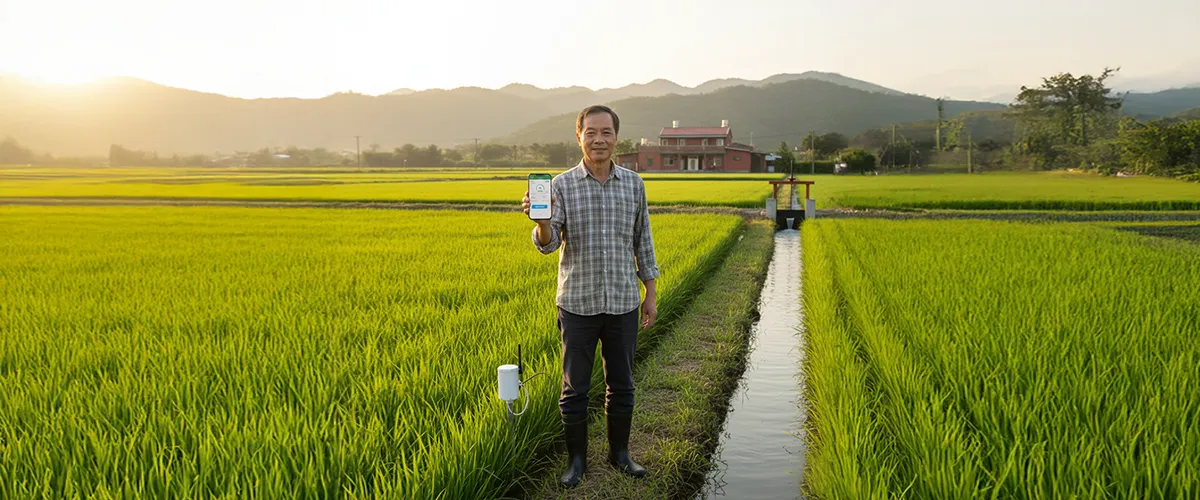
Whenever I chat with farmers, the question I'm asked most is: “Does precision agriculture cost a fortune? Surely a smallholder like me can't afford it?” My answer is usually: smallholders need precision agriculture even more. A large farm has the scale to absorb some losses, but a smallholder has to count every plot of land and every drop of water. Precision agriculture (Precision Agriculture) means using sensors to measure soil moisture, temperature and rainfall in the field, and deciding from the data when to water and how much fertilizer to apply, instead of guessing from experience alone; a smallholder can start with a single soil moisture sensor and add automatic control step by step.
What Is Precision Agriculture? Understand It at a Glance as a "Farm Navigation System"
Precision Agriculture is not an out-of-reach high-tech concept; it's more of a mindset. Its core is: "Using data to help farmers make smarter decisions."
You can think of it as the "navigation system" of the farm. In the past, farming relied on experience and intuition. When weather or soil changed, it was like driving on an unfamiliar country road, where one careless turn could take you the long way or into a dead end. With navigation, it tells you the road conditions ahead, helps you avoid congestion, and helps you pick the smoothest route. Precision agriculture is this "navigation." It farms by data, not by luck.
The Three Pillars of Precision Agriculture: Sensors, IoT, and Big Data
The term precision agriculture might sound fancy, but the concept is very simple. It is supported by 3 pillars: Sensors, IoT (Internet of Things), and Big Data Analysis.
1. Sensors: The "Senses" of the Farm
Sensors are like the eyes, ears, and nose of the farm, helping us keep track of conditions on site at all times. A soil moisture sensor tells you how dry the soil is. A water quality monitor warns fish farmers of low dissolved oxygen. A weather station records temperature, humidity, and rainfall.
2. Internet of Things (IoT): The "Messenger" for Data
Once we have sensors, we need a way to send the data to a place where we can see it. This is the job of IoT. Through technologies like Wi-Fi, 4G, NB-IoT, or LoRa, farm data can be sent to your mobile phone or computer in real-time. Just like home security cameras, you need the internet to watch live footage.
3. Big Data Analytics: The "Smart Brain" Behind the Data
Finally, how do these numbers become useful suggestions? That is where big data and AI come in. They can analyze the trend of soil drying and remind you to water, or judge abnormal greenhouse humidity and turn on the exhaust fan automatically.
Small Farmers Need Precision Agriculture More: Three Pain Points
You often hear small farmers say: "My land isn't big, so there's no need for any high tech." But the problems small farmers face are often more direct. Here are the three most common ones.
Pain Point 1: Labor Shortages
The most common sight in rural Taiwan is the labor shortage. One person has to take care of multiple plots of land; it's impossible to patrol everywhere every day. In this situation, even just a small soil moisture sensor can help keep an eye on the fields 24/7, keeping you informed of the situation at all times.
Pain Point 2: Climate Change
Droughts, heavy rains, and temperature differences caused by climate change hit smallholder farmers especially hard. In the past, we could rely on experience to judge "the rain should be about average this year," but now the weather is unpredictable. Precision agriculture data can help you adapt much faster.
Pain Point 3: Cost Pressure
Fertilizer, water, and electricity are all getting more expensive, and small farmers have no extra money to waste. The traditional way of watering is "better too much than too little," which leads to fertilizer loss and poor crop growth. What precision agriculture does is "just right": just the right amount of water and fertilizer.
To find out whether the sensors are helping, start with the soil moisture curve: compare how moisture changes before and after each watering and how long it takes to drop back to its original level, and you can judge whether your watering timing and amount are just right.
A Beginner's Guide for Smallholder Farmers: How to Get Started with Precision Agriculture
If you ask me: "I want to try it out, but how do I start?" My advice is: Take it step by step; don't rush to turn your field into a space center. Almost any smallholder farmer can follow these 3 steps:
-
Step 1: Start with a Single Sensor
The most highly recommended entry-level option is the "soil temperature and humidity sensor." Watering is the most common and easily understandable agricultural decision. With soil moisture data, you can avoid "over" or "under" watering. -
Step 2: Upload Data to the Cloud
Once you have one or two sensors, you can pair them with IoT data transmission to send the data to a Cloud platform. This way, whether you are setting up a stall at the market or working out of town, you can use your mobile phone to check your farm's status at any time. -
Step three: move up to automatic control
Once you are familiar with the data, you can add automatic control. For example, with a Smart Control Box you can set: "soil moisture below 30% → start the water pump automatically" (set the threshold according to the soil in your field; sandy soil and loam are very different).
Many people worry: "I don't know anything about programming, is it hard?" In fact, our FarmerPack - Smart Field Sensor along with the environmental control platform are entirely "Plug and Play." There is absolutely no need to write any code. It's like buying a coffee machine; you just press a button to brew coffee without adjusting the pressure yourself.
Precision Agriculture FAQs: Costs, Tools, and Three Common Misconceptions
Q1: How Much Do Sensors Actually Cost?
This really is what everyone cares about most. In fact, you can start with a soil temperature and moisture sensor. The FarmerPack Smart Field Sensor has a modular design, so you can buy only the sensing items you need. We suggest starting with the most urgent problem; you do not have to do everything at once. Once you have chosen your sensing items, you can see a quotation directly at Online Quote.
Q2: How Is the Data Used?
Data applications can be divided into three levels:
- Local Display: Sensors display data directly on a screen, suitable for simple observation.
- Cloud Platform: Upload data to a Cloud platform so you can check reports via your phone or computer at any time. This is the approach of the YenProtek FarmerPack and is currently the most popular model.
- Automated Control: Data drives on-site equipment, such as "Temperature above the set value → Automatically turn on ventilation fan" (the set value depends on the crop; about 28–30°C for a tomato greenhouse). This is an advanced application that saves the most labor.
Q3: Common Misconceptions
- Misconception 1: Precision agriculture is always expensive.
→ Fact: A modular design lets you buy only the items you need, so small farmers can afford it too. - Misconception 2: You must know how to program.
→ Fact: The FarmerPack Smart Field Sensor combined with YenProtek's environmental monitoring platform is now "Plug and play," making it as easy to use as a home appliance. - Misconception 3: It is only suitable for large farms.
→ Fact: Smallholder farmers do not have excess resources to waste, so they actually need precision agriculture even more to save costs.
Conclusion: Three Key Points
To sum up in three points:
- Precision agriculture uses data to help make decisions, not some out-of-reach high technology.
- Smallholder farmers can start with one sensor and take it step by step.
- Technology is a helper. It is not meant to replace farmers, but to let you take care of the field with less time and fewer resources.
I often joke: "Precision agriculture is not about turning you into an engineer. It is about giving you a little less anxiety." When the field is watering itself, you can sit and have a cup of tea and check on the field with the phone app.
If you would like to try starting with a single sensor, you can first request a demo account to see the actual screens on your phone.