Introduction: How IoT Became an Early Warning Weapon Against African Swine Fever
When an animal disease outbreak strikes hard, the pig industry needs not only a fast response but, even more, the ability to "know in advance." African Swine Fever (ASF), one of the most devastating infectious diseases of pigs worldwide, still has no effective vaccine. Fortunately, as Internet of Things (IoT) technology is put to practical use on livestock farms, Precision Livestock Farming (PLF) has become a key weapon for detecting outbreaks early.
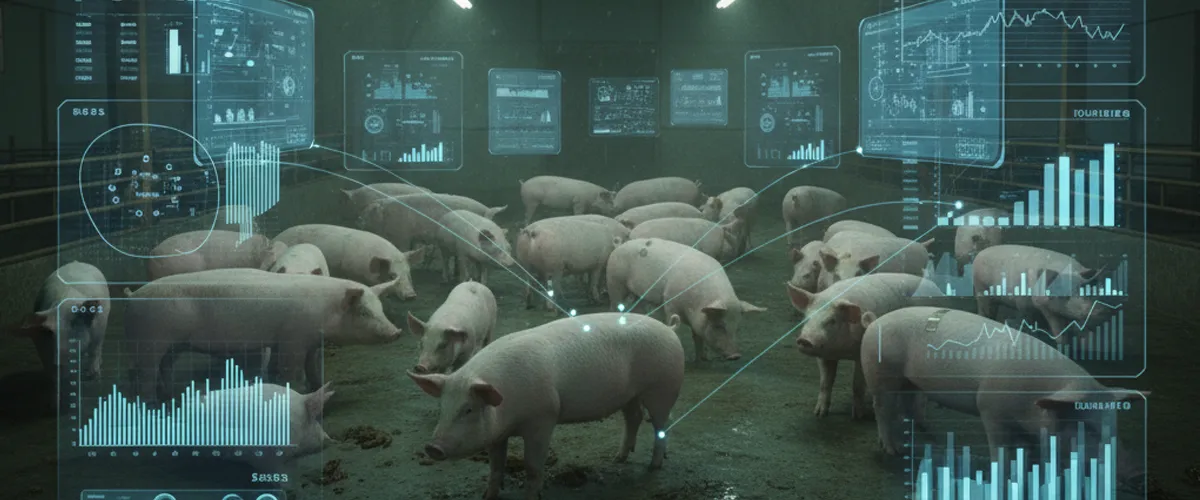
Precision livestock farming uses sensors, cameras, and algorithms to build a round-the-clock health monitoring system for pigs. According to a systematic review published by Gómez et al. (2021) in Frontiers in Veterinary Science, IoT technology can continuously collect behavioral, physiological, and environmental data and holds great potential for improving pig welfare and disease management. The following are three major applications of this technology in early warning of African Swine Fever:
1. Detecting Abnormal Behavior: Activity Patterns as the First Early Warning Line
A pig's daily behavior holds the key to its health. According to a study by Huang et al. (2024) published in Computers and Electronics in Agriculture, healthy pigs show distinct activity peaks from about 5 a.m. to 10 a.m. and from 2 p.m. to 6 p.m. each day, and abnormal activity (such as excessive stillness or reduced activity) is often an early sign of disease.
African Swine Fever causes behavioral changes in pigs at an early stage, such as lethargy and reduced movement. Using cameras and accelerometers (often embedded in ear tags), each pig's movement patterns and posture can be tracked in real time, and algorithms compare them against "normal daily routines" to quickly identify potentially abnormal individuals.
In addition, Arulmozhi et al. (2021), writing in the journal Animals, note that such image-based behavior monitoring technologies are not only low-cost but also particularly well suited to small and medium-sized pig farms.
2. Body Temperature Tracking: Digital Ear Tags as the Pig's "Temperature-Sensing Skin"
Elevated body temperature is the most direct indicator of inflammation and infection. Gómez et al. (2021) point out that IoT devices such as thermal imagers, infrared thermometers, and embedded sensors can continuously monitor body surface temperatures without contact, significantly improving the efficiency of early detection.
Huang et al. (2024) also discovered that although temperature data from ear tags is affected by the environment and behavior, hidden anomalies can still be found by comparing the "overall herd trend." For example, if a pig repeatedly shows a "drop in body temperature" trend during the day, it may be the result of the pig trying to find lower-temperature areas to rest after a fever; this negative change is considered a latent symptom of the disease.
3. Data Integration: From Single-Point Detection to Comprehensive Early Warning
While a single sensor can detect anomalies, integrating and cross-referencing behavioral, physiological, feeding, and drinking data greatly improves the accuracy of early warning.
According to a literature review by Trabachini et al. (2025) in the journal Animals, feeding multi-sensor data into AI models, such as Random Forest and deep learning systems, can effectively distinguish between normal and abnormal pigs and turn the results into actionable criteria for managers.
In addition, combining RFID technology with load sensors makes it possible to monitor each pig's feeding and drinking behavior. Subtle changes in eating patterns are often among the earliest anomalies to appear before illness.
From Sensing to Perception: Building a Digitally Guarded Pig House
In summary, precision livestock farming involves building a detection system consisting of "digital eyes" (cameras) and "digital skin" (sensors). Through real-time comparison and processing of massive amounts of data, proactive warnings can be issued before an epidemic breaks out.
This is not merely the adoption of technology, but a revolution in livestock concepts: shifting from manual inspection to data-driven warnings, and from reacting to problems to preventing them. In the future, in animal husbandry scenarios that prioritize both epidemic prevention and animal welfare, IoT technology will undoubtedly play an increasingly vital role.
References:
- Gómez, Y., et al. (2021). A Systematic Review on Validated Precision Livestock Farming Technologies for Pig Production and Its Potential to Assess Animal Welfare. Frontiers in Veterinary Science, 8:660565. https://doi.org/10.3389/fvets.2021.660565
- Huang, Y., et al. (2024). Analysis of pig activity level and body temperature variation based on ear tag data. Computers and Electronics in Agriculture, 219, 108768. https://doi.org/10.1016/j.compag.2024.108768
- Arulmozhi, E., et al. (2021). The Application of Cameras in Precision Pig Farming: An Overview for Swine-Keeping Professionals. Animals, 11(8), 2343. https://doi.org/10.3390/ani11082343
- Trabachini, A., et al. (2025). Precision Livestock Farming Applied to Swine Farms—A Systematic Literature Review. Animals, 15, 2138. https://doi.org/10.3390/ani15142138
- Benjamin, M., & Yik, S. (2019). Precision Livestock Farming in Swine Welfare: A Review for Swine Practitioners. Animals, 9(4), 133. https://doi.org/10.3390/ani9040133