Smart Industry Knowledge Hub

Smart Safety Classroom

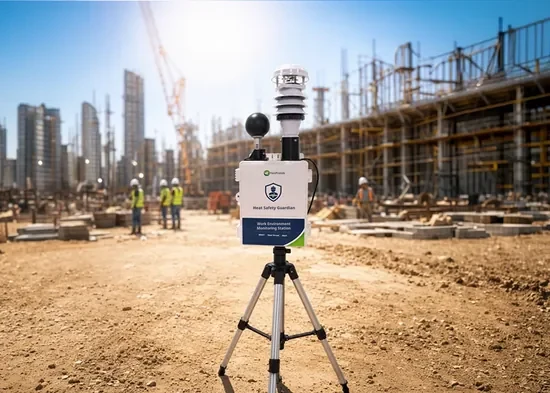
Not Just High Temperature: What Is WBGT? From Heat-Hazard Classification to Outdoor-Work Safety Management

The greatest danger of outdoor work in summer is not just high temperature, but the combination of heat, high humidity, direct sun, still air, and heavy physical labor all at once. WBGT (Wet Bulb Globe Temperature) combines temperature, humidity, radiant heat, and air movement into a single, manageable heat hazard index. This article fully explains what WBGT is, how it differs from the heat index, which sites (construction sites, farms, fish ponds, warehouses, and campuses) especially need monitoring, and the measurement, risk-level classification, notification, equipment interlocking, and record-keeping functions a WBGT system should provide. It also shows how WBGT sensing, a cloud platform, tiered alerts, and the Smart Control Box can turn "it feels hot" into evidence-based trigger conditions for heat hazard management…

Read More
Smart Agriculture Getting Started Guide

Beyond Temperature and Humidity: What Agricultural Sensors Are There? A Complete Guide from Soil, Weather and Water Quality to Environmental Monitoring

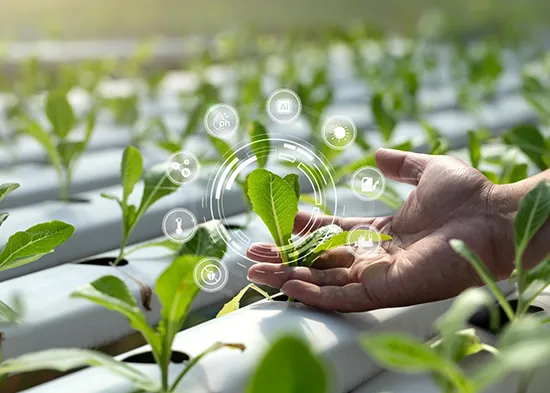
The first step in smart agriculture isn't necessarily AI or automated control; it's making the farm "visible": seeing whether the soil is too dry, whether rainfall is sufficient, whether greenhouse temperature, humidity, and light are suitable, and whether dissolved oxygen in the fish pond is dropping. The source of this data is agricultural sensors. Starting from the four most common categories of sensors used in the field, this article provides a complete introduction to soil sensors (moisture, temperature, pH, EC, NPK), weather and microclimate sensors (temperature and humidity, rainfall, wind speed and direction, sunlight, CO₂), water quality sensors (DO, water temperature, pH, salinity, ammonia nitrogen, ORP, water level), and environmental and equipment status sensors (water level, flooding, power outage), covering their uses, suitable sites, and key selection criteria, and explains how to choose sensing parameters for smart irrigation, precision fertilization, aquaculture, greenhouse climate control, and food and agricultural education…

Read More

Smart Agriculture Getting Started Guide

Food and Agricultural Education Activities: 10 Lesson Designs for Elementary and Junior High Schools

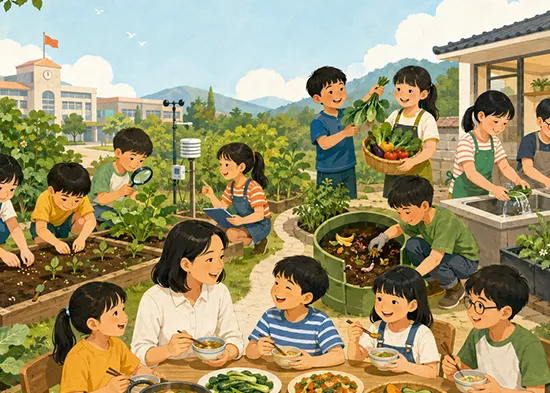
Food and agricultural education is more than having students plant, water, and harvest vegetables, and more than a one-off farm visit or cooking activity. For elementary and junior high schools, the best approach is to design it as a learning journey of observation, recording, discussion, experimentation, and presentation. This article presents 10 food and agricultural education activities suited to elementary and junior high schools: from seed to table, garden observation journals, soil moisture and watering experiments, plant phototropism, designing automatic irrigation rules, school lunch ingredient surveys, food waste investigations, and a smart garden showcase, along with a quick comparison table. Paired with FarmerPack and the Smart Control Box, school gardens can generate observable data, extending food and agricultural education from a planting experience into an inquiry-based curriculum that integrates STEM and sustainability education…

Read More

Smart Agriculture Application Projects

A Fish Pond Power Outage Is No Small Matter: How an Aquaculture Safety Monitoring System Holds the Last Line of Defense

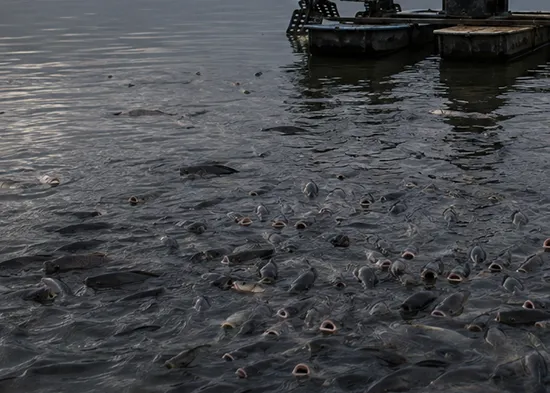
In aquaculture, the biggest fear is not whether equipment runs on a normal day, but whether any system on site can still tell the manager "something is wrong" when an abnormal event occurs. During a power outage, aeration stops, monitoring is interrupted, and communications go down; just when the farm needs an alarm the most, the system may fall silent along with everything else. This article examines the power outage risks facing fish ponds, independent backup power design for aquaculture safety monitoring systems, the four things a system must do during an emergency outage, and the five site conditions to confirm before deployment. Combined with the Power Outage Alert Module, the Smart Control Box, and AquaPack, fish farmers can be notified the moment a power outage, tripped breaker, or aerator failure occurs, buying the most valuable time for response…

Read More

Smart Agriculture Getting Started Guide

How to Make Food and Agricultural Education Fun: From Growing Vegetables to Smart Agriculture, Building a School Garden That Gets Students Thinking

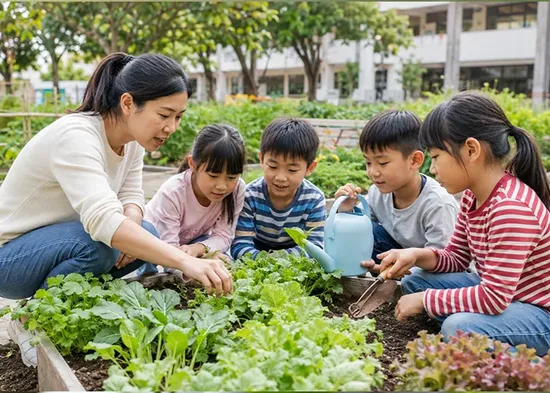
Food and agricultural education is more than having students plant, water, and harvest vegetables, or learning where food comes from. Truly good food and agricultural education should help students understand the relationships among food, agriculture, the environment, climate, land, water resources, and daily life. When a school garden introduces sensors, a microclimate station, soil monitoring, and automatic irrigation, students do more than tend plants: they can observe data, ask questions, and test their ideas. The garden turns from a "planting activity" into a "smart agriculture lab," an integrated teaching platform that combines natural science, information technology, environmental education, and sustainability literacy. Starting from the common pain points schools face in promoting food and agricultural education, this article shows how to use FarmerPack and the Smart Control Box to build a smart school garden that generates data, waters itself automatically, and prompts students to think…

Read More

Communication Technology and Cloud Platforms

Do not Rush to Choose Wi-Fi: How to Select IoT Communication Technology? Which Scenarios Suit LoRa, NB-IoT and 4G?

When implementing IoT, many people's first thought is, "Should this device use Wi-Fi or 4G?" But the real question isn't which communication technology is better; it's which one best fits your site. The success of an IoT project is often determined not by device specifications but by whether the communication architecture matches the site's requirements. This article provides a complete breakdown of the four most common IoT communication methods, Wi-Fi, LoRa, NB-IoT, and 4G, comparing their pros and cons, suitable sites, costs, power requirements, and deployment methods. Drawing on YenProtek's hands-on experience in Taiwan, it explains why NB-IoT is the main choice for Taiwan's small, scattered fields and fish ponds, while LoRa is better suited to large, flat, unobstructed areas…

Read More

Getting Started with Smart Irrigation

What Is Intermittent Irrigation? Understanding the Key to Smart Irrigation Through Soil Moisture Management

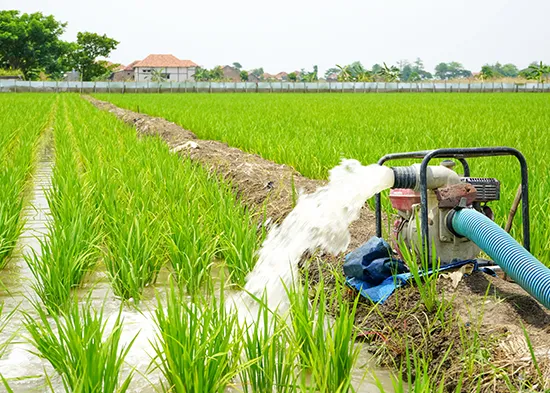
Irrigation is not just a matter of turning the water on. Intermittent irrigation is a management approach in which water is no longer supplied continuously for long periods, but instead follows a rhythm of "wet, absorb, replenish," giving water time to infiltrate the soil and be taken up by the root zone while reducing the risk of over-irrigation and water waste. AWD (Alternate Wetting and Drying), commonly used in paddy rice fields, is a typical example, but intermittent irrigation can also extend to orchards, greenhouses, leafy vegetables, flowers, and nurseries. This article explains how intermittent irrigation differs from traditional irrigation, what soil and microclimate data it requires, how the four-step monitor–evaluate–control–feedback process works, five common mistakes during deployment, and how FarmerPack + the Smart Control Box moves irrigation from manual experience to data-driven control…

Read More

IoT Getting Started Guide

Stable Outdoors, Even More Stable Indoors: Why Outdoor IoT Is the True Test of IoT Capability

The value of IoT isn't whether a device can get online for a short time, but whether it can run stably over the long term in real-world sites. Outdoor IoT must simultaneously cope with multiple challenges, including sun, rain, humidity, salt damage, unstable power, unreliable connectivity, and difficult maintenance, so it puts hardware weather resistance, mechanical design, power management, communication architecture, and system integration capabilities to a far tougher test than general IoT. This article explains what outdoor IoT is, its four key differences from general IoT, why it is a greater test of system integration capabilities, six major application scenarios including smart agriculture, aquaculture, environmental monitoring, smart cities, and energy/solar PV, and the key points to confirm before implementation, helping you understand the system integration logic behind "if it's stable outdoors, it's even more stable indoors"…

Read More

Getting Started with Smart Irrigation

What Is an Automatic Sprinkler System? Stop Watering by Feel and Let Irrigation Start and Stop Automatically Based on Conditions

Traditional agriculture has long relied on farmers' experience to decide when to water. That experience is extremely valuable and often comes from years of field observation. But as climate change intensifies, labor shortages become more pronounced, agricultural production scales up, and pressure on water costs and quality management grows, visual observation and fixed-schedule irrigation alone are increasingly unable to meet the management needs of modern agriculture. The core of smart irrigation and precision agriculture is not to make the farm more complicated, but to help managers answer a very practical question: When should we water? How much? Which zone needs attention first? And was the irrigation actually effective?…

Read More

Smart Agriculture Getting Started Guide

What Is Smart Agriculture? A Complete Guide from Traditional Farming to Data-Driven Management

Smart agriculture brings IoT, sensors, communication technologies, cloud platforms, artificial intelligence, automated control, and data analytics into agricultural production and management. Instead of relying solely on experience, manual inspections, and after-the-fact judgment, agriculture can use real-time data to track the status of crops, the environment, soil, water, climate, and equipment. Its core value isn't replacing farmers with technology, but giving farmers and managers a more complete, timely, and traceable basis for decision-making, moving agricultural management from "gut feeling" to "data-driven," from "after-the-fact handling" to "early warning," and from "manual field patrols" to "remote monitoring." This article provides a complete analysis of smart agriculture's definition, main domains, the four operating steps of sensing, transmission, analysis, and execution, core technologies, application scenarios, benefits of adoption, common challenges, and future trends…

Read More

IoT Getting Started Guide

What Is IoT? Understand How IoT Works and Its Applications in 5 Minutes

In recent years, the Internet of Things (IoT) has become a foundational technology for digital transformation, smart manufacturing, smart cities, and the development of artificial intelligence. Yet while many people hear the term often, they may not truly understand the principles and core value behind it. In fact, IoT is neither a single product nor a particular type of device, but a technical architecture that connects the physical and digital worlds. Through sensors, communication networks, cloud platforms, and data analytics, IoT enables devices that once could not "speak" to collect data, transmit information, monitor status, and make smart decisions. Starting with everyday examples, this article walks you through the definition of IoT, its four-part core architecture of sensing → connectivity → analysis → action, how it differs from traditional devices, seven major industry applications, the benefits and challenges of adoption, and future AIoT trends…

Read More

Smart Agriculture Industry Trends

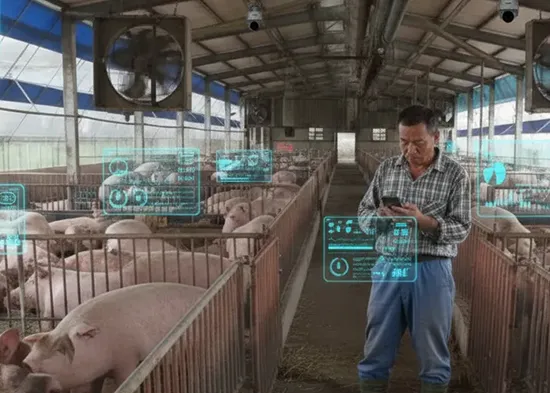
When African Swine Fever Strikes, Outdoor IoT Becomes the New Defense Line for the Pig Farming Industry

A suspected case of African swine fever (ASF) was recently reported in Taichung, leading to the preventive culling of 195 pigs and nationwide bans on transport and slaughter, sending shockwaves through the pig farming industry and the consumer market. With Taiwan's pork self-sufficiency rate as high as 87.5%, a spreading outbreak would not only threaten food safety but also hit an industry chain worth more than NT$100 billion. ASF is aggressive and highly contagious, and the virus can survive in frozen pork for up to 1,000 days. To date, there is still no vaccine or cure…

Read More

Smart Agriculture Industry Trends

What Exactly Is African Swine Fever? Can It Spread to Humans? The Complete Biosecurity Guide Every Pig Farmer Must Know

In August 2018, an invisible storm quietly struck Liaoning Province, China. Within just a few months, the outbreak led to the culling of more than a million pigs, plunging the entire Asian pig farming industry into unprecedented panic. This was the impact of African swine fever. As a practitioner who has long followed smart livestock farming, I have seen too many pig farmers caught off guard because they didn't understand this disease, and I have also witnessed how farms with sound disease prevention stood firm through the outbreak. Today, I'd like to explain in the simplest, most practical terms what African swine fever really is, whether it can spread to humans, and how we should respond…

Read More

Smart Agriculture Industry Trends

How Precision Livestock Farming Forms the First Line of Defense Against Swine Fever - IoT Technology for Early Warning of African Swine Fever

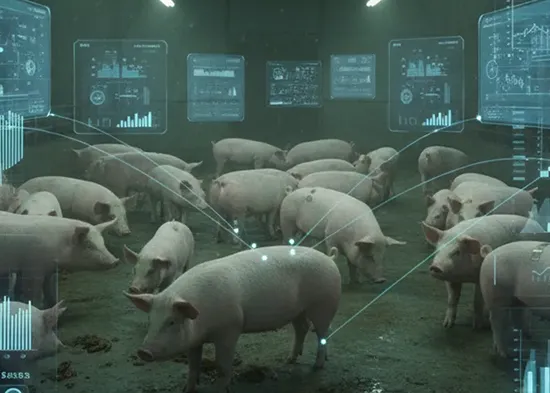
When an animal epidemic strikes hard, the pig farming industry needs not only a rapid response but also the ability to "know in advance." African swine fever (ASF), one of the most devastating infectious diseases of pigs worldwide, still has no effective vaccine. Fortunately, as Internet of Things (IoT) technology is put into practice on livestock farms, Precision Livestock Farming (PLF) has become a key weapon for detecting outbreaks early. PLF uses sensors, cameras, and algorithms to build an around-the-clock health monitoring system for pigs…

Read More

Smart Agriculture Getting Started Guide

What Is Precision Agriculture? Low-Cost, Data-Driven Tools That Small Farms Can Use Too

Every time I chat with fellow farmers, the question I'm asked most often is: "Doesn't precision agriculture cost a lot of money? Small farmers like us can't afford it, right?" Whenever I hear this, I smile and tell everyone: "That's the biggest misconception about precision agriculture!" In fact, precision agriculture isn't some out-of-reach high technology; it's more of a mindset, and its core is: "Using data to help farmers make smarter decisions." You can think of it as a "navigation system" for the fields. In the past, farming relied on experience and intuition. Dealing with changes in weather and soil was like driving on an unfamiliar country road: one wrong turn and you might take a detour or hit a dead end. But a navigation system tells you the road conditions ahead, helps you avoid congestion, and guides you onto the smoothest route. Precision agriculture is that "navigation system," letting us farm based on science and data instead of luck. And I must emphasize: smallholder farmers actually need precision agriculture even more…

Read More