Smart Agriculture Getting Started Guide

Smart Agriculture Getting Started Guide

Beyond Temperature and Humidity: What Agricultural Sensors Are There? A Complete Guide from Soil, Weather and Water Quality to Environmental Monitoring

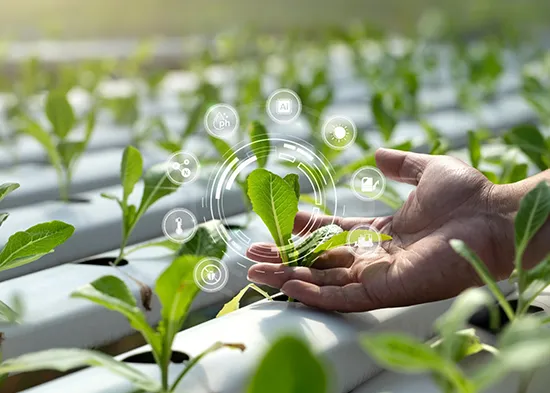
The first step in smart agriculture isn't necessarily AI or automated control; it's making the farm "visible": seeing whether the soil is too dry, whether rainfall is sufficient, whether greenhouse temperature, humidity, and light are suitable, and whether dissolved oxygen in the fish pond is dropping. The source of this data is agricultural sensors. Starting from the four most common categories of sensors used in the field, this article provides a complete introduction to soil sensors (moisture, temperature, pH, EC, NPK), weather and microclimate sensors (temperature and humidity, rainfall, wind speed and direction, sunlight, CO₂), water quality sensors (DO, water temperature, pH, salinity, ammonia nitrogen, ORP, water level), and environmental and equipment status sensors (water level, flooding, power outage), covering their uses, suitable sites, and key selection criteria, and explains how to choose sensing parameters for smart irrigation, precision fertilization, aquaculture, greenhouse climate control, and food and agricultural education…

Read More
Smart Agriculture Getting Started Guide

Food and Agricultural Education Activities: 10 Lesson Designs for Elementary and Junior High Schools

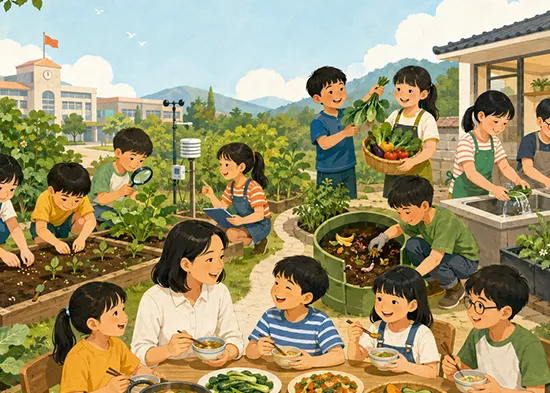
Food and agricultural education is more than having students plant, water, and harvest vegetables, and more than a one-off farm visit or cooking activity. For elementary and junior high schools, the best approach is to design it as a learning journey of observation, recording, discussion, experimentation, and presentation. This article presents 10 food and agricultural education activities suited to elementary and junior high schools: from seed to table, garden observation journals, soil moisture and watering experiments, plant phototropism, designing automatic irrigation rules, school lunch ingredient surveys, food waste investigations, and a smart garden showcase, along with a quick comparison table. Paired with FarmerPack and the Smart Control Box, school gardens can generate observable data, extending food and agricultural education from a planting experience into an inquiry-based curriculum that integrates STEM and sustainability education…

Read More

Smart Agriculture Getting Started Guide

How to Make Food and Agricultural Education Fun: From Growing Vegetables to Smart Agriculture, Building a School Garden That Gets Students Thinking

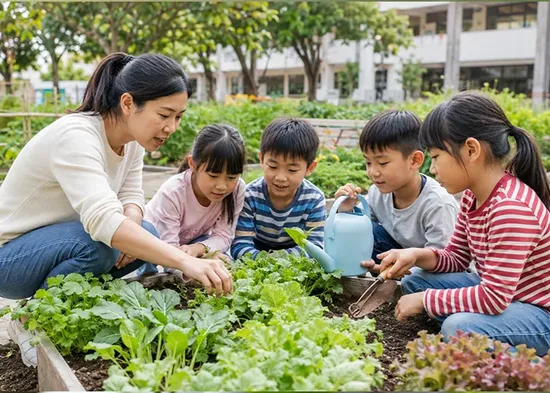
Food and agricultural education is more than having students plant, water, and harvest vegetables, or learning where food comes from. Truly good food and agricultural education should help students understand the relationships among food, agriculture, the environment, climate, land, water resources, and daily life. When a school garden introduces sensors, a microclimate station, soil monitoring, and automatic irrigation, students do more than tend plants: they can observe data, ask questions, and test their ideas. The garden turns from a "planting activity" into a "smart agriculture lab," an integrated teaching platform that combines natural science, information technology, environmental education, and sustainability literacy. Starting from the common pain points schools face in promoting food and agricultural education, this article shows how to use FarmerPack and the Smart Control Box to build a smart school garden that generates data, waters itself automatically, and prompts students to think…

Read More

Smart Agriculture Getting Started Guide

What Is Smart Agriculture? A Complete Guide from Traditional Farming to Data-Driven Management

Smart agriculture brings IoT, sensors, communication technologies, cloud platforms, artificial intelligence, automated control, and data analytics into agricultural production and management. Instead of relying solely on experience, manual inspections, and after-the-fact judgment, agriculture can use real-time data to track the status of crops, the environment, soil, water, climate, and equipment. Its core value isn't replacing farmers with technology, but giving farmers and managers a more complete, timely, and traceable basis for decision-making, moving agricultural management from "gut feeling" to "data-driven," from "after-the-fact handling" to "early warning," and from "manual field patrols" to "remote monitoring." This article provides a complete analysis of smart agriculture's definition, main domains, the four operating steps of sensing, transmission, analysis, and execution, core technologies, application scenarios, benefits of adoption, common challenges, and future trends…

Read More

Smart Agriculture Getting Started Guide

What Is Precision Agriculture? Low-Cost, Data-Driven Tools That Small Farms Can Use Too

Every time I chat with fellow farmers, the question I'm asked most often is: "Doesn't precision agriculture cost a lot of money? Small farmers like us can't afford it, right?" Whenever I hear this, I smile and tell everyone: "That's the biggest misconception about precision agriculture!" In fact, precision agriculture isn't some out-of-reach high technology; it's more of a mindset, and its core is: "Using data to help farmers make smarter decisions." You can think of it as a "navigation system" for the fields. In the past, farming relied on experience and intuition. Dealing with changes in weather and soil was like driving on an unfamiliar country road: one wrong turn and you might take a detour or hit a dead end. But a navigation system tells you the road conditions ahead, helps you avoid congestion, and guides you onto the smoothest route. Precision agriculture is that "navigation system," letting us farm based on science and data instead of luck. And I must emphasize: smallholder farmers actually need precision agriculture even more…

Read More