Sensors Combined with a Cloud System Make Aquaponics Smarter!
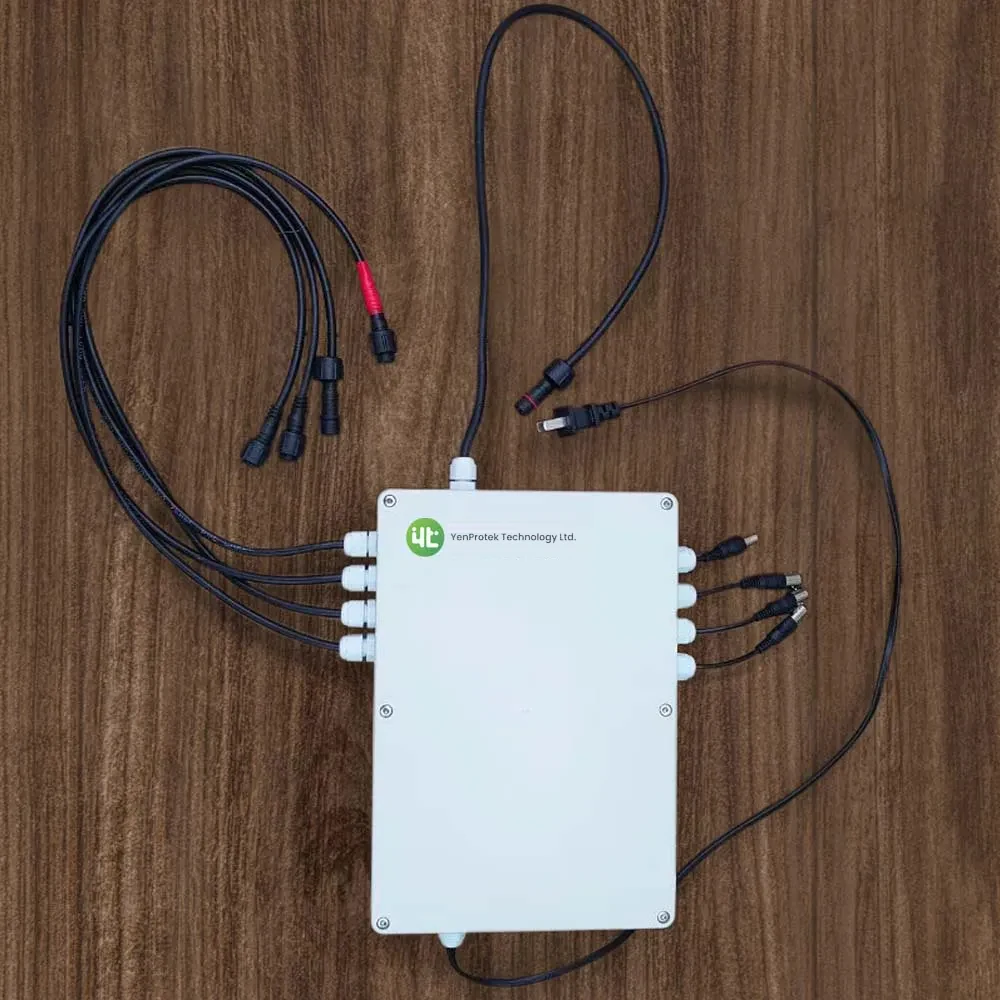
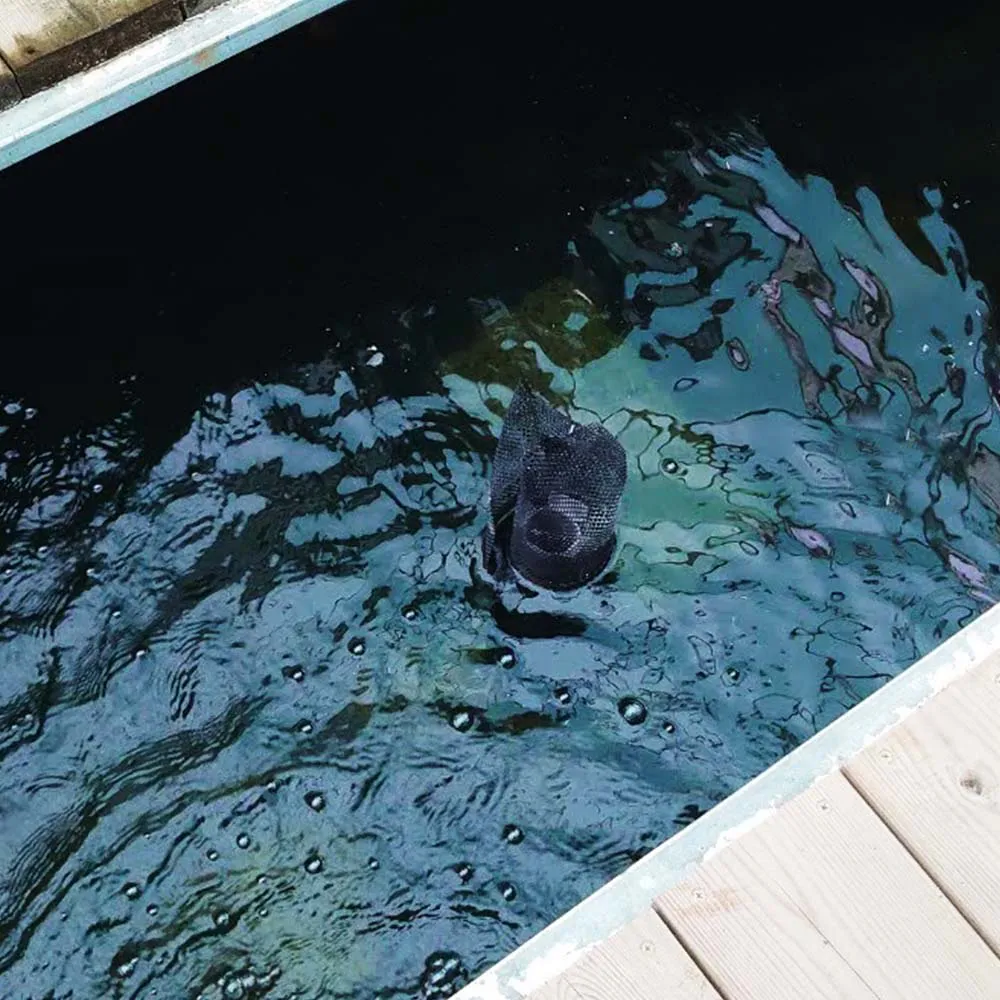
- The feeder is connected to the control box, and the system can be scheduled to automatically feed the fish at specified times or under specific conditions.
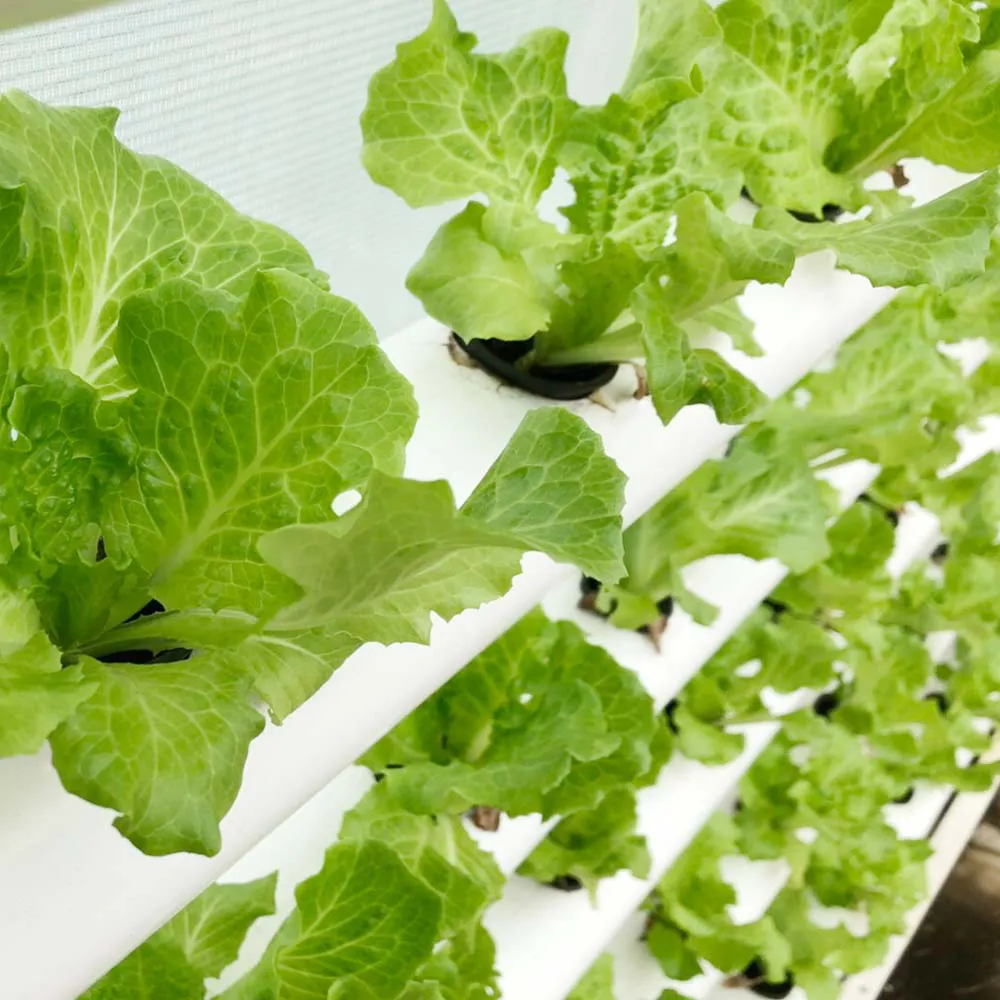
- The water valve is connected to the control box, and the system can be scheduled to activate automatically at specified times or under specific conditions, supplying crops with the right amount of water at the right time through drip irrigation lines.
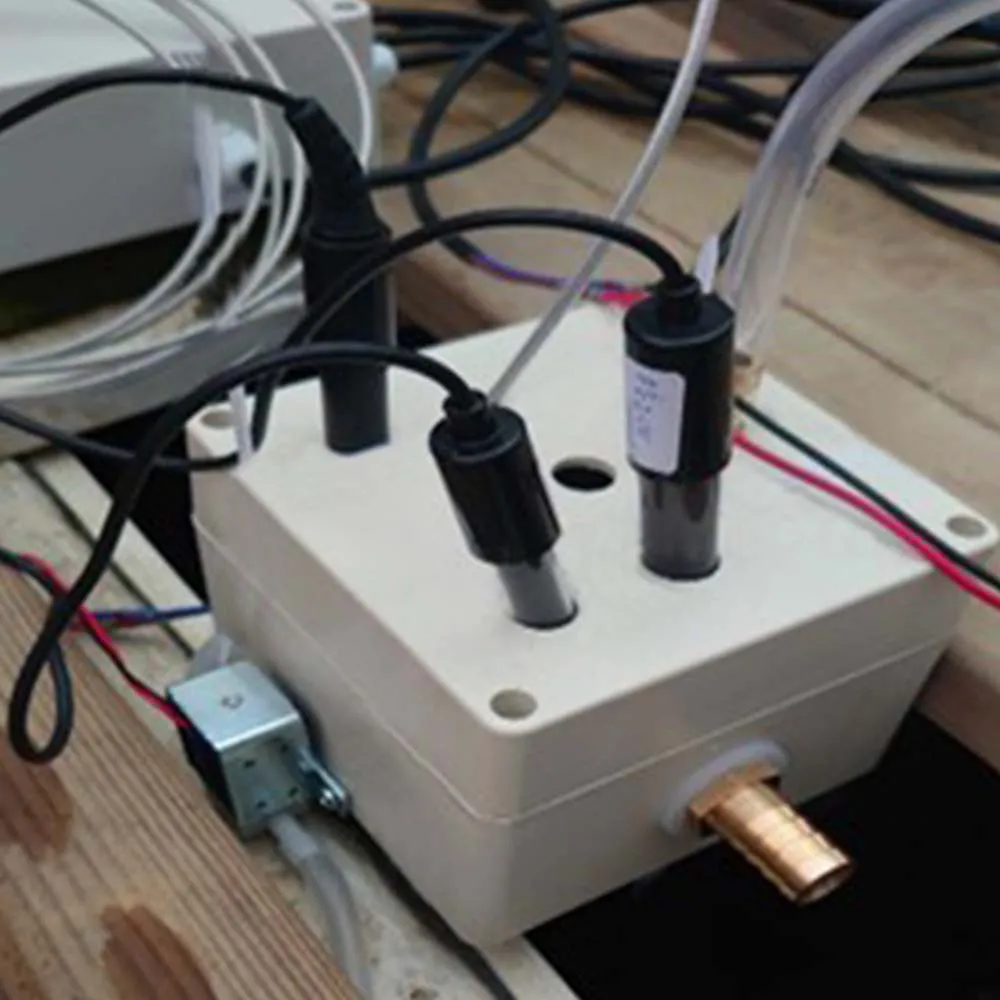
- The water quality monitor is connected to the control box. Through system scheduling or manual control, the water quality sensor continuously measures environmental parameters that affect aquaculture—such as conductivity, pH, dissolved oxygen, ammonia ions, and water temperature—and uploads the data. With the cloud system, managers can check the aquaculture water environment anytime, anywhere from a mobile device.
Development Highlights
Automatic Cloud Data Upload
Data is automatically uploaded to the Cloud via NB-IoT, making remote monitoring more efficient.
Rugged and Durable
Specifically designed for outdoor wireless applications, built to withstand frequently changing outdoor environments.
Accurate and Reliable
Utilizes high-precision sensor modules for fast response, stability, and reliability.
High Reliability
Equipped with a temporary data storage mechanism to ensure the completeness and continuity of uploaded data.
Easy Installation
Environmental sensing systems connect directly to the network without needing additional host equipment.
High Scalability
100% designed and manufactured in Taiwan, offering flexible customization and configuration options.
Project Overview
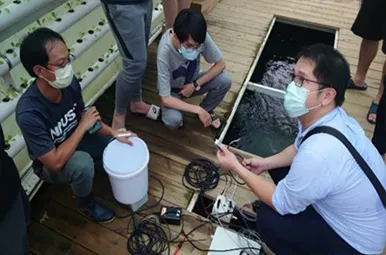
YenProtek partnered with National Pingtung University of Science and Technology to design an aquaponics system that integrates three functions: aquaculture water quality monitoring, a feeding system, and a plant drip irrigation system. The water quality sensing system automatically draws water samples for testing, measuring dissolved oxygen, pH, electrical conductivity, ammonia nitrogen, and water temperature. In addition to collecting water quality data, the system synchronizes the data to the Cloud for recording, enabling remote monitoring of the aquaculture environment anytime, anywhere. The feeding and drip irrigation systems can run on automatic schedules or be controlled manually and remotely to adjust feeding and irrigation timing as conditions require.
Once completed, the system not only lets the research team monitor the fish farming and crop growing environments in real time, but also uses long-term monitoring data to identify the external environmental factors affecting fish and crop harvests, providing a stronger basis for future research on improving fish and plant quality and yield. In addition, the automated, connected system greatly reduces the labor required for inspections and record-keeping, making research work more efficient.
Project Details
- Client / Site
- National Pingtung University of Science and Technology
- Project Period
- 2022
- Category
- # Smart Agriculture # Smart Aquaculture # Environmental Sensing
- Sensing Technology
- Electrical conductivity (EC), pH, dissolved oxygen (DO), ammonium ions, water temperature, and other related environmental parameters
Partner Institutions
NPUST Department of Management Information Systems, NPUST E-Commerce Center, NPUST Smart Agriculture Center
Participating Faculty
Department of Management Information Systems / Prof. Hsu-Yang Kung
Technology Agriculture Program / Asst. Prof. Shang-Han Tsai
General Research Service Center / Researcher Chien-Liang Pan
General Research Service Center / Researcher Jui-Ching Ko