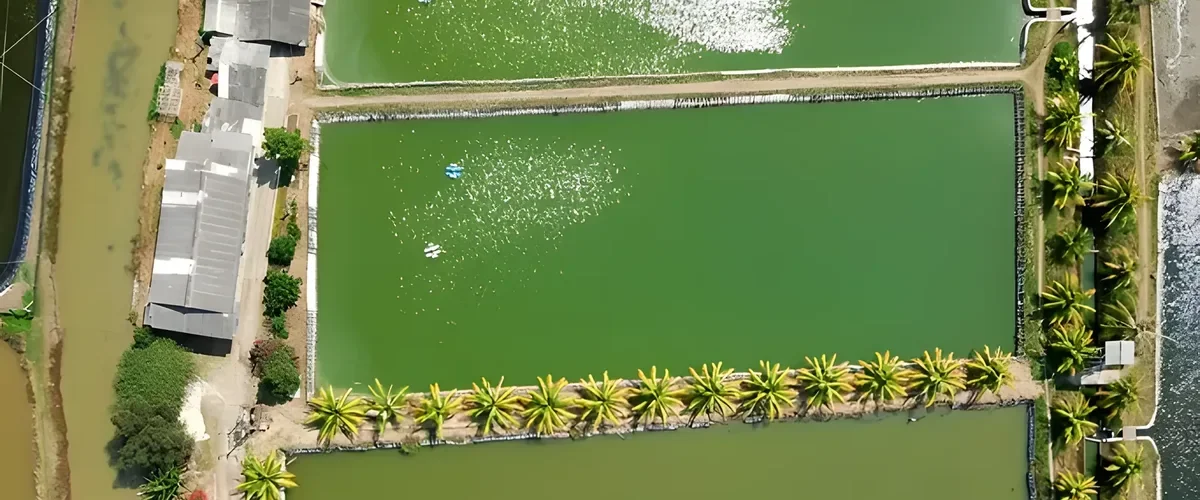
A water quality sensor for aquaculture is a device placed in a fish pond or shrimp pond that measures dissolved oxygen, water temperature, pH and more all day on its own, and notifies you when a reading goes wrong. The dissolved oxygen and pH of pond water swing widely within a single day, and the most dangerous time is often from midnight to early morning, when nobody can stay by the pond all night. So you need continuous measurement, not one or two readings a day.
Anyone who has looked after a pond knows that fish trouble often comes just before dawn: everything was fine the night before, and in the early morning you find the fish gasping at the surface. What a water quality sensor is meant to save you is the worry of the whole night and the repeated trips out to check the pond in the middle of the night. Below, from the point of view of looking after a pond, we explain what to measure, why probes so often read wrong, what to check before you buy, and how to use the data.
What Should You Measure in a Fish Pond?
A water quality sensor is not better just because it has more measurements. Every number should answer a question: Do I need to run the paddlewheel? Should I feed a bit less? Should I change the water? First work out how each measurement relates to your daily management, then decide what to measure.
Dissolved oxygen: the most important one
Dissolved oxygen is the measurement given the most attention in aquaculture water quality. In the daytime, algae photosynthesize and release oxygen into the water. At night there is no sunlight, and algae, fish, shrimp and the microbes on the pond bottom all use up oxygen, so dissolved oxygen keeps falling. That is why, in an ordinary fish pond, dissolved oxygen is highest in the evening and lowest before dawn. On hot, cloudy, windless days, or after algae suddenly die off in large numbers (an algae crash), dissolved oxygen is more likely to run short. Right after feeding, fish and shrimp use more oxygen, and dissolved oxygen drops with it.
The benefit of continuous measurement is that you know when dissolved oxygen starts falling at two in the morning, instead of finding out from fish gasping at the surface at dawn. As for how low is dangerous, it depends on the species, size and water temperature, so follow the advice of your local aquaculture research station or your feed and fry suppliers.
Water temperature: the key to reading dissolved oxygen
The warmer the water, the less oxygen it can hold, while the metabolism and oxygen use of fish and shrimp go up. A New Mexico State University extension document gives an example: water at 11°C can hold about 40% more oxygen than water at 27°C. That is why you need to watch dissolved oxygen especially on summer nights, and when a cold snap arrives, the water temperature itself is a risk to watch. The FAO’s aquaculture handbook also advises measuring water temperature at the same time as dissolved oxygen, because the two numbers are only accurate when read together.
pH: look at the swing over the day, not just one number
Like dissolved oxygen, the pH of pond water changes between day and night. In the daytime, photosynthesis uses up carbon dioxide and pH rises. At night, respiration gives off carbon dioxide and pH falls, so it is usually lowest at dawn and highest in the evening. pH also affects how toxic ammonia is, so it is best measured continuously and read as a trend, rather than measured once a day.
Ammonia nitrogen: read it together with pH and water temperature
Ammonia nitrogen comes mainly from leftover feed, the waste of fish and shrimp, and the breakdown of organic matter on the pond bottom. Ammonia in water comes in two forms, and the one more toxic to fish and shrimp is un-ionized ammonia, whose share goes up as pH and water temperature rise. The same ammonia nitrogen reading carries more risk when pH and water temperature are high, so ammonia nitrogen must always be read together with pH and water temperature.
Most online ammonia nitrogen probes use the electrode method, which is good for tracking the slow build-up of ammonia nitrogen. In brackish water and seawater, ions such as sodium and potassium in the water interfere with the electrode reading. We suggest comparing against a reagent test from time to time, and when you need an exact figure, rely on reagents or a lab test.
Conductivity and salinity: most noticeable after rain or topping up water
Conductivity and salinity reflect how much salt is in the water. In a brackish water pond, heavy rain or topping up with fresh water can change the salinity within a short time, while in a freshwater pond conductivity can show whether the water is slowly getting “thicker.” The conductivity of seawater and brackish water is much higher than that of fresh water, so the probe’s range has to suit the water body.
Blue-green algae and chlorophyll: turning “the water color changed” into a number
When you look at the water color, what you are really looking at is the algae in the pond. Too little algae and there is not enough oxygen produced in the daytime; algae that are too dense, or that suddenly crash, can make dissolved oxygen fall fast. Chlorophyll and blue-green algae sensing turns “the water color changed” into a trend line, so you notice it earlier.
Taking the AquaPack from YenProtek as an example, the measurements available are dissolved oxygen (DO), pH, ammonia nitrogen, water temperature, conductivity, salinity, blue-green algae and chlorophyll. You can combine them as you like to suit the type of water body, the species you raise and your budget, and buy only the sensors you need.
Why Do Probes So Often Read Wrong?
Many fish farmers have installed sensors and ended up no longer trusting the numbers on them. The reason is usually one of the following three things.
Algae on the probe: biofouling
Pond water is rich in nutrients and algae, so a probe left in the water soon grows a slimy film, algae and even small shells. A summary by researchers at IFREMER, the French ocean research institute, points out that biofouling can affect a sensor’s measurement quality within a week. Once the probe is dirty, the numbers slowly drift. With dissolved oxygen, a dirty probe may read too high, making it look like there is “still enough” so the aerator is not started, which is the most dangerous case.
Without calibration, a number is just a number
The dissolved oxygen measurement guidance from the Southern Regional Aquaculture Center (SRAC) in the U.S. is very direct: the number shown on an instrument is only right when the instrument is calibrated, the method is correct and the probe is well maintained. A pH electrode responds more poorly the longer it is used, and the U.S. Geological Survey (USGS) field manual calls for calibrating with two or more standard solutions. Dissolved oxygen membrane caps and pH electrodes are consumables that age and need replacing, and a pH bulb that is broken cannot be repaired. We suggest comparing the reading with a handheld instrument at the same spot from time to time.
Installed in the wrong place: what it measures is not the water the fish and shrimp feel
In the same pond, dissolved oxygen varies with depth, position and time. In general it is lower at the bottom than at the surface, lower on the upwind side than the downwind side, and lower near the bank than in the middle of the pond. For handheld measurement, SRAC recommends measuring at least about 60 cm from the bank and about 30 to 45 cm below the water surface, and not right next to an aerator. The same logic applies to fixed sensors: do not put them directly in front of a paddlewheel or next to the water inlet, and fix them in the same position so that you can see the trend from day to day. Rather than chasing how accurate a single reading is, the trend at the same spot and the same time of day is more useful.
How AquaPack Deals with Fouling
AquaPack uses a circulating self-cleaning design (utility model patent No. M617481): before measuring, the water sample is treated to reduce suspended solids and cut down microbial attachment; after measuring, a cleaning cycle starts automatically to remove the microbes attached to the sensing head and reduce biofilm growth. This cuts down the number of times you have to go into the water and scrub the probe, but it does not mean no maintenance from now on: the sensing probes still need regular calibration, and the dissolved oxygen membrane cap still needs regular replacement.
6 Things to Check Before You Buy
| What to check | Questions you can ask the supplier |
|---|---|
| 1. What to measure | Can I pick only the measurements I need? Can I add more later? |
| 2. Fresh water or salt water | Is the probe range enough for the salinity of my pond? Is ammonia nitrogen accurate in salt water? |
| 3. Cleaning and calibration | How often does the probe need cleaning and calibration? How often do the consumables need replacing? |
| 4. Power and connectivity | Can it be used when there is no power at the pond and the signal is poor? Will data be lost when the connection drops? |
| 5. Alerts | How will it notify me when a reading is abnormal? Can I set the thresholds myself? |
| 6. Connecting to controls | Can it start the paddlewheel automatically when dissolved oxygen is low? What else do I need to buy? |
1. What to measure
Start with dissolved oxygen and water temperature, then add pH, ammonia nitrogen, salinity or algae according to your pond’s problems. Choosing a design where you can buy things separately and add more later helps you avoid wasting money.
2. Fresh water or salt water
This is the easiest place to buy the wrong thing. Conductivity and salinity probes made for fresh water may go straight past their range in seawater or brackish water, dissolved oxygen readings have to be corrected for salinity, and ammonia nitrogen by the electrode method is interfered with in salt water. If you raise brackish or seawater species such as whiteleg shrimp, milkfish or grouper, tell the supplier your pond salinity before you buy.
3. Cleaning and calibration
Ask whether it cleans itself, how often it needs cleaning by hand, how it is calibrated and how often the consumables are replaced. Count the labor and time of going into the water to scrub the probe as part of the cost too.
4. Power and connectivity
At many fish ponds there is no power outlet beside the pond and the phone signal is unstable. Check whether the device can run on solar power, how many connection methods you can choose from, and whether data is saved first and resent when the connection returns if it drops. For how the connection methods differ, see “Comparison of IoT Communication Technologies.”
5. Alerts
Check whether you can set the thresholds yourself, how you are notified, and whether you can understand it on your phone. AquaPack can notify you by app push, SMS or email when a reading is abnormal, based on the thresholds you set; the app and cloud platform support multi-language interfaces.
6. Connecting to controls
If it only measures and does not control, you still have to get up in the middle of the night to run the paddlewheel after you get a notification. Check whether the sensor can connect to control equipment, what equipment is needed, and how large motors are wired.
How to Use the Data
Alerts: let your phone check the pond for you at night
First set thresholds for dissolved oxygen, water temperature, pH and so on according to the species and growth stage, and your phone is notified as soon as a reading crosses a line. Watch the trend too: dissolved oxygen at the same time of day falling for several days in a row is often more worth noticing than a single low point.
A reference for adjusting feeding, water changes and running the aerators
Water quality data can serve as a reference for adjusting feeding, water changes and when to run aerators. Dissolved oxygen staying low in the early morning, ammonia nitrogen slowly building up or a sudden change in the algae indicators are all signs to go back and check how much you feed, when you change water and how you run the paddlewheels. What you finally do still has to go with what you see of how the fish and shrimp are eating and moving.
When dissolved oxygen is low, the paddlewheel starts by itself: with the Smart Control Box
With AquaPack and the Smart Control Box, you can set a rule on your phone: “when dissolved oxygen falls below the set value, turn on the aerators and paddlewheels” (controlling equipment automatically from water quality data requires the LoRa communication version). High-power or three-phase motors such as aerators and paddlewheels are wired through an external circuit by a qualified electrician.
Two safety suggestions for use: night and early morning are when dissolved oxygen most easily runs low, so we suggest using a schedule to keep the paddlewheels running during that time. The dissolved oxygen rule should only “add” equipment when dissolved oxygen is low, and should not be relied on to turn paddlewheels off. Also, when a probe is dirty the dissolved oxygen reading may be too high, so still clean the probe regularly and compare readings with a handheld dissolved oxygen meter.
During a power outage: the sensor has power, but the paddlewheel may not
When the whole site loses power, aerators and paddlewheels stop together and dissolved oxygen can fall quickly. This is another risk beyond what a water quality sensor can cover. For how to find out right away and how to prepare backup, see “A Fish Pond Power Outage Is No Small Matter.” Among YenProtek’s Power Outage Alert Modules, the ones that can still send an alarm after the power goes out are the NB-IoT and 4G versions with built-in SIM communication.
Connecting to Your Existing Systems
If you already have your own management system, AquaPack can provide an API and MCP to connect the monitoring data to your existing management system or AI tools. To see the full range of agricultural sensors, see “What Agricultural Sensors Are There?”
Frequently Asked Questions
Q1: With a water quality sensor, do I still need to test with reagents myself?
Yes. An online sensor’s strength is continuous measurement and spotting changes early, while reagents and handheld instruments are used to check from time to time that the readings have not drifted. Ammonia nitrogen is interfered with by ions in brackish water and seawater, so we especially recommend comparing it against a reagent test regularly.
Q2: How many times a day is enough?
SRAC recommends that high-density fish ponds be measured at least twice a day, at dawn and in the evening, during the growing season, and on hot days possibly every hour or two at night. That is hard to do by hand, which is why you need a device that measures automatically on a schedule and uploads the data on its own.
Q3: If it cleans itself, does it need no maintenance?
No. Circulating self-cleaning reduces how often you have to clean by hand, but the sensing probes are consumables and still need regular calibration; the dissolved oxygen membrane cap needs regular replacement, and a damaged pH bulb cannot be repaired.
Q4: Can it be used in brackish water and seawater ponds?
The conductivity and salinity of seawater and brackish water are far higher than those of fresh water, so the probe range has to be confirmed for the water body. For AquaPack in brackish water or seawater, please ask about the probe range first. Tell us your pond salinity and the species you raise, and we will suggest a setup.
Q5: Can it start the paddlewheel automatically when dissolved oxygen is low?
Yes. Choose the LoRa communication version and pair it with the Smart Control Box, and it can automatically start equipment such as aerators and paddlewheels when dissolved oxygen falls below the set value. High-power or three-phase motors are wired through an external circuit by a qualified electrician.
Q6: There is no power beside the pond and the signal is poor. Can I still install it?
Yes. AquaPack is solar powered as standard, and can also use mains power or an external battery, and no water or electrical work is needed. For connectivity you can choose LoRa, NB-IoT, 4G or Wi-Fi to suit the signal on site, and when the network is unstable the data is stored in the device for the time being.
Looking for a water quality sensor for looking after your ponds?
What matters in choosing a water quality sensor is not having many measurements or a good-looking spec sheet, but that it measures accurately, that you can keep it maintained, that it wakes you when something is wrong and, when needed, that it can start the paddlewheel for you. AquaPack is a water quality sensing system with patented circulating self-cleaning. It comes with a one-year warranty, and if it fails during the warranty period we ship you a replacement; the actual warranty terms are as stated in your quotation.
To see how it looks on a phone and on the cloud platform, you can request a demo account. Tell us your type of water body and the species you raise, and we will give you a suggested setup and a quotation.
References
- FAO, Improving Pond Water Quality(FAO Training Series)
- Sallenave, R., Understanding Water Quality Parameters to Better Manage Your Pond(New Mexico State University, Guide W-104)
- Hargreaves, J.A. & Tucker, C.S., Measuring Dissolved Oxygen Concentration in Aquaculture(SRAC Publication No. 4601, 2002)
- U.S. Geological Survey, Measurement of pH(Techniques and Methods 9-A6.4)
- Delauney, L., Compère, C. & Lehaitre, M., Biofouling protection for marine environmental sensors(Ocean Science, 2010)
- A New Ammonium Smart Sensor with Interference Rejection(Sensors, 2020)