YenProtek Flood Alert System
Flood Alert System
Even with no one on site, you know the moment water starts rising
Risk
Water rises fast — and leaves your team little time to respond
Intense rainstorms can make flooding spread rapidly
When drainage cannot keep up, water in basements, parking garages, server rooms, and low-lying areas can spread rapidly within a short time.
Found too late, flooding can hit both equipment and operations
Flooding can submerge electromechanical equipment and bring a site to a standstill; at aquaculture farms, heavy rainwater inflow can also destabilize water levels and water quality.
At unattended sites, abnormal flooding is hard to detect
At night, on holidays, or at remote sites with no one on patrol, flooding is often noticed only after it has spread — and only then does pumping begin.
Product Overview
One system for flood monitoring, on-site alarms, and remote notifications
Set it up quickly with the installation guide and start right away
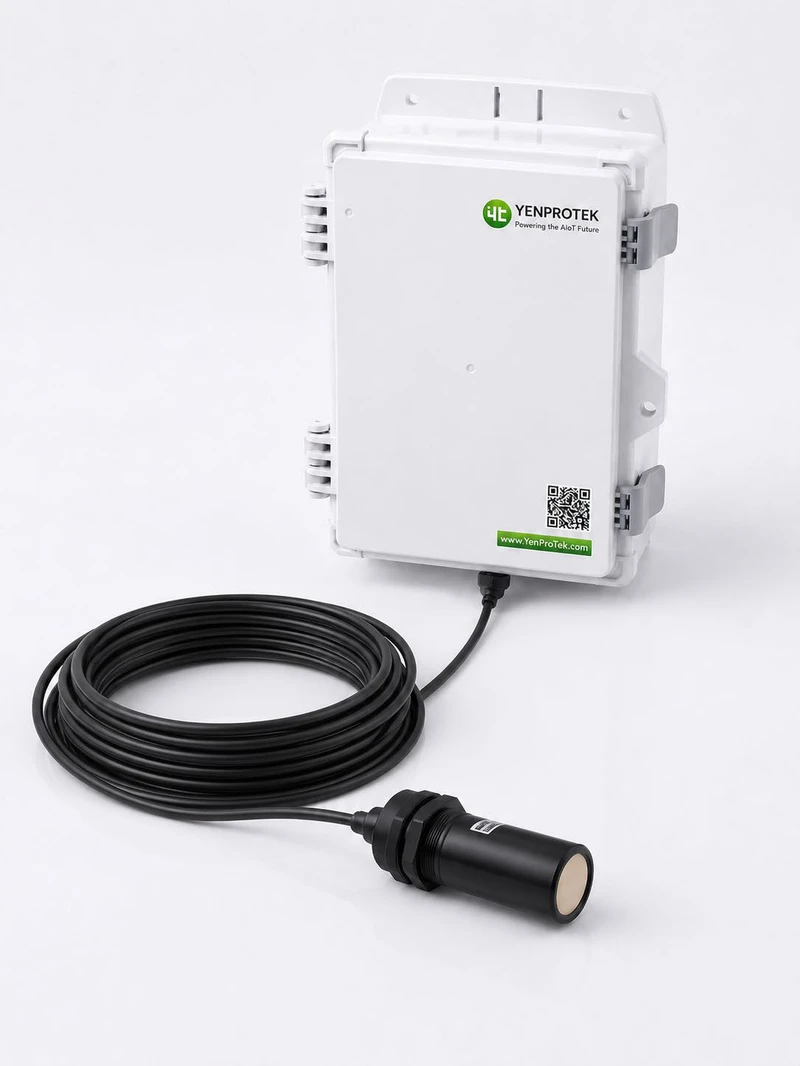
The YenProtek Flood Alert System comes fully integrated with on-site monitoring, data transmission, cloud management, and alert notification. Basic settings can be configured at the factory to match your site — once the equipment arrives, simply mount it in the designated location and connect power to start, with no need to integrate separate devices and platforms yourself.
- Fast installation: Integrated and pre-configured at the factory — just mount the equipment and connect power to activate
- Around-the-clock monitoring: Continuously tracks flooding in alert zones, so you no longer rely on patrols alone to catch anomalies
- Multiple alert channels: Depending on your plan, triggers on-site audible and visual alarms and notifies managers via LINE, SMS, or email
- Backup power design: Keeps monitoring and alarm functions running for the backup period after external power is lost
- Complete historical records: Buffers data during communication outages and automatically resends it once the network recovers, for easy follow-up and auditing
How It Works
Three steps to get up and running after your equipment arrives
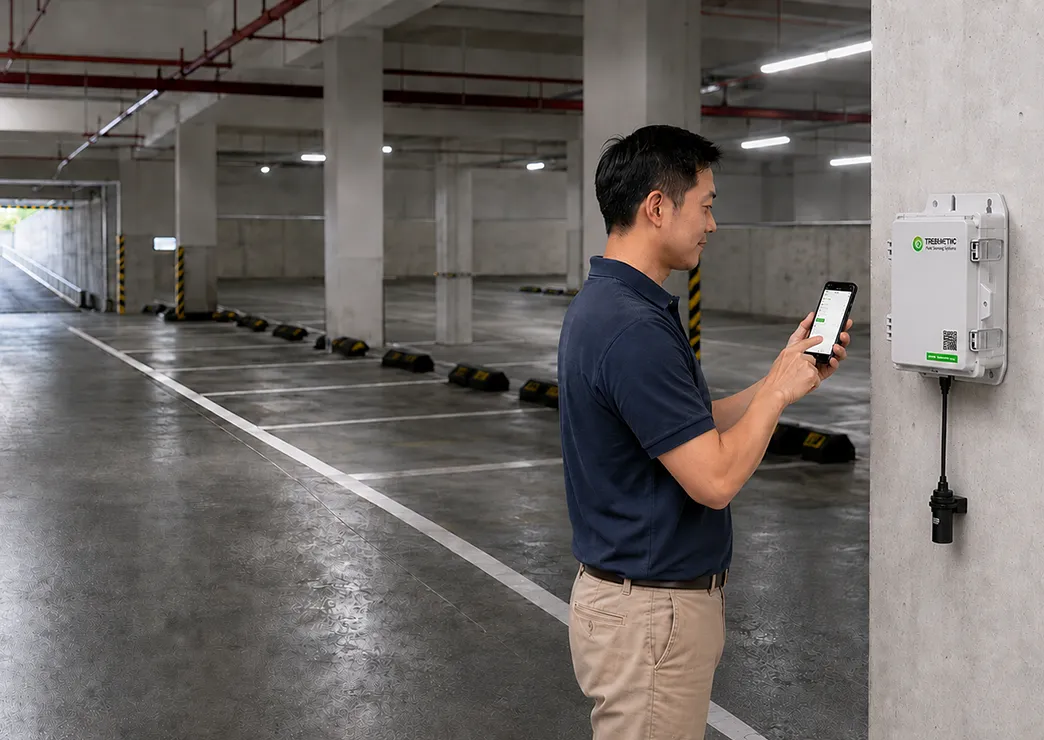
Choose the installation location
Mount the complete system in a basement, underpass, server room, sump pit, or any other area that needs monitoring.
Connect power and communications
Follow the installation guide to connect power and confirm communication status — no complex system integration required.
Activate alert notifications
Confirm the alert conditions and recipients, and the system starts monitoring; when water reaches the alert threshold, it automatically issues on-site and remote alerts.
Benefits
From after-the-fact recovery to proactive early warning
Before | Relying on people to notice — often too late
- Manual patrols mean flooding often goes unnoticed at night and on holidays
- By the time anyone notices, equipment is already underwater — all that is left is salvage
- Staff wear themselves out traveling back and forth just to check whether anything is wrong
- With sites scattered across locations, there is no way to see at once which one needs attention first
After | The system alerts you first, so you can act early
- 24-hour automatic monitoring, with an instant LINE notification at the alert threshold
- Respond on site before equipment is submerged — or set the drainage pump to start automatically
- Monitor water levels at multiple points remotely on a dashboard, greatly reducing routine patrols
- All monitoring stations shown in one view, so you can quickly find the areas to handle first
Applications
Every extra minute of warning means less damage afterward
From public safety and building management to critical equipment and unattended sites, early alerts buy your team the time to respond.
Underpasses and low-lying roads
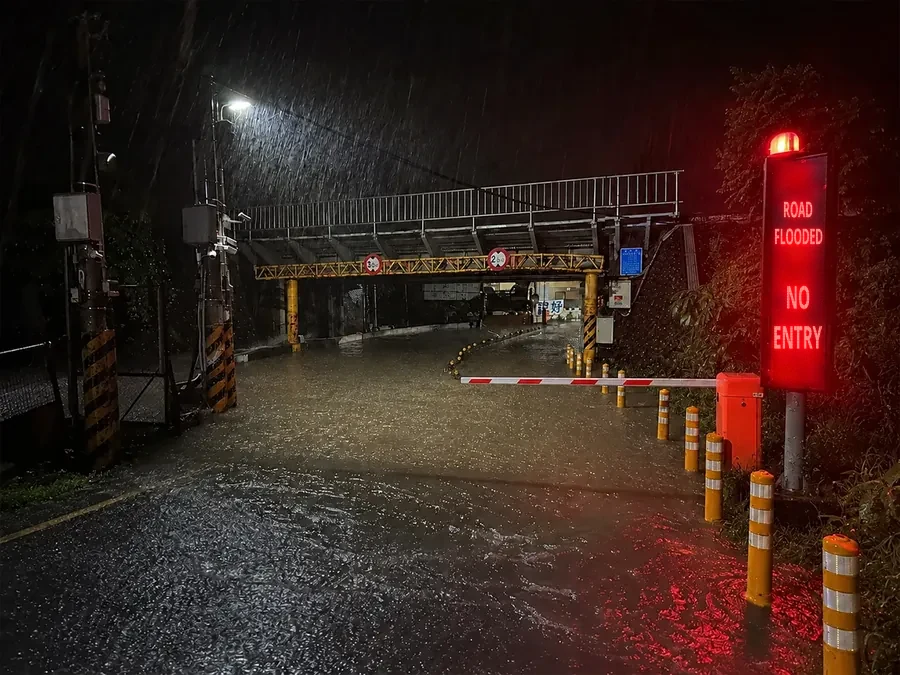
During intense rainstorms, an underpass can flood within minutes. Drivers at the entrance often cannot judge conditions ahead — by the time a vehicle drives in, the water is already too deep to pass safely, risking not only a flooded vehicle but trapped occupants.
When water reaches the alert threshold, the system can (depending on your plan) simultaneously activate the entrance LED information board and audible and visual alarm lights to warn vehicles not to enter, and notify the managing authority to close the underpass and respond — keeping accidents out of the underpass altogether.
Server rooms and electrical rooms
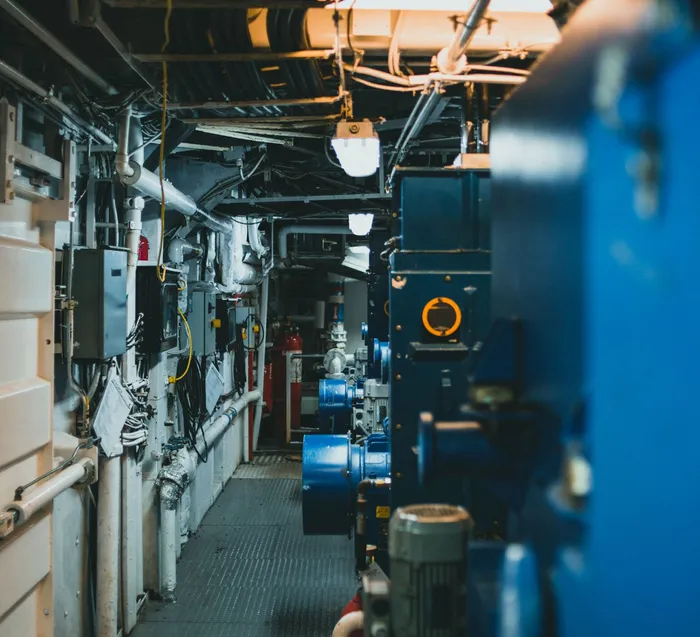
Once switchboards, servers, and communications or electromechanical equipment are submerged, the result can be power outages, system downtime, and even electrical safety hazards. For factories, commercial buildings, and critical server rooms, a single flood often affects far more than the equipment — it disrupts the entire operation.
The system proactively notifies on-duty and management staff when water reaches the alert threshold, so the site can act before flooding spreads — reducing the risk of equipment damage and operational downtime.
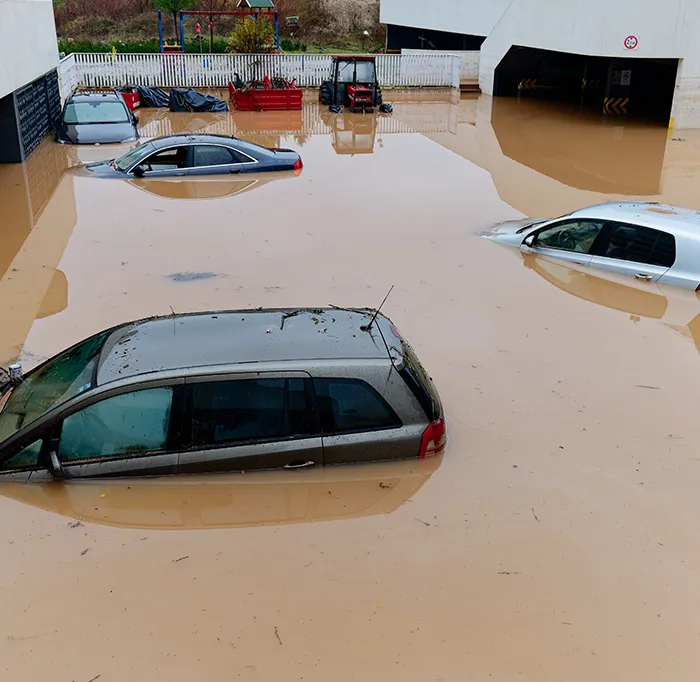
Underground parking garages and elevator pits
Parking garages usually sit at a building's lowest point, where intense rainstorms, overwhelmed drainage, or pipe failures can all cause flooding. If it happens late at night, vehicles, charging equipment, and elevator pits may already be underwater by the time residents or managers notice.
The Flood Alert System continuously tracks water buildup in underground spaces and notifies managers when the alert threshold is reached — helping you start pumping, move vehicles, or close off areas earlier.

Unattended and remote sites
Pumping stations, sump pits, warehouses, greenhouses, and outdoor facilities are typically scattered across locations, with no one necessarily on site at night, on holidays, or during heavy rain. Relying on manual patrols alone, problems are often discovered only after water overflows, equipment is damaged, or someone reports it from the field.
Multiple monitoring stations can be displayed together on a single management platform, with proactive notifications to the right people when water reaches the alert threshold. Where pumping is needed, optional smart control features can be added to suit site conditions, cutting the wait for staff to arrive and operate equipment.
Solution Configuration
Configuration at a Glance
| Installation | System integration and basic settings completed before shipping; mount the equipment per the installation guide and connect power to activate |
|---|---|
| Data Transmission | Wi-Fi, NB-IoT, or 4G, selectable to suit on-site network conditions |
| Power Supply | AC 110V/220V, or solar power depending on site conditions |
| Alert Notifications | LINE, SMS, email, or on-site audible and visual alarms, depending on your plan |
| Dimensions | 277 × 187 × 130 mm |
| Management Platform | Supports the YenProtek cloud management platform, with on-premises deployment available for project requirements |
| Optional Add-ons | LED warning boards, pumping equipment interlock, integration with existing systems, command center dashboard planning |
FAQ
Frequently Asked Questions
Can I install the Flood Alert System myself?
Yes. Before shipping, the system can be preconfigured with basic settings and communication parameters for your site. Once you receive the equipment, simply mount it in the designated location following the installation guide, connect power, and confirm the connection to start using it. There is no need to integrate different devices and platforms yourself.
How will I be notified when the water reaches the alert level?
When flooding reaches the preset alert threshold, the system can trigger on-site audible and visual alarms and, depending on your plan, notify users and managers via LINE, SMS, or email. If the optional smart control function is added, it can also activate pumping equipment, depending on the on-site equipment.
Does it still work during a power outage or unstable communications?
The system features backup power and data buffering. If external power is cut off, monitoring and alarm functions continue for the duration of the backup period; if communication is temporarily interrupted, data is retained and resent once the network is restored. Actual backup and notification capabilities depend on the communication and power options you choose.
Where is the Flood Alert System suitable for installation?
It can be installed in any area at high risk of flooding, including underpasses, basements, underground parking garages, server rooms and electrical rooms, pumping stations, sump pits, aquaculture farms, and greenhouses. Multiple monitoring stations can also be displayed together on a single management platform, making it easy to identify which areas need attention first based on alert levels.
Can the system automatically warn road users when an underpass floods?
Yes. When the system detects that flooding has reached the alert threshold, it can, depending on your plan, activate LED message signs and audible and visual warning lights at both ends of the underpass to stop vehicles from entering, while also sending LINE notifications to the managing agency for follow-up action.