YenProtek Power Outage Alert Module
Power Outage Alert Module
The moment your equipment stops running, we buy you time to respond
Risk
Equipment has already stopped running, yet no one on site knows
Even a brief outage can bring equipment to a halt
Even if power is quickly restored, equipment such as aerators and water pumps may fail to restart on their own — and if this goes unnoticed, losses can still follow.
When the oxygen supply stops, risk rises fast with every passing minute
Once blowers or aerators stop running, dissolved oxygen in the water can keep dropping, threatening the survival of fish and shrimp.
Remote sites make anomalies hard to spot in time
Fish ponds, farmland, and equipment rooms are scattered across locations — staff cannot possibly stay on site around the clock to watch the equipment.
Product Overview
Continuously monitors equipment power and proactively alerts on anomalies
Catch equipment downtime early and buy time for an on-site response
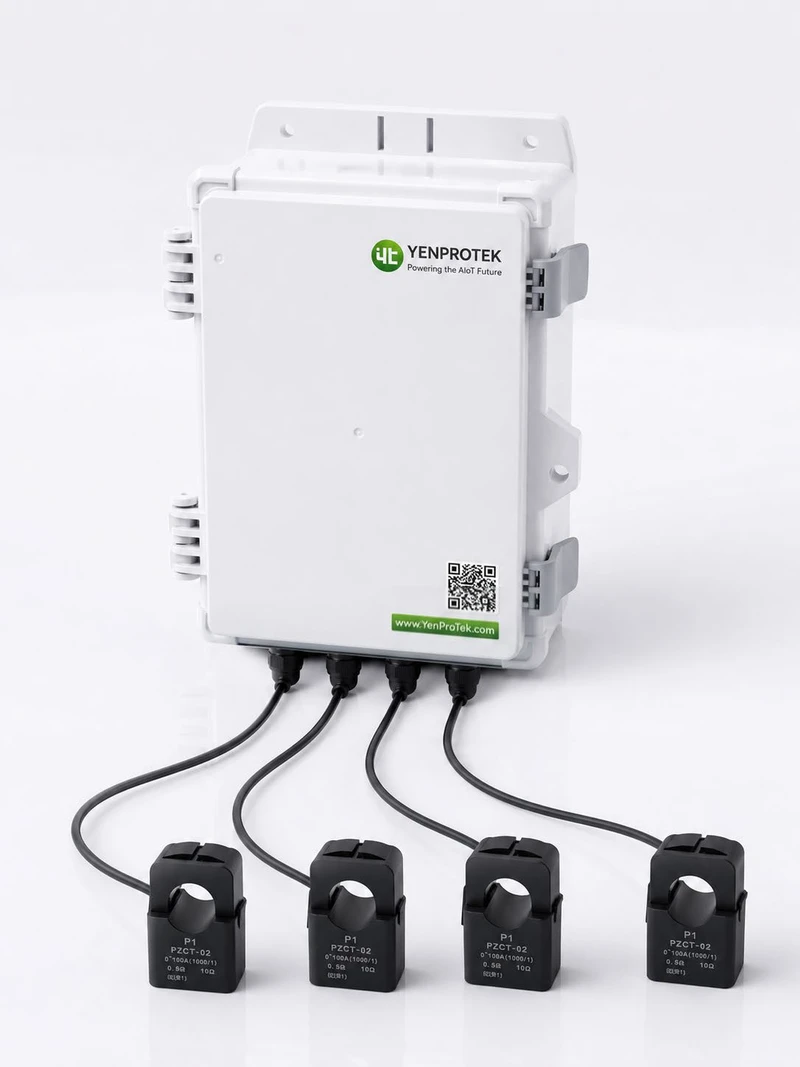
The Power Outage Alert Module can be retrofitted onto the power supply lines of existing equipment to continuously monitor voltage and current. When the system detects a power outage, voltage drop, or current anomaly, it proactively sends an alarm so managers can quickly confirm whether the equipment has stopped running.
- Retrofits onto existing equipment: no need to replace your existing aerators, water pumps, or feeding equipment
- Around-the-clock monitoring: keeps constant track of equipment voltage and current, reducing the reliance on patrol rounds to catch anomalies
- Proactive anomaly notifications: alerts managers early when equipment loses power or shows abnormal power usage
- Keeps sending alarms after a blackout: the NB-IoT version has built-in SIM connectivity and, paired with a backup battery, continues transmitting alarms after on-site power is lost.
- Buffers data during communication outages: automatically retransmits once the network is restored, so equipment operation records are never lost
How It Works
Three steps to knowing your equipment is running properly
1. Install the monitoring module
Mount the voltage and current sensing components on the power supply lines of your existing equipment — no equipment replacement required.
2. Continuously monitor power status
Continuously measures the equipment's voltage and current and transmits the data to the management platform.
3. Get proactive alerts on anomalies
When equipment loses power, voltage falls too low, or current moves outside the configured range, the system proactively notifies managers to check the site.

Benefits
Knowing about an anomaly earlier means you can act in time
Reduce the risk of losing an entire pond
Proactive notifications the moment equipment stops running — no waiting for the next patrol round to discover the problem, giving staff more time to get on site and respond.
Lighten the patrol workload
The system continuously monitors equipment status, reducing the trips staff make to the site just to confirm that equipment is running.
Build a record of equipment operation data
Keeps a history of equipment voltage and current, helping managers spot abnormal power consumption, load changes, or frequent start-stop cycles as a reference for equipment inspection and maintenance.
Applications
Proactive monitoring for any critical equipment that must keep running
Ideal for equipment whose downtime can affect production, farming, or storage conditions — such as aerators, water pumps, automatic feeders, and cold chain equipment.

Aerator oxygen supply

Water pumps

Automatic feeders
- If the on-site backup generator has a remote-start interface, you can also consider pairing the Smart Control Box and related electrical equipment to start backup power during an outage.
- Suitable for critical powered equipment such as aerators, water pumps, automatic feeders, and cold chain equipment, reducing the risk of prolonged oxygen-supply downtime
- Use long-term current and voltage records to spot abnormal loads or changes in power usage, as a reference for preventive maintenance.
Specifications
Product Specifications
| Signal Points | Monitors up to 4 equipment circuits, supporting AC 110V / 220V voltage and current monitoring |
|---|---|
| Data Transmission (choose one) | Wi-Fi: suited to indoor or fixed sites with a stable existing network NB-IoT: suited to remote outdoor sites without a fixed network |
| Power Supply | AC 110V / 220V mains power, or solar power depending on site conditions |
| Dimensions | 277 × 187 × 130 mm |
| System | Works with the YenProtek cloud management platform, or an on-premises system can be built to project requirements; actual features and licensing depend on the chosen plan. |
FAQ
Frequently Asked Questions
If the module itself loses power during an outage, can it still send alarms?
Yes (NB-IoT version). The NB-IoT version has built-in SIM connectivity and a backup battery, so it keeps sending alerts after an on-site power outage. It also has a data buffering mechanism for sites with unstable communications, resending data once the signal is restored.
Does installing the Power Outage Alert Module require modifying existing equipment?
No. The module is connected in parallel to existing equipment (such as aerators, water pumps, and cold chain equipment) to measure current and voltage in real time. Simply add it on, making adoption easy.
What anomalies trigger a notification?
The module sends data at regular intervals and immediately triggers a phone notification when it detects a power outage, voltage sag, or current anomaly, so you don't miss the critical window for corrective action. Its stored voltage and current history can also serve as a reference for equipment inspection and maintenance.
Can it automatically start a generator during a power outage?
If the on-site backup generator has a remote-start interface, pairing it with the YenProtek Smart Control Box and related electrical equipment can be evaluated separately, so the generator starts during a power outage and the oxygen supply stays uninterrupted.
How do I choose between the Wi-Fi and NB-IoT versions?
The Wi-Fi version suits indoor or fixed sites that already have a stable network. The NB-IoT version suits remote outdoor sites without a fixed network, and has built-in SIM connectivity and a backup battery, so it can still send alerts after a power outage.