Introduction: Now That Taiwan Has Regained ASF-Free Status, Biosafety Cannot Be Relaxed
After the outbreak of African Swine Fever in China in 2018, many Asian countries were subsequently affected, leading the industry to face unprecedented impacts. Taiwan successfully blocked the epidemic for many years. In October 2025, the first confirmed case appeared on a pig farm in Wuqi, Taichung; disease prevention agencies contained the outbreak to that single farm and completed cleaning and disinfection within about a month. On 6 April 2026, Taiwan returned to self-declared ASF-free status. This experience also reminds us that the virus could break through again at any time, and maintaining ASF-free status requires every pig farm to put solid biosafety in place, even more than before.
As a practitioner who has long paid attention to smart livestock trends and overseas epidemics, I have seen two completely different outcomes through exchanges with farm owners, veterinarians, and researchers in multiple countries in the past: pig farms that build more complete biosafety habits can better maintain stability under epidemic pressure, while environments with lax disease prevention concepts accumulate risks unknowingly.
This article aims to help everyone truly understand "What is African Swine Fever", as well as what should be done first and what effective methods to adopt when facing the epidemic, in a clear and easy-to-understand way.
Understanding African Swine Fever: Why Does It Terrify the Global Pig Farming Industry?
Virus Characteristics and the Danger of African Swine Fever
African Swine Fever (ASF) is not an ordinary pig disease; it is caused by an extremely tough and resilient DNA virus. How difficult is this virus to deal with? Research shows that the virus can survive in frozen pork for several years, in chilled meat products for over 100 days, and even in pig manure within the pens for up to 11 days. And once a pig is infected, the mortality rate can be as high as 90-100%. This means that if the virus slips into a pig farm, the result is usually the loss of the entire farm.
What is even more alarming is that the African Swine Fever virus tolerates a very wide pH range (and tolerates it even better when protected by organic matter such as serum), possessing properties that are acid-resistant, alkali-resistant, and low-temperature resistant. In other words, no matter how the weather changes, whether there are errors in disinfection, environmental humidity, or seasonal transitions, the virus can still maintain its activity. Its only obvious weakness is a fear of high temperatures, which requires continuous heating at 56°C for about 70 minutes, or at 60°C for 20 minutes, to be effectively inactivated.
For this reason, the global pig farming industry is extremely alert and cautious about African Swine Fever because there is no treatment and vaccines are not yet mature: although Vietnam has approved domestically produced live attenuated vaccines, international concerns about their safety remain, and Taiwan has not approved their use. In Taiwan, the only thing that can be done is still "not letting it in."
Global Epidemic Situation of African Swine Fever
African Swine Fever was first discovered in Kenya in 1921, but it truly gained global attention in 2007 after spreading from Africa to Georgia and expanding rapidly. After entering China in August 2018, the epidemic spread like wildfire, expanding to Vietnam, the Philippines, South Korea, Myanmar, and other Asian countries within a single year. This resulted in hundreds of millions of pigs being culled, and the industrial supply chain suffered a severe blow.
Taiwan has successfully blocked the invasion of African Swine Fever for many years, relying on strict border quarantine, food waste management, and the joint efforts of pig farmers, producers, and disease prevention agencies. In October 2025, Taiwan's first confirmed African Swine Fever (ASF) case was detected on a pig farm in Wuqi, Taichung. Disease prevention agencies culled the pigs on the farm, designated a control zone, and imposed a ban on pig transport and slaughter across Taiwan, containing the outbreak to that single farm and completing cleaning and disinfection within about a month. After surveillance confirmed there was no virus activity, Taiwan returned to self-declared ASF-free status on 6 April 2026.
Regaining ASF-free status does not mean the risk has disappeared. The virus can still re-enter through illegally carried meat products, food waste, people, and vehicles. The focus now, beyond guarding the border, is implementing biosafety on every pig farm, detecting anomalies early, and preventing spread, so that Taiwan can maintain its hard-won ASF-free status.
Differences from Other Pig Diseases
Many people might ask, "How is African Swine Fever different from classical swine fever and foot-and-mouth disease?" Let me explain in the simplest terms. Classical swine fever and foot-and-mouth disease have preventive vaccines, just like how we get flu shots. But vaccines for African Swine Fever are only just getting started: Vietnam has approved two domestically produced live attenuated vaccines (NAVET-ASFVAC and AVAC ASF LIVE) since 2022 and opened them for nationwide use in July 2023, but international concerns about their safety remain, and Taiwan has not approved their use. What does this mean? It means that in Taiwan we have no vaccine to rely on. We can only use one method: "preventing the virus from entering the farm."
Another major difference is that the foot-and-mouth disease virus has a relatively shorter survival time in the environment and is relatively easier to control, whereas the African Swine Fever virus is like an immortal cockroach, capable of surviving in various environments for a long time. This is why when an outbreak occurs, it is usually necessary to cull all the pigs on the farm and thoroughly disinfect the area for several months. Next, we will discuss the question everyone is most concerned about: Can this disease infect humans?
Can African Swine Fever Infect Humans? A Complete Answer on Food Safety
Scientific Evidence on Zoonotic Transmission
Let me summarise this upfront: African Swine Fever "will not" infect humans. This is a fact confirmed by countless scientific studies worldwide. The World Health Organization (WHO), the World Organisation for Animal Health (WOAH), and the Food and Agriculture Organization of the United Nations (FAO) have all repeatedly emphasised that the African Swine Fever virus only infects the suidae family, including domestic pigs, wild boars, and African warthogs, but it will not infect humans or other animal species.
Is Consuming Pork Products Safe?
"Since it doesn't infect humans, is it safe to eat pork?" This is the question I receive most often. The answer is: As long as the pork has properly passed government quarantine inspections and is fully cooked, it is completely safe to consume. Although the African Swine Fever virus is highly resistant to low temperatures, it fears heat. As long as it goes through normal cooking processes (70°C and above), the virus will be completely killed.
What needs to be specially emphasised here is: What is unsafe is not "eating" pork, but "carrying" pork products of unknown origin. Many people travel abroad and want to bring back sausages or dried meat slices, and this is where the real risk lies. If the brought-back meat products come from epidemic areas, there may be live viruses hidden inside. When these come into contact with pigs or are used as food waste (swill) to feed pigs, it can cause an outbreak. This is why travellers who carry pork products from countries or regions that have had African Swine Fever in the past three years without declaring them are fined NT$200,000 for the first offence and NT$1,000,000 for a repeat offence, because a single moment of negligence could destroy an entire industry.
Key Prevention Points for Pig Farm Operators
Although African Swine Fever does not infect humans, that doesn't mean we can lower our guard. Personnel, clothing, shoes, and vehicles can all serve as mediums for transmission, acting like couriers bringing the virus from one farm to another.
I know a pig farmer, Ms. Lin from Tainan. She has an ironclad rule on her farm: All external personnel must shower outside the farm and change into clean clothes and shoes provided by the farm before entering. Even mobile phones must be disinfected with alcohol. Her car, both before entering and leaving the farm, must go through detailed spraying with chlorine-based disinfectants. Although it seems cumbersome, these measures have kept her pig farm safe amidst multiple epidemic alerts nearby. This is the practical application of biosafety; it is not to protect humans, but to protect our pigs. Now that you understand the transmission characteristics of African Swine Fever, we will next delve into what symptoms infected pigs will display.
Common Symptoms of ASF-Infected Pigs: The Key to Early Detection
Clinical Characteristics of Acute Infection
When a pig is infected with African Swine Fever, the most typical acute symptoms will erupt suddenly after an incubation period of 4-19 days. You will notice the pig suddenly developing a high fever, with body temperatures soaring to 40-42°C, which is much higher than a pig's normal body temperature (38-39°C). Then, the pigs that were previously active and scrambling for food will become lethargic and completely lose their appetite; they won't even touch their favourite foods.
A more obvious characteristic is the appearance of purplish-red bleeding spots on the skin, especially at the extremities such as the ears, abdomen, limbs, and tail, looking as if they were splashed with purple ink. Some pigs may experience difficulty breathing, coughing, vomiting, and bloody diarrhoea. According to data from the Animal and Plant Health Inspection Agency (APHIA), Ministry of Agriculture, the acute course lasts about 7 days; according to the World Organisation for Animal Health (WOAH), death occurs within 6 to 13 days, and the mortality rate is nearly 100%.
Practical sharing tip: The morning feeding time is the best time to observe the pigs' health. If you find any pig hiding in the corner refusing to eat, with purple ears, or walking unsteadily, take its temperature immediately. If it exceeds 40°C, you must be highly vigilant. Experienced pig farmers know very well that a pig's appetite is the first indicator of its health.
The Concealment of Subacute and Chronic Infections
This is a more difficult situation to handle. Not all infected pigs will show acute symptoms. Some pigs may have subacute or chronic infections, where the symptoms are not obvious; they might only have intermittent fevers, slow growth, and weight loss, which look like ordinary respiratory diseases or malnutrition.
These "invisible carrier pigs" are the biggest challenge in epidemic prevention because they can move around the pig farm for weeks or months, continuously shedding the virus to infect other healthy pigs without the farmer's knowledge. Some infected pigs (more often with lower-virulence virus strains) show this subacute or chronic infection, with symptoms that are not obvious and can last for months. This reminds us: Any abnormal deaths or illnesses should be actively submitted for inspection. Don't just guess and diagnose it yourself. These pathological changes can only be used for preliminary judgement. Confirmation still relies on laboratory PCR testing. Do not make judgements on your own just because you see similar symptoms. You must notify the animal disease prevention agency immediately for experts to collect samples for inspection. Understanding the symptoms is just the first step; what's more important is knowing how the virus spreads to implement effective blocking.
Transmission Routes of African Swine Fever: Prevention Strategies to Break the Infection Cycle
Transmission by Direct Contact
The most direct method of infection is contact between sick pigs and healthy pigs. The blood, saliva, nasal secretions, faeces, urine, and semen of sick pigs all contain massive amounts of the virus. If healthy pigs simply touch these bodily fluids or inhale airborne droplets containing the virus, they can get infected. The virus has an extremely strong transmission capability. Studies show that only a very small amount of the virus can cause infection through drinking water, while a higher dose is needed through feed, but both can spread the disease.
This is why zoning management and quarantine measures are so important in pig farms. If you want to introduce new pigs, you must strictly set up a separate quarantine pen to observe the new pigs for a period of time and confirm they are healthy before mixing them. At the same time, pigs of different ages and from different sources should be raised separately to avoid the chance of cross-infection.
High Risk of Feeding Pigs with Food Waste (Swill)
Many traditional pig farmers in Taiwan are accustomed to using food waste to feed pigs, which was a very cost-effective method in the past. But under the threat of African Swine Fever, using food waste has become the highest-risk transmission route. Why? Because the food waste might contain imported pork products. If this meat comes from an epidemic area, the virus in the meat will enter the pigs' bodies through the food waste.
In epidemic investigations across countries, improperly treated food waste has consistently been one of the main routes of African Swine Fever transmission. After the October 2025 case in Taichung, the government decided to phase out feeding pigs with food waste: household food waste may no longer enter pig farms under any circumstances; 2026 is the final transition period, in which only farms with 200 or more pigs that are approved by the environmental authority for reuse, have installed a system for monitoring steaming temperature with video surveillance, and use food waste trucks fitted with GPS may conditionally use commercial food waste, and it must be steamed continuously at 90°C for at least 1 hour; from 1 January 2027, feeding pigs with food waste will be completely prohibited. We recommend that pig farmers switch to formulated feed as early as possible.
Transmission via Fomites and Environmental Contamination
This is the most easily overlooked transmission route. The virus can attach to the surface of various objects and enter the pig farm through the shoes, clothing, tools, feed bags, and vehicle tyres of personnel. Even insects, such as flies and mosquitoes, can act as vectors carrying the virus.
International epidemic investigations have also found that vehicles, equipment, and personnel that have not been disinfected are among the main routes by which African Swine Fever spreads between pig farms. This reminds us that the disinfection of vehicles entering and leaving the pig farm must absolutely not be neglected. I recommend that every farm set up a vehicle disinfection area, using a high-pressure water gun combined with an effective disinfectant (like 2% sodium hydroxide or sodium hypochlorite) to thoroughly wash the undercarriage and tyres.
Having understood the transmission routes, next, I will share practical disease prevention measures, which is the most critical part of protecting your pig farm.
Pig Farm Disease Prevention Measures: Practical SOPs from Smallholders to Large Enterprises
Strengthening Biosafety in the Farm Area
Biosafety sounds like an academic term, but it really just means all the measures taken to "block the virus at the door." First, your pig farm should have a clear division between the "clean area" and the "contaminated area," with a control point in the middle. All personnel entering the contaminated area (that is, the pig pen area) must change into dedicated farm work clothes and shoes at the control point and disinfect their hands.
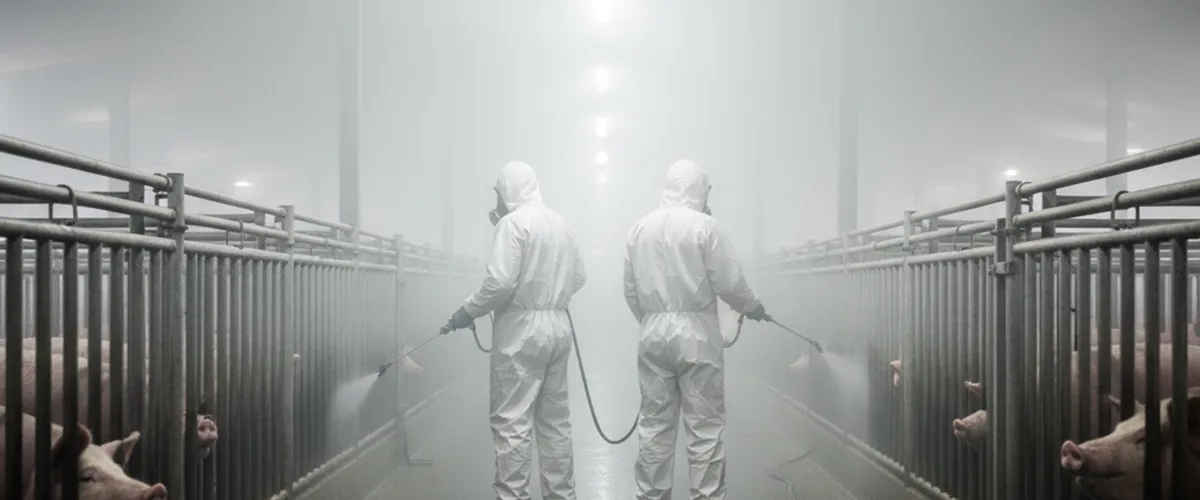
Disinfection pools are essential facilities. It is recommended to set up a vehicle disinfection pool at the farm entrance, using a sodium hydroxide solution or chlorine-based disinfectant at the concentration recommended by APHIA, deep enough to submerge the tyre treads so that the tyres can be fully immersed. Personnel entrances and exits must have footbath disinfection basins, and the disinfectant in the footbath should be replaced daily to maintain effective concentration.
A higher standard approach is the use of the "Danish Shower": Personnel must shower outside the farm before entering and change into farm clothing, and then shower and change back into their own clothing before leaving. Although cumbersome, this is standard equipment for large pig farms in Europe and America, which can maximally reduce the risk of personnel bringing in the virus.
Practical suggestion: If the farm has an office or rest room, it should be set up in the clean area, avoiding mixing with the pig pens. Many pig farmers set up their offices right next to the pens for convenience, which increases the chance of cross-contamination.
Daily Health Monitoring and Reporting Mechanisms
Early detection and rapid reporting are golden rules in preventing the epidemic from expanding. I recommend that every farm maintain a "Daily Pig Health Inspection Log," recording the following data every day: feed intake, water intake, the presence of pigs with abnormal symptoms, and the number of deaths in each pen, etc. Report immediately if anomalies are found.
Under what circumstances must you report? If your pig farm experiences any of the following situations, please immediately notify your local animal disease control authority (the county/city animal disease control centre or animal protection office). You can also call the APHIA toll-free hotline at 0800-761-590 for advice:
- Pigs die of unknown causes
- Multiple pigs exhibit high fever and severe loss of appetite simultaneously.
- Pigs show suspected symptoms like purple spots on the skin and difficulty breathing.
- Any unexplained abnormal deaths.
Many people worry that once they report, their pigs will be culled, so they choose to cover it up. This is the most dangerous approach. In fact, early reporting combined with inspection will allow you to receive government compensation if confirmed. But if you conceal the epidemic and cause it to spread, not only will you not receive compensation, but you may also face criminal penalties and massive fines. Furthermore, covering up the epidemic ultimately harms the entire industry, including yourself.
However, comprehensive disease prevention does not mean needing "more people or harder work." In recent years, more and more pig farms have begun to adopt IoT smart monitoring systems, entrusting tasks that previously required extensive experience and labour to the system to help manage.
The three monitoring applications we are asked about most and use most frequently on-site:
- Pig Pen Environmental Monitoring: Automatically detecting temperature, humidity, ammonia gas, and ventilation equipment.
→ The system gives early warnings when the environment is abnormal, without waiting until the pigs develop problems. - AI Vision Behaviour Recognition: Detecting behaviours of "not eating, not moving, and abnormal clustering."
→ This is one of the earliest warning signs of disease, detected faster than the human eye. - Individual Body Temperature / Activity Monitoring (Smart ear tags can be configured for pigs based on needs).
→ Viewing health status with data instead of relying solely on memory.
These tools do not replace farm patrols but make patrols more targeted and labour-saving.
Instead of needing someone to watch the pigs all the time, it becomes "the system will alert you on which pen you should check."
YenProtek can provide modular monitoring solutions that can be introduced in phases according to your pen structure, ventilation methods, and personnel working habits. It does not require you to introduce a massive system all at once, but rather fills in the parts you are most concerned about first, ensuring disease prevention is stable and sustainable.
Environment sensing and entry-control records can also be handed to YenProtek's Pig Herd Management System: it links breeding, medication, environment and biosecurity records by ear tag, so inspection reminders and every record stay in one system.
Next, we will discuss: If suspected cases are actually found, how should they be handled?
What to Do When Suspected Cases are Found? Reporting Procedures and Government Compensation
Suspected Disease Reporting Procedures
Suppose today you find several pigs in a pen suddenly developing a high fever, not eating, and having purple spots on their skin. What should you do? In the very first moment, please immediately isolate these suspected pigs to avoid contact with other pigs. Then, immediately notify the local animal disease control authority (the county/city animal disease control centre or animal protection office). You can also call the Ministry of Agriculture's APHIA toll-free hotline at 0800-761-590 for advice.
After reporting, disease prevention personnel will arrive on-site in the shortest possible time to collect samples for testing. They will collect blood, spleen, and lymph node samples from the sick or dead pigs to send to the laboratory for PCR nucleic acid testing. Test results are usually available within a few days. While waiting for the results, your pig farm will be under temporary movement restrictions; pigs and related items are forbidden from entering or leaving the farm.
What you need to do during this time is: remain calm, cooperate with disease prevention personnel, maintain normal pen management (but avoid unnecessary movement), and document all personnel and items that have been in contact with the suspected pigs. Remember, never dispose of dead pigs yourself, and absolutely do not discard or sell them; these actions are all illegal.
Culling and Site Cleaning After Confirmation
If, unfortunately, it is confirmed as African Swine Fever, a series of epidemic prevention measures will immediately commence. First, all pigs on the confirmed farm will be culled to prevent the virus from spreading further.
A 3-kilometre radius around the confirmed farm will be designated as a control zone; pig movements are prohibited within this area, and all pig farms must heighten surveillance. These measures usually last for several months until the epidemic is confirmed to be under control.
Site cleaning will be extremely strict and thorough, including: all pens, equipment, and vehicles must be washed with high pressure and heat, then repeatedly disinfected with effective disinfectants. Movable equipment may need to be soaked in disinfectant, while items that cannot be disinfected must be destroyed. Floors, walls, and ceilings must be thoroughly cleaned and disinfected; even drainage pipes cannot be neglected.
The entire site cleaning process may take several weeks to months, followed by an "empty period" to confirm no virus remains in the environment before restocking can be considered. Before restocking, disease prevention agencies will test environmental samples again and will only approve when safety is confirmed.
Compensation and Assistance for Livestock Farmers
This is the question everyone is most concerned about: If the pig farm is culled, who will compensate for the losses? The government has a complete compensation mechanism. According to the "Statute for Prevention and Control of Infectious Animal Diseases," for pigs culled out of epidemic prevention necessity, the government provides compensation based on appraised value: pigs culled after a confirmed diagnosis are compensated up to three-fifths of the appraised value; for a disease that is newly occurring in Taiwan or has not occurred for two years or more, the first person to proactively report a case can be compensated for the full appraised value. The appraised value is determined by an appraisal committee formed by the county or city government, which considers factors such as breed, age, and weight of the pigs to ensure reasonable compensation.
Please follow the notice from your local animal disease control authority for the application schedule for compensation. Although compensation cannot cover all losses (as there are still intangible losses such as facilities, equipment, feed, and time), it can at least partially alleviate the economic impact.
In addition, the government has other assistance measures:
- Low-interest loans: Assisting pig farmers with capital needs during the restocking period.
- Restocking guidance: Providing technical consultation and disease prevention guidance to help farmers start over.
- Relief subsidies: Targeted at pig farmers affected by the epidemic to provide short-term assistance.
Crucial reminder: Only pig farmers who "proactively report" can receive these compensations and assistance. If you fail to report as required and the case is discovered passively, culled pigs will not be compensated, and you may also be fined NT$50,000 to NT$1,000,000; smuggling meat products from epidemic areas may be punished by imprisonment of up to 7 years. Therefore, honest reporting is the best way to protect yourself.
FAQ: The Questions Pig Farmers are Most Concerned About
What is the progress on vaccine development? Can vaccines be used in Taiwan?
This is the question I'm asked most often. Everyone hopes for a vaccine to protect the pigs. Currently, several research teams globally are developing African Swine Fever vaccines, including in China, Russia, the US, Spain, Vietnam, and other countries. Vietnam has approved two domestically produced live attenuated vaccines (NAVET-ASFVAC and AVAC ASF LIVE) since 2022 and opened them for nationwide use in July 2023, making them the world's earliest African Swine Fever vaccines in commercial use. However, long-term field safety and efficacy data for these two vaccines have not been made public, there are international concerns that the virus could revert to virulence, and the World Organisation for Animal Health (WOAH) has also reminded countries to use only vaccines whose safety and efficacy have been verified.
Taiwan has not currently approved the use of any African Swine Fever vaccine. In Taiwan, disease prevention still relies solely on solid biosafety measures.
A neighbouring pig farm has confirmed cases. What should my farm do?
If you hear that a nearby pig farm has confirmed African Swine Fever, do not panic, but do not ignore it either. First, immediately elevate the biosafety measures on your farm:
- Reduce unnecessary personnel entering and exiting; decline visitors.
- Increase disinfection frequency; disinfect vehicles, equipment, and work areas daily.
- Strengthen pig health monitoring; patrol the farm at least twice a day, recording feed intake and anomalies.
- Verify the sources of feed, medicines, and other resources; avoid suppliers related to the epidemic area.
- Do not keep other animals on the farm, including dogs and cats (they could be mechanical vectors).
If your pig farm is within the control or protection zone, you must cooperate with the government's movement restriction measures. Do not move pigs arbitrarily. Disease prevention personnel may visit periodically to collect samples for testing; please fully cooperate.
Most importantly, maintain contact with the local disease prevention agency and keep track of epidemic updates so you can adjust your prevention strategies promptly. Some pig farmers form joint disease prevention alliances, sharing information and prevention resources, which is an excellent method. Remember, disease prevention is not a solo fight but a shared responsibility of the entire area.
Are folk remedies or online disinfection methods reliable?
During epidemic outbreaks, the internet is often flooded with "miracle folk remedies," such as "adding garlic to feed can prevent African Swine Fever," "using vinegar for disinfection is safer and more effective than chemicals," "giving pigs traditional Chinese medicine can boost immunity to resist the virus," etc. I must honestly tell you: These are all scientifically unfounded claims; absolutely do not believe them.
The resilience of the African Swine Fever virus requires scientifically proven effective disinfectants to kill it. According to APHIA recommendations, the following disinfectants can be used for African Swine Fever prevention:
- Sodium hypochlorite (bleach): 2% solution, for environmental disinfection
- Sodium hydroxide (caustic soda): 2% solution, for carcasses and manure
- Sodium carbonate: 40% dissolved in 95°C hot water, for floors and walls
- Oxidising disinfectants: for vehicles and premises
These disinfectants must be used at appropriate temperatures (ideally above 20°C) and in environments with low organic matter to be most effective. If surfaces have faeces, soil, or other organic matter, disinfection efficacy will be reduced, so thorough cleaning must be done before disinfecting.
Do small-scale pig farms also need to strictly follow disease prevention measures?
"I only raise a few dozen pigs. Do I really need to be as strict as large farms?" If you have this mindset, I must tell you seriously: The virus won't spare you just because your farm is small. In fact, small-scale pig farms are even more vulnerable because once infected, the entire farm might be lost. Moreover, smallholders usually lack the capital and resources of large farms to handle crises.
International outbreaks show that small pig farms are also a high-risk group. This is because small farms usually have weaker biosafety measures, may lack complete disinfection facilities, have lax personnel control, or use food waste (swill) for feeding, all of which increase risk.
But I also understand that smallholders have limited resources, and it's impossible to build corporate-level pig farm facilities. So I recommend starting with the most basic and economical measures:
Low-cost, high-return disease prevention measures:
Access Control: Set clear boundaries at the pen entrance; outsiders are prohibited. Family members entering and exiting must also change shoes and clothes.
Simple Disinfection Pool: Set up a disinfection pool at the entrance filled with diluted bleach, and step in it every time you enter or exit.
Dedicated Work Clothes: Prepare work clothes and boots specifically for wearing only inside the pig pens; do not wear them outside.
Feed management: Switch to formulated feed. Under current rules, farms with fewer than 200 pigs are already prohibited from using food waste, and from 2027 it will be completely prohibited on all farms; transporting and feeding food waste in violation of the rules may result in a fine of NT$400,000 for a first offence
Daily Observation: Develop a habit of closely observing the pigs every day, recording feed intake and abnormal symptoms.
Reduce Contact: Do not visit other pig farms, and do not let other farmers visit yours.
How can foreign meat products be identified as coming from epidemic areas?
When travelling abroad or shopping online, how can you confirm if pork products come from an African Swine Fever epidemic area? Actually, the simplest principle is: Do not buy and do not carry any pork products into Taiwan unless they are items that have properly passed import quarantine inspections.
If you absolutely must carry them, pay attention to the following points:
- Check the origin label on the packaging; avoid countries in epidemic areas like China, Vietnam, the Philippines, South Korea, and Thailand.
- Confirm the presence of quarantine certification marks, such as the US USDA mark or the EU quarantine stamp, etc.
- Vacuum-packed cooked pork products might seem safe, but if they come from epidemic areas, the virus could still be present.
- Processed products like dried meat slices, sausages, and pork floss are considered high-risk because the manufacturing process may not completely kill the virus.
However, it's still recommended that instead of taking risks, buying locally produced pork products in Taiwan is better. Taiwan's pork is currently of excellent quality and value. There is no reason to risk a 200,000 NTD fine or even risk causing an epidemic just to bring in foreign meat products.
If you see someone carrying pork products at the airport, please proactively notify quarantine personnel. This is not being nosy, but protecting our entire industry. The negligence of one person could destroy the livelihoods of tens of thousands of pig farmers, and the price is too high.
Conclusion: Disease Prevention is a Protracted War, But We Are Not Alone
Having written this much, I want to say to all pig farmer friends: Although Taiwan has regained ASF-free status, it does not mean we can relax. Completing cleaning and disinfection and returning to ASF-free status in such a short time this time depended on early reporting, containment, and the cooperation of every pig farm; maintaining ASF-free status will likewise depend on everyone. What determines whether a pig farm can stand firm is not "luck," but the meticulousness and thoroughness of biosafety management, and the stability of building a monitoring system.
Disease prevention is a protracted war. It's not a one-time disinfection, but everyday farm patrols, controlling every entry point, observing during every feeding, and keeping records of every anomaly. These seemingly tedious details, when accumulated, form the firewall that protects the entire pig farm.
Remember a few of the most important principles:
- African Swine Fever will not infect humans, but it causes nearly a 100% mortality rate in pigs.
- No cure; Vietnam has approved vaccines, but international safety concerns remain and Taiwan has not approved their use, so disease prevention relies solely on biosafety and early detection
- Biosafety is not an abstract concept; it is entries, clothing, vehicles, tools, and movement routes—every detail must be ready.
- Early reporting can reduce losses better than concealment.
- Small farms can also achieve excellent disease prevention; the key is building sustainable processes, not the size of the farm.
As long as we do not let our guard down, maintain alertness, continuously strengthen farm SOPs, and use smart monitoring systems to assist with farm patrols, Taiwan can maintain its ASF-free status, and its pig farming industry can continue growing steadily.
References
- Taiwan Ministry of Agriculture (MOA) announcement: Transporting Food Waste to Pig Farms Prohibited from 1 January 2026 (2025-12-26)
- Taiwan's Ministry of Agriculture: Policy of a Complete Ban on Feeding Pigs Food Waste from 1 January 2027 Remains Unchanged (2026-07-16)
- MOA: Taiwan Returns to Self-Declared ASF-Free Status (2026-04-06)
- Laws & Regulations Database of the Republic of China (Taiwan): Statute for Prevention and Control of Infectious Animal Diseases
- Animal and Plant Health Inspection Agency (APHIA), MOA: Introduction to African Swine Fever
- APHIA, MOA: Disinfection Methods and Selectable Types of Disinfectants for Preventing African Swine Fever
- WOAH:African Swine Fever technical disease card
- Niederwerder et al. (2019), Emerging Infectious Diseases 25(5)