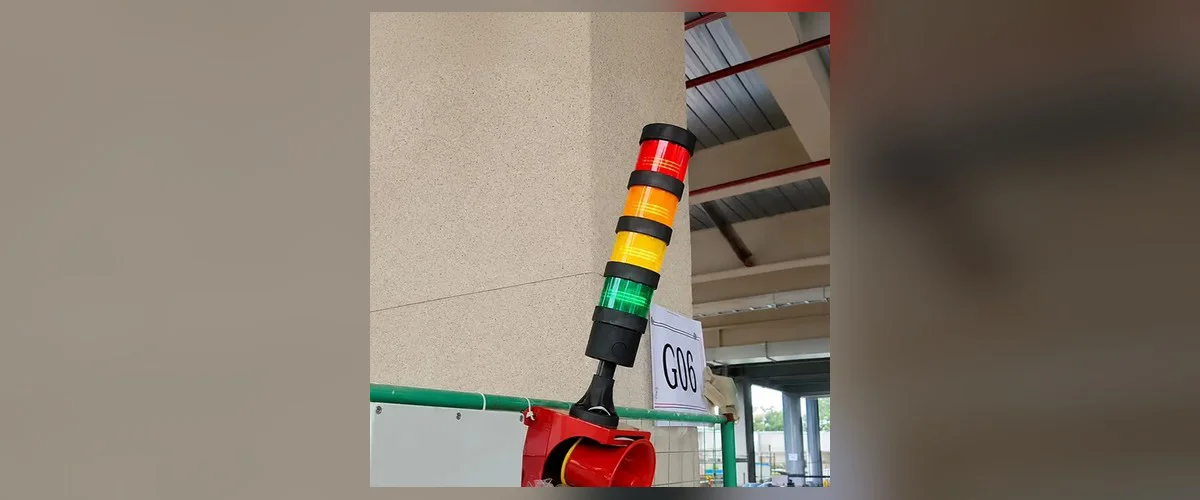
The heat hazard subsidy is the Ministry of Labor OSHA's "Subsidy for Improving Safety and Health Facilities and Equipment": SMEs and self-employed persons can apply for shade structures, cooling equipment and heat protection gear such as ice vests. From 2026 it also covers "heat hazard technology disaster prevention equipment", such as heat hazard detection and alert devices. The 2026 application period was 6 May to 31 October.
This article explains what is subsidised, who can apply, how much is covered, how to apply, and how to prepare early for next year now that 2026 has closed. Everything follows Ministry of Labor announcements, and anything we could not find in the original source is stated plainly.
What Does the Heat Hazard Subsidy Cover?
In May 2026 the Ministry of Labor announced "Preventing Outdoor High-Temperature Work Hazards: OSHA Opens Applications for 2026 Protective Facility Subsidies", amending the Operating Guidelines for Subsidies for Improving Safety and Health Facilities and Equipment. The subsidised items fall into three categories:
| Category | Examples | Notes |
|---|---|---|
| Shade and cooling equipment | Shade structures, water mist, misting fans, water-cooled fans | Previously existing item |
| Heat hazard technology disaster prevention equipment | Heat hazard detection and alert devices | New in 2026 |
| Personal protective equipment | Fan-cooled clothing, ice vests, water-circulating cooling vests | Heat protection gear |
"Heat hazard detection and alert devices" are listed explicitly in the subsidy for the first time. This means that equipment that measures heat on site and gives a warning when limits are exceeded is now treated by the authority as part of heat hazard prevention, and not only shade canopies and fans.
Who Can Apply?
- SMEs: the Ministry of Labor sets tiers by number of employees, and the announcement mentions two: 10 or fewer, and 11 to 50.
- Self-employed persons: same tier as SMEs with 10 or fewer employees.
The media summaries mainly describe people who work outdoors for long periods, such as in construction, road repair, power facility maintenance and farming. Large enterprises are outside this subsidy, but still bear the legal responsibility for heat hazard prevention (see Heat Hazard Regulations and Penalties).
How Much Is Covered?
The Ministry of Labor press release states:
| Size | Subsidy rate | Cap |
|---|---|---|
| SMEs with 10 or fewer employees and self-employed persons | Up to 80% | NT$30,000 |
| Businesses with 11 to 50 employees | Up to 50% | NT$50,000 |
The press release puts these rates after its description of personal protective equipment. For equipment (shade, cooling, heat hazard detection and alert devices), a table compiled by the media shows a "cap of NT$200,000", but how it maps to the press release is not entirely clear. For official amounts, refer to the original text of the Operating Guidelines for Subsidies for Improving Safety and Health Facilities and Equipment and the answer from the acceptance office. We do not guess for you here.
How Do You Apply?
- Register online: go to the subsidy section of the SME Safety and Health Information Website (sh168.osha.gov.tw) and fill in basic information.
- On-site guidance: the local government arranges for someone to visit the site to help confirm the improvement items and the application.
- Prepare documents and submit: the documents listed by media summaries are the application form, copies of expense receipts, a copy of the bank passbook cover for payment, the expense report, SME registration or the self-employed person's tax registration certificate, the latest tax payment certificate and proof of labor insurance headcount. For equipment, a work environment guidance improvement confirmation form or an on-site professional guidance report from the Safety and Health Family is also required.
Hotline: OSHA's toll-free line 0800-300-636. The process set out in the subsidy guidelines (for example, whether guidance and confirmation must come first, or whether you can buy first and claim later) may change each year, so it is safest to call and confirm before applying.
2026 Has Closed: How to Prepare for Next Year
The 2026 application period ran from 6 May to 31 October and has ended. Whether the programme continues in 2027 and when it opens depends on Ministry of Labor announcements. If it opens in May as it did this year, you can start preparing now:
- Survey your site first: which work areas are hottest, how many crews work outdoors, and what shade and cooling equipment you already have.
- Decide what to apply for: shade canopies and misting fans are the basics. If the site is large and crews are spread out, a detection and alert device means "when to rest and cool down" does not depend on feeling.
- Get quotes and specifications first: applications usually need cost information, so have the quotation and specification sheet ready and you can submit as soon as it opens.
- Finish installation planning before April: in Taiwan it starts getting hot in May. If you plan only after the subsidy opens, the equipment may not be installed until midsummer.
What Kind of Detection and Alert Device Should You Choose?
The subsidy announcement only says "heat hazard detection and alert devices" and sets no specification. From a site management point of view, we suggest checking at least these things:
- Is it measuring WBGT? It needs a globe temperature to see sunshine and radiant heat. Measuring only temperature and humidity gives only a heat index. For the principle, see How to Calculate WBGT.
- Can people on site see and hear the warning? Workers in gloves and helmets do not keep looking at their phones, so there should be a warning light or alarm on site.
- Do managers know even when they are not on site? A phone notification at the same time when limits are exceeded.
- Does it work on sites with no power or internet? Solar power and built-in mobile communication, so temporary sites need no extra cabling.
- Are there records to check? Which day and what time limits were exceeded and who was notified, clearly accounted for afterwards.
For the difference between handheld instruments and fixed monitoring stations, see How to Choose a WBGT Meter.
Heat Safety Guardian is a heat hazard alert system developed in-house by YenProtek. It calculates the WBGT heat index in real time and, when limits are exceeded, triggers on-site sound and light alarms and LINE notifications. The standard kit includes the main unit, an NB-IoT communication module, a solar power module, a sound and light alarm and an app cloud management system. It is designed and made by a Taiwanese team. For specifications, see the Heat Safety Guardian product page. Whether it fits a subsidy item is decided by the competent authority, and we can provide specifications and a quotation to help you prepare your application. Go to Online Quote to see configurations, or contact us.
Frequently Asked Questions
Q1: Which agency runs the heat hazard subsidy?
The Occupational Safety and Health Administration (OSHA) of the Ministry of Labor, under the Operating Guidelines for Subsidies for Improving Safety and Health Facilities and Equipment. Applications go through the subsidy section of the SME Safety and Health Information Website (sh168.osha.gov.tw). The hotline is 0800-300-636.
Q2: Can WBGT monitoring equipment get a subsidy?
The 2026 announcement added "heat hazard technology disaster prevention equipment", such as heat hazard detection and alert devices. Whether a particular device qualifies is decided by the competent authority under the guidelines, so check with the acceptance office before applying.
Q3: What is the subsidy rate?
The Ministry of Labor press release says: up to 80% with a cap of NT$30,000 for SMEs with 10 or fewer employees and self-employed persons; up to 50% with a cap of NT$50,000 for businesses with 11 to 50 employees. For the rates and caps for equipment, refer to the original text of the guidelines.
Q4: Can I still apply in 2026?
The 2026 application period was from 6 May to 31 October and has closed. Please watch for Ministry of Labor announcements on whether the programme continues in 2027 and when applications open.
Q5: Can large companies apply?
The subsidy is for SMEs and self-employed persons. Large businesses are outside its scope, but must still carry out heat hazard prevention measures as required by law.
Further Reading: WBGT and Heat Hazard Series
- What Is WBGT? Wet Bulb Globe Temperature Explained (Series Overview)
- How to Calculate WBGT: Outdoor and Indoor Formulas with Examples
- WBGT Rest Break Schedule: High-Temperature Work Rest Standard Table
- What Is the Heat Index? Heat Index Chart, Levels and How It Differs from WBGT
- Heat Hazard Regulations and Penalties: What Employers Must Do Under the 2026 Occupational Safety and Health Act
- How to Choose a WBGT Meter: Handheld vs Fixed Monitoring Station
- Managing Heat Hazards on Construction Sites: Heat Stroke Prevention Checklist
References
- Ministry of Labor, "Preventing Outdoor High-Temperature Work Hazards: OSHA Opens Applications for 2026 Protective Facility Subsidies", 2026-05-05.
- Ministry of Labor, "Fighting the Heat, Protecting Workers: Ministry of Labor Heat Hazard Seminar", press release, 2026-07-17 (single acceptance office and online platform).
- 104 Workforce, summary of high-temperature work protection subsidy applications, 2026-05-08.
- SME Safety and Health Information Website, subsidy section: sh168.osha.gov.tw.
Article updated: 2026-11-10. Subsidy details may change each year, and the latest Ministry of Labor announcement prevails.