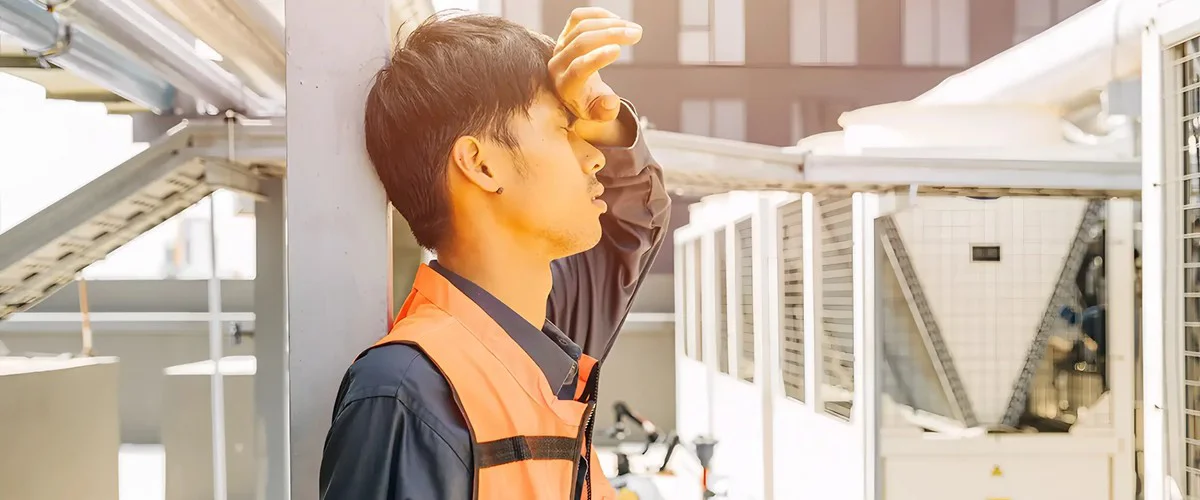
The core of Taiwan's heat hazard regulations is Article 324-6 of the Regulations on Occupational Safety and Health Facilities: when an employer has workers do outdoor work, they must take ten heat hazard prevention measures according to the weather. When the risk reaches Level 4, shade, cooling equipment and a rest area must also be provided under Article 303-1. The new Occupational Safety and Health Act takes effect on 1 July 2026, and the Ministry of Labor says employers who do not take the necessary protective measures can be fined NT$50,000 to NT$3 million.
This article puts together the heat-related laws, how heat hazard risk levels are judged, what Level 4 requires, what the 2026 amendment changed and the penalties, and ends with a checklist employers can follow. The laws are as in the current text in the Laws and Regulations Database.
Overview of Heat Hazard Regulations
| Regulations | What it covers | Key points |
|---|---|---|
| Occupational Safety and Health Act, Article 6, Paragraph 1 | Employers must provide the necessary safety and health equipment and measures to prevent hazards such as high temperature | The heat provisions in the Facilities Regulations are all made under this article |
| Occupational Safety and Health Act, Article 43 | Penalties | Violating Article 6, Paragraph 1 is punishable by a fine of NT$50,000 to NT$3 million (text in force from 2026-07-01) |
| Regulations on Occupational Safety and Health Facilities, Article 324-6 | Preventing heat illness in outdoor work | Take ten hazard prevention measures according to the weather |
| Regulations on Occupational Safety and Health Facilities, Article 303-1 | Heat hazard risk Level 4 and above | Provide shade and cooling equipment at the work area, and a cooling rest area nearby with sufficient drinking water |
| Standard for Work and Rest Schedules for Workers in High-Temperature Work | Indoor high-temperature work such as boiler rooms and molten metal | Uses WBGT to set the rest proportion per hour for light, moderate and heavy work |
| Guidelines for the Prevention of Heat Hazards in High-Temperature Work (third edition) | OSHA administrative guidelines | Method for determining heat hazard risk Levels 1 to 4 and the corresponding measures; applies to all workers |
Article 324-6: Ten Heat Hazard Prevention Measures for Outdoor Work
Text of the article: when an employer has workers do outdoor work, to prevent heat illness caused by the environment, the following hazard prevention measures shall be taken according to the weather:
- Lower the temperature of the work area.
- Provide a cool rest area.
- Provide suitable drinks or salt water.
- Adjust working hours.
- Increase the frequency of patrols of the work area.
- Carry out health management and arrange work appropriately.
- Take measures related to workers' heat acclimatisation.
- Pay attention to workers' health before and during work.
- Carry out education and awareness on heat illness prevention.
- Set up an emergency medical, reporting and response mechanism.
Note the words "according to the weather": the hotter it gets, the more you have to do. The most direct way to show that you adjusted "according to the weather" is to keep a daily record of the heat hazard level or on-site measurements, and of what measures you took that day.
How Is the Heat Hazard Risk Level Determined? Levels 1 to 4
The OSHA Guidelines for the Prevention of Heat Hazards in High-Temperature Work use the "heat index" to determine the level: first get the temperature and relative humidity at the work location, look up the heat index in the heat index table, then check the heat hazard risk level table to find Level 1 to 4 and take the management measures for that level. Temperature and humidity can be taken from Central Weather Administration stations or measured on site. On the Ministry of Labor's High-Temperature Work Protection Information Website you can look up the heat index and level for your area directly. The website states that a heat index below 26.7 is below the high-temperature risk levels.
In two cases you must raise the level by one: working in direct sunshine, or working in non-breathable, heavy or impermeable protective clothing. For how to look up the heat index table and how it differs from WBGT, see What Is the Heat Index?.
Note that the heat index on the website is regional. The Ministry of Labor's WBGT measurement research found that measured values in farm net houses were clearly higher than the website's predictions, so where local conditions differ, it recommends measuring WBGT on site when necessary.
What Must Be Done at Heat Hazard Level 4? (Article 303-1)
When an employer has workers do outdoor work and the heat hazard risk level reaches Level 4 or above in the heat index table, the following must be done:
- Provide shade at the work area, and provide fans, water mist or other equipment that lowers the temperature of the work environment.
- Provide a rest area nearby with shade and a cooling effect such as air conditioning, fans or good natural ventilation, and provide sufficient drinking water or suitable drinks.
Proviso: this does not apply where the work is brief or on-site installation is genuinely difficult, and the heat hazard prevention measures in Article 324-6 have been taken. In other words, even if the proviso is used, the ten measures in Article 324-6 still have to be carried out.
2026 Occupational Safety and Health Act: Higher Penalties, Contractors Share Responsibility
The amended Occupational Safety and Health Act was promulgated on 19 December 2025 (year 114 of the Republic of China calendar), and the Executive Yuan ordered it to take effect on 1 July 2026. The changes related to heat hazards are:
- Higher fines: Article 43 provides that violating Article 6, Paragraph 1 and others is punishable by a fine of NT$50,000 to NT$3 million, and the competent authority may increase it by up to half of the statutory maximum depending on the size, nature or circumstances of the violation. In its 2026 heat protection campaign, the Ministry of Labor also stated clearly that employers who do not take the necessary protective measures can be fined NT$50,000 to NT$3 million under the new law.
- Main contractors and subcontractors identify risk together: a Ministry of Labor press release of 2026-07-17 states that high-temperature work risk is part of contracting safety management, and the principal business unit (main contractor) and subcontractors must jointly identify high-temperature work risks and put protective measures in place.
- More inspections: from 1 June 2026, the Ministry of Labor carries out special outdoor high-temperature inspections of high-risk sites such as construction and road repair, and uses "heat hazard improvement follow-up inspections" to push businesses to follow through.
Summary of Heat Hazard Penalties
| Situation | Basis | Penalties |
|---|---|---|
| Outdoor work without heat hazard prevention measures according to the weather (Article 324-6) | Occupational Safety and Health Act, Article 6, Paragraph 1 and Article 43, Item 2 | Fine of NT$50,000 to NT$3 million, which may be increased by up to half of the maximum |
| No shade, cooling equipment or rest area at Level 4 and above (Article 303-1) | Same as above | Same as above |
| Old rules before the amendment (up to 2026-06-30) | Former Article 43 | Fine of NT$30,000 to NT$300,000 |
Actual penalties depend on the provision and circumstances found by the competent authority. This table is a summary and not legal advice.
Who Is Covered?
The third edition of the guidelines, amended by OSHA in June 2025, explicitly applies to all workers of a business unit, including employees, self-employed persons and dispatched workers, and extends to all industries. Construction, road repair, power facility maintenance, farming, delivery and cleaning, where people work outdoors for long periods, are all focus areas of the Ministry of Labor's recent campaigns and inspections.
Employer Heat Hazard Prevention Checklist
You can use this table to check whether your heat hazard prevention plan has gaps:
| Item | What to do | What record to keep |
|---|---|---|
| Risk assessment | Check the heat hazard level every day; raise it by one level for sun exposure or non-breathable protective clothing; measure WBGT on site when necessary | Daily level or measurement record |
| Cooling and shade | At Level 4 and above, provide cooling equipment such as shade, fans or water mist | Photos and locations of equipment |
| Rest area and drinking water | Provide a cool rest area with a cooling effect near the work point, with sufficient drinking water or electrolyte drinks | Rest area locations, supply records |
| Adjust working hours | Reduce or suspend heavy work in the hottest hours; at least 20 minutes of rest per hour for heavy physical work (guidelines) | Records of the day's schedule changes |
| Patrols and health management | Patrol more often; watch health before and during work; adjust work for high-risk people | Patrol records |
| Heat acclimatisation | Increase exposure gradually for new workers and those back after a long absence | Schedule for new workers |
| Education and awareness | Heat illness symptoms, prevention and first aid | Training sign-in sheet |
| Emergency response | Designate a person in charge, the nearest hospital and the reporting procedure | Response procedure and contact list |
| Contractor management | Main contractor and subcontractors jointly identify high-temperature risk and share duties | Minutes of the coordination organisation meeting |
For how to schedule rest by WBGT, see WBGT Rest Break Schedule. For subsidies for shade, cooling equipment and heat hazard detection and alert devices, see How to Apply for Heat Hazard Subsidies.
Why Are Records More and More Important?
Many of the ten measures are "according to the weather", "increase patrols" and "adjust working hours", and whether you did them can only be explained afterwards by records. Special inspections, heat hazard improvement follow-up inspections and sorting out responsibility between contractors all ask the same things: how hot was it on site that day? Did you know? What did you do?
If there is fixed heat hazard monitoring equipment on site, the daily WBGT curve, the times limits were exceeded and who the alarms went to are all kept automatically. Together with the schedule adjustments and patrol records, this forms a complete heat hazard management record.
Heat Safety Guardian is a heat hazard alert system developed in-house by YenProtek. It calculates the WBGT heat index in real time and, when limits are exceeded, triggers on-site sound and light alarms and LINE notifications. The system presents on-site conditions according to the heat hazard risk levels in the OSHA guidelines, alert thresholds can be customised to the site, and the environmental data and event records before and after an alarm are kept automatically for later review, tracking and audits. The equipment is a tool to help you understand conditions on site and carry out measures. The measures required by regulation must still be carried out by the business. See the Heat Safety Guardian product page, or go to Online Quote for configuration and cost.
Frequently Asked Questions
Q1: What is the fine if heat hazard measures are not in place?
Under Article 43 of the Occupational Safety and Health Act, in force from 1 July 2026, violating Article 6, Paragraph 1 (including the heat hazard measures in Articles 324-6 and 303-1 of the Regulations on Occupational Safety and Health Facilities) is punishable by a fine of NT$50,000 to NT$3 million, which may be increased by up to half depending on the size of the business and the circumstances.
Q2: Can people still work outdoors at heat hazard Level 4?
Article 303-1 requires that at Level 4 and above, shade, cooling equipment, a cooling rest area and sufficient drinking water must be provided. This does not apply where the work is brief or on-site installation is genuinely difficult, and the Article 324-6 measures have been taken. For actual work arrangements, follow the Level 4 management measures in the guidelines.
Q3: Do I have to buy WBGT equipment?
The regulations do not require WBGT equipment. The heat hazard level can be determined from the heat index table or the information website. But the website gives area values, and the actual heat in exposed spots, net houses or near heat sources may be higher. The Ministry of Labor recommends measuring WBGT on site when necessary.
Q4: Do self-employed people and dispatched workers also have to be covered?
Yes. The third edition of the OSHA guidelines explicitly applies to all workers of a business unit, including employees, self-employed persons and dispatched workers.
Q5: If a subcontractor's worker gets heat stroke, is the main contractor responsible?
The Ministry of Labor states that high-temperature work risk is part of contracting safety management, and the principal business unit (main contractor) and the subcontractors must jointly identify high-temperature work risks and put protective measures in place.
Q6: Does this apply to indoor factories?
Articles 324-6 and 303-1 cover outdoor work. Specified indoor high-temperature work, such as in boiler rooms, metal melting and casting, falls under the Standard for Work and Rest Schedules for Workers in High-Temperature Work, which sets work and rest proportions by work intensity using WBGT.
Further Reading: WBGT and Heat Hazard Series
- What Is WBGT? Wet Bulb Globe Temperature Explained (Series Overview)
- How to Calculate WBGT: Outdoor and Indoor Formulas with Examples
- WBGT Rest Break Schedule: High-Temperature Work Rest Standard Table
- What Is the Heat Index? Heat Index Chart, Levels and How It Differs from WBGT
- How to Apply for Heat Hazard Subsidies
- How to Choose a WBGT Meter: Handheld vs Fixed Monitoring Station
- Managing Heat Hazards on Construction Sites: Heat Stroke Prevention Checklist
References
- Occupational Safety and Health Act, Articles 6 and 43 (amended and promulgated 19 December 2025, in force 1 July 2026), Laws and Regulations Database.
- Regulations on Occupational Safety and Health Facilities, Articles 303-1 and 324-6, Laws and Regulations Database.
- Occupational Safety and Health Administration, Ministry of Labor, Guidelines for the Prevention of Heat Hazards in High-Temperature Work, third edition (amended 20 June 2025).
- Ministry of Labor, press release "Fighting the Heat, Protecting Workers: Ministry of Labor Heat Hazard Seminar", 2026-07-17.
- Ministry of Labor, outdoor high-temperature special inspections and new Occupational Safety and Health Act penalty campaign, 2026-05 (reprinted by 104 Workforce).
- Ministry of Labor, "Real-Time Measurement to Prevent Heat Hazards: Recommended Method for WBGT Measurement in High-Temperature Work", 2025-08-26.
- High-Temperature Work Protection Information Website (hiosha.osha.gov.tw).
Article updated: 2026-11-10. If the regulations are amended, the Laws and Regulations Database announcement prevails.