

How Does Precision Livestock Build the First Line of Defense Against African Swine Fever? - Application of IoT Technology in African Swine Fever (ASF) Early Warning
Table of Contents
1. Introduction: How IoT Becomes an ASF Early Warning Weapon
When an animal epidemic strikes fiercely, the pig farming industry must not only respond quickly but also "know in advance." African Swine Fever (ASF) is one of the most devastating infectious swine diseases globally, and there is currently no effective vaccine. Fortunately, with the application of Internet of Things (IoT) technology in livestock farms, "Precision Livestock Farming" (PLF) has become a crucial weapon for early disease detection.
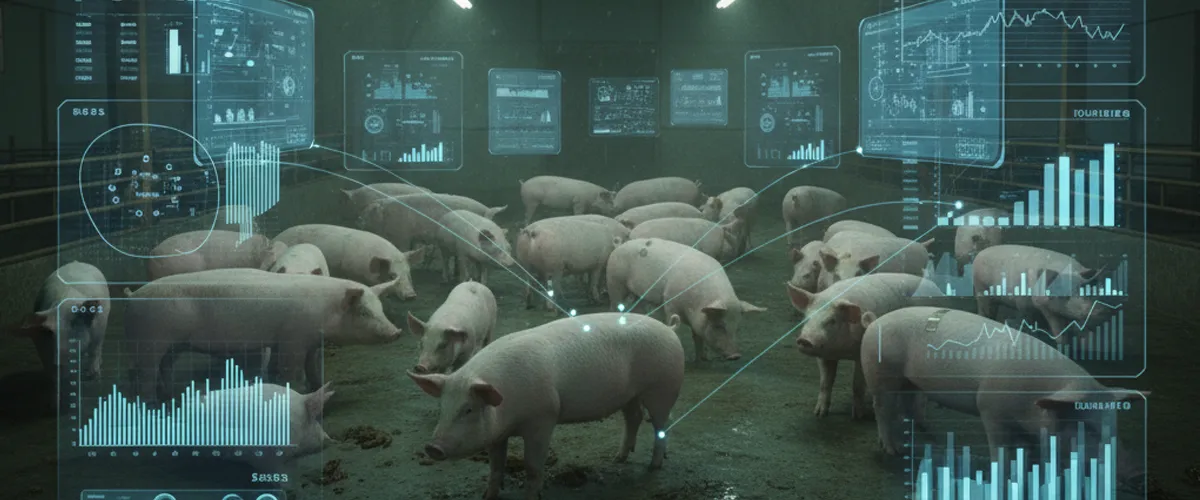
Precision livestock farming utilizes sensors, cameras, and algorithms to build a 24-hour health observation system for pigs. According to a systematic literature review by Gómez et al. (2021) published in Frontiers in Veterinary Science, IoT technology can continuously collect behavioral, physiological, and environmental data, showing high potential in improving animal welfare and disease management. Below are 3 approaches to applying this technology for early warning of African Swine Fever:
2. Observing Anomalies from Behavior: The First Line of Defense from Activity Patterns
Health codes are hidden in the daily behavior of pigs. Research by Huang et al. (2024) published in Computers and Electronics in Agriculture indicates that healthy pigs typically have peak activity levels between 05:00-10:00 and 14:00-18:00. Anomalies in activity (e.g., excessive inactivity, decreased activity levels) are often early signs of disease.
In its early stages, African Swine Fever causes behavioral changes such as lethargy and reduced movement. Through cameras and accelerometers (often embedded in ear tags), the movement patterns and postures of individual pigs can be tracked in real-time, and algorithms can compare them with "normal daily routines" to quickly identify anomalous individuals.
Furthermore, a report by Arulmozhi et al. (2021) in Animals points out that this image-based behavior monitoring technology is not only low-cost but also highly suitable for medium and small-scale pig farms.
3. Body Temperature Tracking: Digital Ear Tags Become the Pig's "Temperature-Sensing Skin"
Elevated body temperature is the most direct indicator of inflammation and infection. Gómez et al. (2021) point out that IoT devices such as thermal imagers, infrared thermometers, and embedded sensors can continuously monitor body surface temperatures without contact, significantly improving the efficiency of early detection.
Huang et al. (2024) also discovered that although temperature data from ear tags is affected by the environment and behavior, hidden anomalies can still be found by comparing the "overall herd trend." For example, if a pig repeatedly shows a "drop in body temperature" trend during the day, it may be the result of the pig trying to find lower-temperature areas to rest after a fever; this negative change is considered a latent symptom of the disease.
4. Data Integration: From Single-Point Detection to Comprehensive Early Warning
While a single sensor can discover anomalies, integrating and comparing behavioral, physiological, feeding, and drinking data significantly increases early warning accuracy.
A literature review by Trabachini et al. (2025) in the journal Animals points out that feeding data from multiple sensors into AI models like Random Forest and Deep Learning systems can effectively classify normal and abnormal pigs, transforming this into decision-making references for caretakers.
In addition, combining RFID and load sensor technologies allows for monitoring the feeding and drinking behavior of individual pigs. Subtle changes in feeding patterns are often one of the first anomalies to appear before the onset of illness.
5. Conclusion: From Sensors to Perception, Building a Digital Defense System in Pig Pens
In summary, precision livestock farming involves building a detection system consisting of "digital eyes" (cameras) and "digital skin" (sensors). Through real-time comparison and processing of massive amounts of data, proactive warnings can be issued before an epidemic breaks out.
This is not merely the adoption of technology, but a revolution in livestock concepts: shifting from manual inspection to data-driven warnings, and from reacting to problems to preventing them. In the future, in animal husbandry scenarios that prioritize both epidemic prevention and animal welfare, IoT technology will undoubtedly play an increasingly vital role.
6. References:
- Gómez, Y., et al. (2021). A Systematic Review on Validated Precision Livestock Farming Technologies for Pig Production and Its Potential to Assess Animal Welfare. Frontiers in Veterinary Science, 8:660565. https://doi.org/10.3389/fvets.2021.660565
- Huang, Y., et al. (2024). Analysis of pig activity level and body temperature variation based on ear tag data. Computers and Electronics in Agriculture, 219, 108768. https://doi.org/10.1016/j.compag.2024.108768
- Arulmozhi, E., et al. (2021). The Application of Cameras in Precision Pig Farming: An Overview for Swine-Keeping Professionals. Animals, 11(8), 2343. https://doi.org/10.3390/ani11082343
- Trabachini, A., et al. (2025). Precision Livestock Farming Applied to Swine Farms—A Systematic Literature Review. Animals, 15, 2138. https://doi.org/10.3390/ani15142138
- Benjamin, M., & Yik, S. (2019). Precision Livestock Farming in Swine Welfare: A Review for Swine Practitioners. Animals, 9(4), 133. https://doi.org/10.3390/ani9040133
Author

Dr. Peter Lin
A consultant in smart livestock and precision farming with over 30 years of experience in livestock site management and technology implementation. Continuously focusing on pig, cattle, and poultry farming efficiency, environmental monitoring, and animal health behavior analysis. Specializing in integrating sensor devices, data logging, and practical operational procedures. Has assisted numerous industrial sites in applying temperature/humidity, ammonia gas, ventilation, and movement tracking systems to elevate production stability and animal welfare through data-driven methods. Committed to promoting smart livestock solutions that are "practically implementable on-site".