

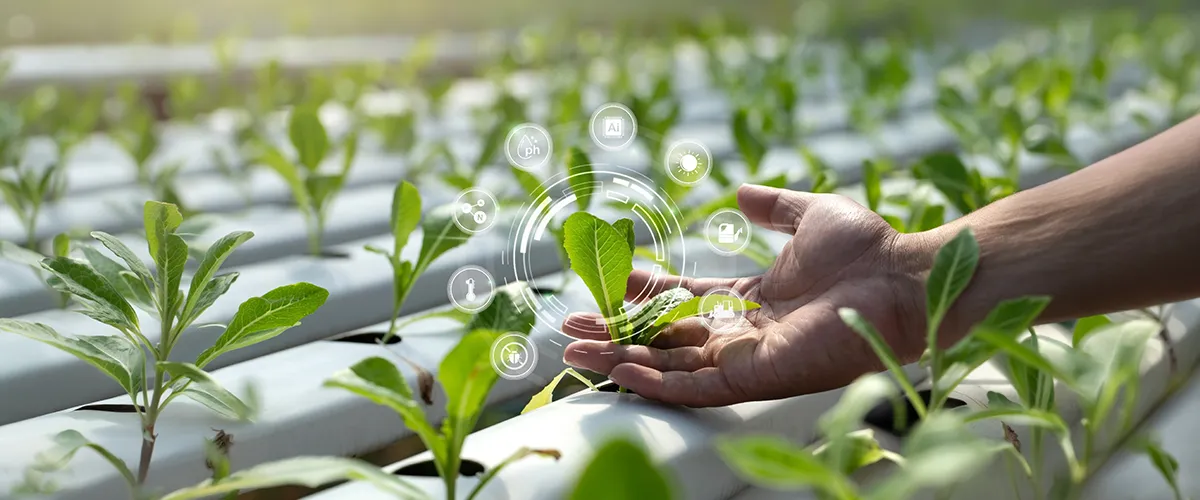
What Is Smart Agriculture? A Complete Guide from Traditional Farming to Data-Driven Management
Table of Contents
Article Summary | Smart Agriculture introduces the Internet of Things (IoT), sensors, communication technologies, cloud platforms, artificial intelligence, automatic control and data analysis into agricultural production and management processes, so that farming no longer relies solely on experience, manual inspection and after-the-fact judgment, but can grasp the status of crops, environment, soil, water, climate and equipment through real-time data. Its core value is not to replace farmers with technology, but to give farmers and managers a more complete, more real-time and more traceable basis for decision-making—moving agricultural management from "relying on intuition" to "relying on data," from "after-the-fact handling" to "early warning," and from "manual field patrols" to "remote monitoring." This article fully explains the definition, development background, core technologies, operating architecture, application scenarios, adoption benefits, common challenges and future trends of Smart Agriculture.
1. What Is Smart Agriculture?
Smart Agriculture refers to a mode of agricultural management that uses digital technology, the Internet of Things (IoT), sensors, communication networks, cloud platforms, artificial intelligence and automatic control technologies to help agricultural producers manage their farms, crops, environment, equipment and resources more efficiently. It is not a single device, nor a fixed set of systems, but rather a technical architecture that digitizes on-site agricultural data and converts that data into management decisions.
Traditional farming relies on human observation and experience-based judgment: a farmer walks into the field, observes whether the soil is cracked and dry, whether the leaves are wilting, whether the weather is hot and humid, and whether pests and diseases have appeared, and then decides whether to irrigate, fertilize, spray or harvest. Smart Agriculture, building on this experience, adds continuous data sources. For example, the system can record:
- Whether soil moisture content is continuously declining
- Whether nighttime temperature falls below the crop's safe range
- Whether humidity inside the greenhouse is too high, potentially increasing disease risk
- Whether the field may become waterlogged after continuous rainfall
- Whether insufficient sunlight is affecting crop growth rate
- Whether soil moisture actually recovers after irrigation
- Whether equipment starts up and shuts down normally
This data allows agricultural managers to see not only "what is happening now," but also to further understand "what the trend of change is" and "what the next step should be." Therefore, the focus of Smart Agriculture is not on how much technological equipment a farm uses, but on whether that equipment can genuinely help agricultural production make better decisions.
2. What Are the Main Domains of Smart Agriculture?
Smart Agriculture is not a single technology, nor is it applicable only to one type of farming. In a broad sense, any use of data, equipment, platforms or automation technologies to improve agricultural production, environmental management, resource utilization and business decision-making can be regarded as part of Smart Agriculture. It can therefore extend to Precision Agriculture, smart aquaculture, smart livestock, aquavoltaics and agrivoltaics, greenhouse environmental control, agricultural automation, plant factories, as well as production and farm management in various directions. These domains may seem different, but in essence they all revolve around the same core: enabling the environment, crops, equipment, animals, water quality, energy and management processes on the agricultural site to be measured, recorded and analyzed, and further supporting decisions and actions.
Precision Agriculture: Bringing Management Closer to Crops' Actual Needs
Precision Agriculture emphasizes adopting more precise management approaches according to different areas, different crops, different growth stages and different environmental conditions. Traditional farming often treats an entire field as a single management unit (irrigating at the same time, fertilizing at the same dose, applying pesticides in the same way), yet within the same field there may be differences in soil texture, drainage conditions, sunlight, terrain elevation and crop vigor. The goal of Precision Agriculture is to see these differences and incorporate them into management—prioritizing irrigation for drier areas, strengthening drainage in low-lying, easily waterlogged areas, further inspecting soil and pests and diseases in weaker-growing areas, and matching different water and nutrient strategies to different growth stages. It does not simply pursue high technology, but shifts management from "treating the whole field together" to "zoned management based on actual conditions."
Smart Aquaculture: From Experience-Based Pond Patrols to Water-Quality Data Management
Smart aquaculture is mainly applied to fish ponds, shrimp ponds, recirculating aquaculture and indoor farming. Unlike general crop farming, the key object of management is not soil but the water environment—water temperature, dissolved oxygen, pH, salinity, ammonia nitrogen and water-level changes can all directly affect the health of fish and shrimp and farming risk. Many water-quality anomalies often occur at night, in the early morning or during dramatic weather changes, making them difficult to detect promptly through inspection. The value of smart aquaculture lies in enabling water-quality conditions to be continuously monitored and grasped in real time; when dissolved oxygen drops, pH becomes abnormal or water temperature changes drastically, the system can issue immediate alerts, and can even further interlock with aeration, pumping or other equipment control, turning water-quality changes from "waiting for someone to discover them" into "proactive alerts from the system."
Smart Livestock: Making Barn Environments and Rearing Management More Controllable
Smart livestock applies sensing, monitoring, imaging, environmental control and data management to the rearing environments of poultry, pigs, cattle, sheep and other livestock. Environmental conditions directly affect animal health, growth efficiency, feed conversion rate and disease risk: excessively high temperatures cause heat stress, poor ventilation leads to ammonia accumulation, and excessively high humidity increases pathogen risk. Common management items include barn temperature, humidity, ventilation status, ammonia or carbon dioxide concentration, drinking-water status, abnormalities in the rearing environment and video observation of animal activity. As livestock farms gradually scale up, it becomes difficult to grasp the status of all areas in real time through manual inspection alone; smart livestock can help detect anomalies more quickly, reduce rearing risk, and accumulate long-term data as a basis for improvement.
Aquavoltaics and Agrivoltaics: Integrated Management of Agricultural Production and Energy Use
Aquavoltaics typically combines solar power generation facilities within aquaculture sites, while agrivoltaics combines photovoltaic facilities with crop production in agricultural production sites. The management focus of such sites is not only power-generation efficiency, but also crops, the farming environment, production conditions and facility safety, requiring the simultaneous management of more variables: the impact of sunlight and shading on crop growth, changes to the field microclimate caused by photovoltaic panel layouts, the water quality of fish ponds and the status of aeration equipment, the impact of typhoons, strong winds or heavy rain on facility safety, the maintenance of power-generation and agricultural equipment, and the integration of energy, production and environmental data. Therefore, it is not simply about placing solar panels on farmland or fish ponds, but requires more refined site monitoring and management mechanisms.
Greenhouse Environmental Control: Making the Crop Growing Environment More Stable
Greenhouse environmental control is one of the relatively mature applications in Smart Agriculture and also one of the easiest to demonstrate benefits. A greenhouse is inherently designed to create a relatively controllable crop growing environment, making it highly suitable for introducing sensors, environmental monitoring, equipment control and data analysis. Common items include temperature, humidity, carbon dioxide, light, ventilation, shading, supplemental lighting, heating, irrigation and nutrient-solution management. When temperature is too high, humidity is too high, light is insufficient or ventilation is poor, the system can alert managers, or further control fans, roof vents, shading, supplemental lighting and irrigation equipment. For high-value crops, stable environmental management often directly affects yield, quality, harvest timing and success rate.
Agricultural Automation: From Manual Operation to Equipment Collaboration
Agricultural automation is an important stage in which Smart Agriculture moves from "monitoring" to "execution." In the early stages, systems mostly handle data collection and alerts, but when the data is stable, the control logic is clear and equipment safety is sufficient, automated control can be introduced—such as automatic irrigation, ventilation, shading, supplemental lighting, fertilization, aeration, water-pump control and environmental alerts. Its purpose is not to make everything completely unmanned, but to reduce repetitive manual operations, improve response speed, and let equipment perform tasks according to clear conditions—for example, starting irrigation when soil moisture falls below a set value, starting ventilation when the greenhouse temperature is too high, or starting aeration when dissolved oxygen in a fish pond is insufficient.
Plant Factories: An Agricultural Production Model Under Highly Controlled Environments
Plant factories are one of the applications with the highest degree of environmental control in Smart Agriculture. Unlike open-field farmland, production typically takes place in an indoor environment, using artificial light sources, air conditioning, recirculating water, nutrient solutions, sensors and automated equipment to control the light, temperature, humidity, carbon dioxide and nutrients required for crop growth. Their advantages lie in a stable production environment, lower susceptibility to weather, higher space-utilization efficiency and the opportunity to establish standardized production processes; but correspondingly, they place higher demands on energy, equipment, environmental-control strategies and operational management. Therefore, the core challenge of plant factories is not merely whether crops can be grown, but how to strike a balance among quality, yield, energy cost and operational efficiency.
Production and Farm Management: Making Agricultural Operations More Systematic
Smart Agriculture does not only take place in the field; it also includes production and farm management. As a farm scales up, the scope of management is no longer just the crops themselves but also personnel, equipment, work orders, harvesting, batches, inventory, traceability records, distribution channels and costs. Production and farm management systems can help record crop batches, planting areas, sowing and harvest dates, irrigation/fertilization/pesticide records, personnel operation records, equipment maintenance records, yield and quality records, and produce traceability data. This data can help a farm move from individual experience-based management to organized management, and is especially suitable for agricultural enterprises, contract farms, cooperatives, branded agriculture, export supply chains and government program management.
3. The Simplest Way to Understand Smart Agriculture
Smart Agriculture can be understood in one sentence: let the farm start generating data, and let that data assist agricultural management.
In traditional farming, the farmland itself does not proactively provide information; the farmer must go to the site in person and judge the farm's status through eyes, touch, experience and memory—for example, "the soil looks a bit dry today," "it seems to have been hotter these past few days," "the crops in this area are growing more slowly," or "there seems to have been too much rain lately." These judgments are not necessarily wrong—indeed, they are often very accurate, because a farmer's experience is itself highly valuable knowledge. The problem is that human perception can hardly achieve continuous recording, and it is difficult to grasp the status of a large area, multiple zones and multiple variables at the same time.
The approach of Smart Agriculture is to have key information on the farm continuously recorded by the system—for example, recording soil moisture every 10 minutes, recording air temperature and humidity every 10 minutes, accumulating daily rainfall, continuously observing changes in sunlight, recording irrigation-equipment startup times, and recording environmental conditions at different crop growth stages. Once this data accumulates, agricultural managers can answer questions that were previously hard to answer:
- Was this poor crop growth caused by lack of water, temperature, sunlight, soil or disease?
- How large are the differences between different areas within the same field?
- Did the irrigation really reach the soil layer where the crop's roots are located?
- Was this better yield due to a change in management practices, or to more favorable climatic conditions?
- Under which environmental conditions is crop quality most stable?
This is the most important significance of Smart Agriculture: transforming the agricultural site from a state that is "visible but hard to quantify" into a management model that "can be recorded, analyzed, compared and improved."
4. Why Is Smart Agriculture Becoming More Important?
Smart Agriculture is gaining attention not because agriculture must pursue high technology, but because modern agriculture is facing increasingly complex management pressures.
- Climate instability: In recent years, extreme heat, short-duration heavy rainfall, drought, cold spells, shifting typhoon paths and abnormal climate events have become harder to predict. As climate volatility increases, agricultural management increasingly needs real-time environmental information as a basis for judgment.
- Labor shortages and an aging agricultural workforce: As the managed area grows and available labor shrinks, the frequency and quality of manual inspections become limited. Smart Agriculture can reduce repetitive patrol work, allowing labor to focus on tasks that genuinely require judgment and handling.
- Higher demands for consistent quality: The market increasingly values stable quality, consistent specifications, traceability, pesticide management, harvest-timing control and stable supply, all of which require more complete production records and environmental data as support.
- Rising resource costs: The costs of water, electricity, fertilizer, pesticides, labor and equipment maintenance all affect profits. Smart Agriculture can help use resources more precisely—for example, adjusting irrigation based on soil moisture and weather conditions rather than watering heavily at fixed times.
- The gradual corporatization of agriculture: As farms move toward contract farming, branding, distribution channels, processing, export or large agricultural-enterprise management, they need more standardized, more replicable and more traceable management methods, and data-driven management is precisely an important foundation for the scaling and specialization of agriculture.
Therefore, Smart Agriculture is not about making agriculture look more high-tech, but about responding to the real challenges of modern agriculture in terms of climate, labor, quality, cost and management.
5. How Does Smart Agriculture Differ from Traditional Farming?
The biggest difference between Smart Agriculture and traditional farming is not whether equipment is used, but a different management model. Traditional farming emphasizes experience, observation and on-site handling; Smart Agriculture, beyond experience, adds data, systems and real-time information. More precisely: Smart Agriculture does not seek to replace traditional farming, but to convert the experiential knowledge in traditional farming into management methods that are easier to record, analyze, pass on and optimize.
The Operating Model of Traditional Farming
Traditional farming usually relies on manual inspection and experience-based judgment: a farmer only judges a possible water shortage after noticing leaves wilting; only starts handling a disease after noticing disease spots spreading; only arranges drainage after noticing the field is waterlogged; and only repairs equipment after noticing it has broken down. This model is highly flexible and can adapt to local conditions, but its drawbacks are discontinuous data, judgment standards that vary from person to person, and problems that are often discovered only after they have already occurred—relying on the experience of veteran farmers, difficulty in grasping on-site conditions in real time, records that are mostly on paper or manually entered, management quality affected by labor and inspection frequency, and anomalies that are usually only handled when visible to the naked eye.
The Operating Model of Smart Agriculture
Smart Agriculture, by contrast, continuously collects on-site data through the system so that the farm's status is monitored in real time: when soil moisture drops, the system can detect it before the crops visibly wilt; when greenhouse humidity is too high, the system can warn of a possible increase in disease risk; when accumulated rainfall is too high, the system can help judge whether drainage is needed; and when equipment fails to start normally, the system can send an anomaly notification. Its management state is one of continuously recorded data, remotely viewable on-site conditions, real-time anomaly notifications, management decisions supported by objective data, historical data usable for comparison and improvement, and experience that can be turned into data and institutionalized.
| Comparison Item | Traditional Farming | Smart Agriculture |
|---|---|---|
| Basis for judgment | Experience and on-site observation | Experience + continuous data |
| Data recording | Paper, manual entry, discontinuous | Automatic by system, continuous recording |
| Grasp of on-site conditions | Requires being on-site in person | Remotely viewable in real time |
| Problem detection | Handled only when visible to the naked eye | Real-time anomaly notification, early warning |
| Judgment standards | Vary from person to person | Supported by objective data |
| Passing on experience | Difficult to pass on | Can be turned into data and institutionalized |
From Experience-Based Management to Data-Driven Management
Smart Agriculture does not negate experience, but gives experience more data to support it. A veteran farmer may know that "this field dries out more easily"; Smart Agriculture can go further and answer "how fast does it dry out? Which area is most pronounced? How long after each irrigation does it drop back to the critical value again? Are there differences between seasons?" A veteran farmer may know that "this greenhouse gets stuffy easily in summer"; Smart Agriculture can go further and answer "at which time of day is the temperature highest? Does humidity rise at the same time? How much does it improve after the ventilation equipment starts? Is it related to the timing of disease outbreaks?" This conversion from experience to data is the true value of Smart Agriculture.
6. How Does Smart Agriculture Work? Four Core Steps
The operating logic of Smart Agriculture can be broken down into four core steps—sensing data, transmitting data, analyzing data and executing management—and these four steps form a complete agricultural data cycle.
Step One: Sensing Data
The first step is to obtain farm information through sensors, imaging equipment, manual records or external data sources. Common data includes air temperature, air humidity, soil temperature, soil moisture, soil pH, soil electrical conductivity, sunlight intensity, rainfall, wind speed and direction, carbon dioxide concentration, water level, water quality, crop imagery and equipment on/off status. Different crops, sites and management goals require different data—open-field leafy vegetables may emphasize rainfall, temperature, soil moisture and disease risk; greenhouse crops place more emphasis on temperature and humidity, carbon dioxide, light, ventilation and environmental-control equipment; fruit trees require long-term observation of soil moisture, weather, flowering period and harvest period; while aquaculture focuses on water temperature, dissolved oxygen, pH, salinity and ammonia nitrogen. Therefore, in Smart Agriculture, more sensors is not necessarily better; you should first clarify the management problem before deciding what data to collect.
Step Two: Transmitting Data
After data is collected by sensors, it needs to be transmitted to a platform or database via communication technology. Common communication challenges in agricultural sites include large farmland areas, long distances from indoor networks, sites that may not have stable power, equipment distributed across different areas, environments that are humid, hot, sun-exposed and rainy, and signals that may be affected by terrain, buildings or vegetation. Therefore, Wi-Fi, 4G, NB-IoT, LoRa, Ethernet or other wireless communication technologies are often used. The key in selection is not which is newest, but whether it suits the on-site conditions: when the site is small and has stable power and network, Wi-Fi may be sufficient; when farmland is large, equipment is scattered and the data volume is small, low-power long-distance communication may be more suitable; when real-time imagery or large-volume transmission is required, higher bandwidth may be needed; and industrialized greenhouses may integrate directly using wired networks. An incorrectly planned communication architecture can lead to data interruptions, maintenance difficulties or equipment that cannot operate stably, so it is one of the keys to a project's success or failure.
Step Three: Analyzing Data
After data is transmitted to the platform, it must be organized, visualized and analyzed before it can generate value; simply seeing a string of numbers does not equal Smart Agriculture. For example, "soil moisture 28%" does not in itself necessarily indicate good or bad; it needs to be judged together with crop type, growth stage, soil texture, root depth, weather conditions and irrigation strategy. Common analysis methods include real-time value monitoring, historical trend charts, upper- and lower-limit anomaly alerts, daily accumulated rainfall analysis, soil-moisture change curves, comparison of data across different areas, comparison of effects before and after irrigation, analysis of equipment startup records, and comparison of environmental conditions across crop growth stages. More advanced systems may add AI analysis (pest and disease image recognition, yield prediction, irrigation recommendations, energy optimization, anomaly-pattern detection), but AI is not the first step—if front-end data quality is unstable, sensor placement is unreasonable or data is seriously missing, even introducing AI will hardly yield credible results.
Step Four: Executing Management
The final step is to convert analysis results into actual management actions, which may be performed manually or automatically controlled by the system—for example, the system alerts that the soil is too dry and the farmer decides whether to irrigate; it alerts that greenhouse humidity is too high and the manager opens ventilation; it judges that rainfall is too high and reminds to watch for drainage; it detects that equipment has not started and notifies staff to check; or it automatically starts irrigation and environmental-control equipment according to set conditions. The maturity level of Smart Agriculture can be seen from this point:
- Entry level: only collects data.
- Advanced: can monitor and alert.
- Mature: can assist decision-making.
- Highly automated: can control automatically according to rules or models.
Not every farm needs to get there in one step. For most sites, first establishing stable data sources and clear management goals is more important than directly pursuing full automation.
7. What Are the Core Technologies of Smart Agriculture?
Smart Agriculture is not a single technology, but a management system formed by integrating multiple technologies.
Agricultural IoT
Agricultural IoT is one of the most fundamental technologies of Smart Agriculture. Its core is to connect the equipment, sensors and platforms on the agricultural site so that data can be collected, transmitted and analyzed in real time. Common applications include field environment monitoring, soil moisture monitoring, greenhouse environmental-control monitoring, water-quality monitoring, irrigation-equipment monitoring and agricultural-machinery status monitoring. It makes a farm no longer a space whose status can only be known by having a person go on-site, but a production site that can be grasped and managed remotely.
Sensor Technology
Sensors are the data entry point of Smart Agriculture. Common ones include temperature, humidity, soil moisture, soil temperature and light sensors, as well as rain gauges, anemometers and wind-vane instruments, pH sensors, EC sensors, water-level sensors and carbon dioxide sensors. Their value lies not only in "measuring a number," but in providing stable, continuous and comparable data. On the agricultural site, installation location is very important—within the same field, elevation differences, soil texture, irrigation pipelines, shading, drainage and crop density can all affect the data; if the installation point is not representative, the data may mislead decisions. Therefore, sensors are not simply a matter of installing them; the choice of measurement points and the interpretation of data are equally important.
Communication Technology
Agricultural sites often lack a stable network and power supply, so the choice of communication technology is very critical. There is no absolute superiority or inferiority among different communication methods, only whether they suit the site. When planning, you must consider distance, data volume, power consumption, signal coverage, number of devices, maintenance cost and future scalability:
| Communication Technology | Suitable Sites |
|---|---|
| Wi-Fi | Small-area sites with network coverage |
| 4G | Sites requiring wide-area connectivity with telecom signal |
| NB-IoT | Low data volume, low power consumption, wide-area monitoring |
| LoRa | Long-distance, low-power agricultural monitoring with small data volume |
| Ethernet | Integration of greenhouses, plants or fixed equipment |
Cloud Platforms and Data Visualization
The cloud platform is the brain of Smart Agriculture, responsible for receiving, storing, displaying and analyzing data and sending notifications. It typically provides real-time dashboards, historical trend charts, anomaly alerts, data downloads, multi-site management, equipment-status views, permission management and report output. Platform design must not only be understandable to engineers, but must allow on-site staff, managers, agricultural enterprises, research institutions or government project personnel to quickly understand it—a good platform should let users know within a short time: whether things are currently normal, where the anomaly is, how long the anomaly has lasted, what the possible cause is, whether immediate action is needed, and whether it has happened before. Data visualization is not just about pretty charts, but about reducing the cost of judgment.
Artificial Intelligence and Image Recognition
AI is being applied more and more in Smart Agriculture, but it must be built on a good data foundation. Common applications include crop image recognition, pest and disease recognition, fruit ripeness assessment, weed recognition, yield prediction, irrigation recommendations, environmental-anomaly detection and agricultural-machinery route optimization. The advantage of AI is that it can process large volumes of data and find patterns that are difficult for humans to observe, but it is not omnipotent—if training data is insufficient, the on-site environment changes too much, image quality is unstable or labeling is inconsistent, judgments may become inaccurate. Therefore, AI applications should start from a clear problem, rather than introducing AI for the sake of introducing AI.
Automatic Control and Smart Equipment
Automatic control is an important step in which Smart Agriculture moves from "monitoring" to "execution." Common control targets include irrigation, ventilation, shading, supplemental lighting, heating equipment, water pumps, valves, fertilization equipment and environmental-control equipment. For example, automatically starting fans or opening roof vents when the greenhouse temperature is too high, starting irrigation when soil moisture falls below a set value, or alerting to supplement or adjust ventilation when carbon dioxide is insufficient. The focus of automatic control is safety, stability and traceability—there are many variables on the agricultural site, so the control logic must retain manual intervention, anomaly protection and operation records to prevent losses from equipment malfunctions.
8. What Are the Application Scenarios of Smart Agriculture?
The application scope of Smart Agriculture is very broad and not limited to greenhouses or large farms. Open-field farmland, orchards, greenhouses, livestock, aquaculture, agricultural-product storage and transport, and agricultural research can all adopt varying degrees of smart management.
Open-Field Farmland Management
Open-field farmland is most affected by climate. Common management needs include grasping rainfall and soil moisture, evaluating irrigation timing, observing high-temperature and drought risks, grasping wind speed and spraying-operation conditions, recording environmental conditions at different growth stages, and reducing the burden of manual field patrols. When adopting it, you do not necessarily have to pursue automatic control from the outset; for many sites, the most valuable first step is to establish long-term environmental and soil data, allowing managers to see the trend of change in the field.
Greenhouses and Protected Agriculture
A greenhouse is itself a controllable environment and one of the sites where results are easiest to achieve. Common monitoring and control items include temperature, humidity, carbon dioxide, light, ventilation, shading, supplemental lighting, heating, irrigation and nutrient-solution management. The goal of making greenhouses smart is to make the crop growing environment more stable and reduce the risks caused by overheating, excessive humidity, insufficient ventilation, insufficient light or inconsistent management; for high-value crops, environmental stability often directly affects yield, quality and success rate.
Orchard Management
Orchard management has a long cycle, and crops are noticeably affected by weather, soil, moisture and pests and diseases. Applications of Smart Agriculture in orchards include soil moisture monitoring, microclimate monitoring, rainfall and wind-speed recording, environmental recording during the flowering period, moisture management during the fruit-enlargement period, disease-risk early warning and pre-harvest weather observation. The focus of orchard management is not just a single irrigation, but long-term trend observation—for example, flowering-period temperature, rainfall and yield changes across different years can help farmers build more complete cultivation-management data.
Smart Irrigation
Smart Irrigation is one of the most frequently discussed applications. Traditional irrigation is often carried out at fixed times, based on manual experience or visual judgment, whereas Smart Irrigation can be adjusted according to soil moisture, weather conditions, crop growth stage and irrigation records. Its goal is not simply to save water, but to bring water management closer to crop needs—too little irrigation may cause water shortage and stunted growth, while too much irrigation may cause root oxygen deprivation, nutrient loss, increased disease or a waste of water resources. Therefore, the core of Smart Irrigation is balancing crop needs, soil conditions and water-use efficiency.
Livestock Management
Common smart needs in livestock management include monitoring barn temperature and humidity, monitoring ventilation status, monitoring ammonia or carbon dioxide, monitoring drinking-water status, alerting to abnormalities in the rearing environment, and observing animal activity or health status. In livestock sites, environmental changes directly affect animal health, feed efficiency and disease risk, so stable monitoring of the barn environment is an important foundation of smart livestock.
Aquaculture
Although aquaculture is often classified as smart fisheries, like Smart Agriculture it is an important application of data-driven management of the production environment. Common monitoring items include water temperature, dissolved oxygen, pH, salinity, ammonia nitrogen, water level and aeration-equipment status. Water-quality changes are often very rapid, and in particular oxygen-deficiency risks may occur at night or during dramatic weather changes, so real-time monitoring and anomaly alerts are very important for aquaculture.
Agricultural-Product Storage, Transport and Cold Chain
Smart Agriculture also extends to post-harvest management. After harvest, agricultural products still require attention to temperature, humidity, storage environment and transport conditions. Common applications include refrigeration-temperature monitoring, warehouse-humidity monitoring, temperature recording during transport, abnormal-temperature alerts and batch traceability tracking. For high-value agricultural products, post-harvest storage and transport conditions often affect quality and loss rate, so Smart Agriculture is also gradually being linked with smart logistics, cold-chain management and food-traceability systems.
9. What Benefits Does Smart Agriculture Bring?
The benefits of Smart Agriculture cannot be measured merely by "looking more high-tech," but should return to agricultural operations themselves: whether it can reduce risk, improve efficiency, enhance quality, save resources and establish sustainable management capabilities.
- Improved grasp of on-site conditions: In the past you had to go to the field to know the situation; now you can view real-time data through the platform. In the past you could only judge changes by impression; now you can compare via trend charts. In the past you only knew after an anomaly occurred; now you can detect it in advance through alerts. This is especially valuable for distributed farms, large farmland areas, remote sites or managers with limited labor.
- Reduced burden of manual inspection: Smart Agriculture will not completely replace on-site inspection, but it can reduce unnecessary repetitive patrols—first confirm via the platform whether there is an anomaly, then arrange staff to handle the items that genuinely need handling, shifting labor from "routine checking" to "problem handling" and "management optimization."
- Improved efficiency of irrigation and resource use: By using soil moisture, rainfall and environmental data to schedule irrigation more precisely, over-irrigation is reduced, the risk of water shortage is lowered, and nutrients are prevented from being washed away by excess water. Resource efficiency is reflected not only in water, but also in electricity, fertilizer, pesticides, labor and equipment usage time.
- Improved stability of crop quality: Crop quality is greatly affected by environmental conditions. Long-term recording of temperature, humidity, light, moisture and management operations can more clearly reveal which conditions are associated with high-quality output—especially important for branded agriculture, contract production, export supply and high-value crops.
- Support for agricultural traceability and management records: The system can help record environmental data, irrigation records, equipment records and management operations, so that production no longer relies solely on paper or manual recall; this data can serve as a basis for internal management, quality tracking, research analysis or customer communication.
- Support for passing on experience: If a veteran farmer's knowledge is not recorded, it is difficult for the new generation to learn. Smart Agriculture can convert part of this experience into data, rules and records, making agricultural knowledge easier to preserve and continue.
10. Common Challenges in Adopting Smart Agriculture
Smart Agriculture does not automatically succeed just because equipment is installed. Many projects fail not because the technology is entirely unfeasible, but because, before adoption, the needs, site conditions, data uses and operation-and-maintenance methods were not clarified.
- Technology for technology's sake: The most common mistake is deciding to install a lot of equipment before clarifying the problem—not knowing whether the aim is to solve water shortages, labor shortages, unstable quality or insufficient records; not knowing who will view the data once collected, who will handle anomalies once seen, which data will affect decisions, or how to maintain the system after adoption. The result is a system that looks complete but has very low actual usage. Before adoption, you should first ask: What is the most painful management problem right now? Which information, if known in real time, would help decision-making? Who is the data for? Who handles anomalies once they occur? What cost or risk is this system meant to reduce?
- Unreasonable choice of sensing points: Placing sensors in the wrong location makes the data lose its representativeness—installing near an irrigation outlet may overestimate overall moisture, installing in a low-lying spot may misjudge the whole area as too wet, installing in a shaded spot may fail to represent overall sunlight, and installing in an area with very variable soil may result in data that cannot represent other blocks. The choice of measurement points must consider terrain, soil, irrigation zones, crop type, management area and representativeness.
- Unstable data quality: Sensor aging, lack of calibration, unstable communication, insufficient power, improper installation, missing data or equipment damage caused by the environment can all affect data quality. Once the data becomes unstable, managers gradually lose trust and ultimately stop using the system. Therefore, Smart Agriculture is not only a matter of deployment, but also a long-term operation-and-maintenance issue.
- On-site staff not using the system: No matter how complete the system is, if on-site staff do not use it, it cannot generate benefits. Common reasons include an overly complex interface, too many alerts causing fatigue, data that is hard to understand, operation processes that do not match on-site habits, anomaly notifications without clear handling procedures, and a lack of connection between system data and actual decisions. The platform must be close to on-site usage scenarios, not merely satisfy a technical demonstration.
- Unclear return on investment: Adoption requires costs such as equipment, installation, communication, platform, maintenance and staff training; if clear goals are not set before adoption, it is difficult to assess whether it is worthwhile. It can be evaluated in terms of whether it reduces inspection time, lowers losses from anomalies, improves irrigation efficiency, enhances quality stability, reduces equipment-failure risk, reduces manual recording time and improves management transparency—not every benefit can immediately turn into revenue, but each should produce clear value for management.
11. What Should You Consider Before Adopting Smart Agriculture?
Adopting Smart Agriculture should not start with "what equipment should I buy," but with "what problem do I want to improve." The following five confirmations can help a project succeed more easily on the ground:
- Confirm the management goal: Different farms have different goals—reducing labor-shortage pressure, improving irrigation management, enhancing quality stability, establishing production traceability, reducing climate risk, or conducting research and data analysis. Different goals lead to different system designs.
- Confirm the key data: Not all data is worth collecting; you should first determine which data will affect decisions. Managing irrigation requires soil moisture, rainfall, crop growth stage and irrigation records; managing greenhouses requires temperature and humidity, light, carbon dioxide and equipment status; managing aquaculture requires water-quality data such as water temperature, dissolved oxygen and pH; managing the cold chain requires temperature, humidity and transport records. Data collection should serve decision-making, not collection for collection's sake.
- Confirm the site conditions: Before adoption, you must understand whether there is power and network, whether the equipment installation location is safe, whether it is prone to flooding, whether it is exposed to prolonged sunlight, whether there is a risk of collision from animals or machinery, whether the communication signal is stable, and whether maintenance staff can easily reach it. These on-site conditions directly affect equipment selection, power-supply method, communication method and installation method.
- Confirm the users: Who the system is for is very important—on-site staff need to clearly know anomalies and how to handle them; managers need to see trends, comparisons and reports; researchers need to download data and analyze fields; and executives may only need an overview and key indicators. Different users need different interfaces and ways of presenting information.
- Confirm the operation-and-maintenance approach: Smart Agriculture is a long-term system, not a one-off piece of equipment. Before adoption, you should consider who maintains the equipment, how often sensors are inspected, who judges data anomalies, how communication interruptions are handled, how platform fees are calculated, whether future expansion is needed, and how the equipment lifespan and replacement cycle are planned. The clearer the operation-and-maintenance planning, the easier the system is to use over the long term.
12. Future Trends of Smart Agriculture
In the future, Smart Agriculture will not stay at monitoring, but will gradually move toward prediction, decision-making and automation.
From Monitoring to Prediction
Early Smart Agriculture mostly involved viewing real-time data (current temperature, humidity, soil moisture); in the future, more emphasis will be placed on predictive capability—for example, predicting the risk of water shortage over the coming days, the probability of disease outbreaks, harvest timing, yield, and the impact of environmental changes on quality. Predictive capability requires long-term data accumulation, and also needs to be combined with crop models, meteorological data and management records.
From Single-Point Devices to Whole-Site Management
In the past, many projects involved single-point monitoring (installing one soil sensor or one weather station); in the future, more emphasis will be placed on integrated management of the whole site, multiple zones and multiple devices. Within the same farm, different areas may have different soil conditions, irrigation strategies and crop states, and the platform must be able to present regional differences rather than only displaying a single value.
From Data Collection to Decision Support
Smart Agriculture should not stay at "I have a lot of data"; what is truly valuable is a system that can help answer: Is action needed now? Which area should be prioritized? What is the possible cause? What action is recommended? Was this handling effective? This is also an important direction for future Smart Agriculture platforms.
From Manual Operation to Automated Control
When data is stable, rules are clear and equipment is safe and reliable, some tasks can be gradually automated—for example, automatic irrigation, ventilation, shading, supplemental lighting, alerts and automatic generation of management records. But agricultural automation cannot ignore on-site risks, so it is still necessary to retain manual confirmation, manual intervention and anomaly-protection mechanisms.
The Development of AIoT in Agriculture
AIoT is the combination of artificial intelligence and the Internet of Things. In Smart Agriculture, its value lies in enabling the system not only to collect data but to learn patterns from the data. Possible applications include environmental-anomaly detection, crop growth-status assessment, pest and disease image recognition, irrigation recommendations, yield and quality prediction, and energy-use optimization. But the prerequisite for AIoT is data quality—without stable, continuous and reliable on-site data, AI is hard to truly implement.
YenProtek Technology AIoT Research Center Perspective | From the perspective of AIoT system integration, the key to Smart Agriculture lies not in the specifications of a single device, but in whether a stable, sustainable data process that can support decision-making can be established. H.T. Chang recommends that, before introducing a smart system, agricultural sites should first clarify three things: first, what the management problem that genuinely needs improvement on-site is; second, which data can help judge this problem; and third, how the data, once generated, should be converted into concrete action. Many projects tend to focus on the number of devices, sensor specifications or the platform's screen, but what truly determines effectiveness is usually whether the data is reliable, whether the measurement points are reasonable, whether communication is stable, and whether on-site staff can take action based on the data. The essence of Smart Agriculture is not to make the farm more complex, but to make agricultural management clearer, more traceable and easier to judge.
Conclusion: Smart Agriculture Does Not Replace Farmers, but Amplifies the Value of Agricultural Experience
Smart Agriculture is not simply about placing technological equipment in the field, nor is it about using a system to replace farmers' judgment. Truly mature Smart Agriculture combines the experience that farmers have accumulated over the long term with real-time data, historical data, environmental monitoring and system analysis, making agricultural management more precise, more stable and easier to pass on.
The experience of traditional farming is very important, but in the face of climate change, labor shortages, rising quality demands and expanding operational scale, agriculture needs more objective data as support. Smart Agriculture can help agricultural producers see changes that were previously invisible—the long-term trend of soil moisture, the abnormal periods of greenhouse humidity, the actual effect after irrigation, the environmental differences between different areas, and the relationship between crop growth and climatic conditions.
Therefore, the core of Smart Agriculture is not technology, but management. It moves agriculture from experience-based management to data-driven management, from manual patrols to real-time monitoring, and from after-the-fact handling to early warning, gradually advancing toward a more precise, more energy-efficient and more sustainable mode of agricultural production.
FAQ | Frequently Asked Questions About Smart Agriculture
Q1: What is Smart Agriculture?
Smart Agriculture applies technologies such as sensors, the Internet of Things, communication technology, cloud platforms, data analysis, artificial intelligence and automatic control to agricultural production and management, helping farmers or agricultural enterprises grasp the status of crops, environment, soil, moisture and equipment in real time, and make more precise management decisions based on the data.
Q2: How does Smart Agriculture differ from traditional farming?
Traditional farming mainly relies on manual inspection and experience-based judgment, whereas Smart Agriculture assists management through data collection, real-time monitoring and platform analysis. Smart Agriculture does not replace traditional farming, but allows the experience of traditional farming to be recorded, analyzed and optimized.
Q3: Does Smart Agriculture necessarily require AI?
Not necessarily. The first step of Smart Agriculture is usually data collection and real-time monitoring, such as temperature and humidity, soil moisture, rainfall and equipment status. AI is a more advanced application that usually requires long-term stable data as a foundation.
Q4: In which sites can Smart Agriculture be applied?
Smart Agriculture can be applied to open-field farmland, greenhouses, orchards, livestock, aquaculture, agricultural-product storage and transport, cold-chain management and agricultural research. Different sites require different sensing items, communication methods and platform functions.
Q5: Can Smart Agriculture help save water?
Yes, but the purpose is not only to save water, but to bring irrigation closer to crops' actual needs. Using soil moisture, rainfall and weather data, managers can reduce over-irrigation and also lower the risk of water shortage for crops.
Q6: Is Smart Agriculture suitable for smallholder farmers?
Yes, but when adopting it, smallholders do not necessarily have to build a complete system all at once. They can start with the items of greatest management value, such as soil moisture, microclimate, rainfall or irrigation records, and then expand gradually as needed.
Q7: What should you pay attention to before adopting Smart Agriculture?
Before adoption, you should first confirm the management goal, key data, site conditions, user needs and operation-and-maintenance approach. The most important thing is to first clarify the problem to be solved, rather than deciding which equipment to install at the very start.
Q8: What is the biggest challenge of Smart Agriculture?
Common challenges include unreasonable choice of sensing points, unstable communication, insufficient data quality, on-site staff not using the system, unclear operation-and-maintenance planning, and unclear adoption goals. The key to success lies in letting the data genuinely support management decisions.
Q9: What is the relationship between Smart Agriculture and agricultural IoT?
Agricultural IoT is one of the important foundations of Smart Agriculture, responsible for connecting the sensors, equipment and platforms on the agricultural site so that data can be collected, transmitted, analyzed and applied. The scope of Smart Agriculture is broader, also including AI, automatic control, agricultural management and decision-making processes.
Q10: How will Smart Agriculture develop in the future?
In the future, Smart Agriculture will move from simple monitoring toward predictive analysis, decision support and automated control. AIoT, image recognition, Smart Irrigation, agricultural robots, digital farm management and agricultural-traceability integration will become important development directions.
Q11: How does Smart Agriculture differ from Precision Agriculture?
Smart Agriculture is the larger concept, broadly referring to the application of digital technology, the Internet of Things, sensors, AI, platforms and automation technologies to agricultural management. Precision Agriculture is an important direction within Smart Agriculture, focusing on more precise irrigation, fertilization, pesticide application and management according to different areas, crop states and environmental conditions.
Q12: Does Smart Agriculture include smart aquaculture and smart livestock?
In a broad sense, Smart Agriculture can include smart aquaculture and smart livestock. Although the objects of management differ, they likewise improve the production environment and management efficiency through sensing, monitoring, data analysis and equipment control, and therefore all fall within the important application scope of Smart Agriculture and agricultural technology.
Q13: How do greenhouse environmental control and plant factories differ?
Greenhouse environmental control usually improves crop growing conditions inside a greenhouse through ventilation, shading, irrigation, supplemental lighting and environmental monitoring; a plant factory produces in a more highly controlled indoor environment, usually relying on artificial light sources, air conditioning, nutrient-solution systems and automated equipment, with higher demands on energy and environmental control.
Q14: Is agricultural automation the final stage of Smart Agriculture?
Agricultural automation is an important development direction, but it is not necessarily a stage that every site needs to adopt from the outset. Most farms can start with data collection, real-time monitoring and anomaly alerts, and then gradually introduce automatic irrigation, ventilation, shading, fertilization or other automated control once the data is stable, the control logic is clear and equipment safety is sufficient.
Q15: Why do aquavoltaics and agrivoltaics need Smart Agriculture?
Aquavoltaics and agrivoltaics simultaneously involve agricultural production, the farming environment, photovoltaic facilities, energy management and site safety. Adopting Smart Agriculture can help monitor microclimate, water quality, equipment status and environmental changes, enabling managers to balance power-generation benefits, agricultural production and site risk at the same time.
Further Reading and References
To gain a more complete understanding of related concepts, you can also first read YenProtek Technology's "What Is the Internet of Things? Understand How IoT Works and Its Applications in 5 Minutes" to learn about the IoT foundation behind Smart Agriculture. If you are evaluating the adoption of a smart system for farmland, greenhouses, orchards, livestock or aquaculture sites, feel free to chat with us via the LINE link in the footer.
This article references the following authoritative sources:
- Ministry of Agriculture, "Developing Smart Technology Agriculture Toward the Era of Taiwan Agriculture 4.0"—explains how Agriculture 4.0 builds a Smart Agriculture production-and-marketing system through technologies such as sensing, the Internet of Things and Big Data analysis.
- FAO, Digital Agriculture and AI—regards digital technology and AI as key tools for advancing the efficiency, sustainability and resilience of agri-food systems, underpinning international trends such as digital agriculture, Precision Agriculture and climate-smart agriculture.
- World Bank, Climate-Smart Agriculture—defines climate-smart agriculture as an approach that integrates the management of farmland, livestock, forests and fisheries to respond to climate and food-security challenges.
- Ministry of Agriculture, "Smart Technology Toolkits Help Aquaculture Open New Horizons"—supports the smart-aquaculture section, covering water-quality monitoring, growth monitoring, precision feeding, rapid pathogen testing and production-and-marketing management.
- U.S. Department of Energy, Agrivoltaics: Solar and Agriculture Co-Location—explains the concept and applications of agrivoltaics and aquavoltaics (co-locating agricultural production and solar panels).
- Cornell University, Controlled Environment Agriculture—explains how controlled-environment agriculture, such as greenhouse environmental control and plant factories, optimizes horticultural cultivation management within controlled environments.
Author

AIoT System Architecture and Smart Industry Application Planning
Long engaged in AIoT, IoT system integration and smart industry application planning, with over 15 years of experience focused on Smart Agriculture, smart fisheries, Industrial IoT (IIoT), edge computing, cloud platforms and AI application adoption. Possessing experience in sensor integration, device networking, data transmission, platform architecture and on-site application implementation, he helps different industries turn on-site equipment and data into usable management systems and a basis for decision-making.