

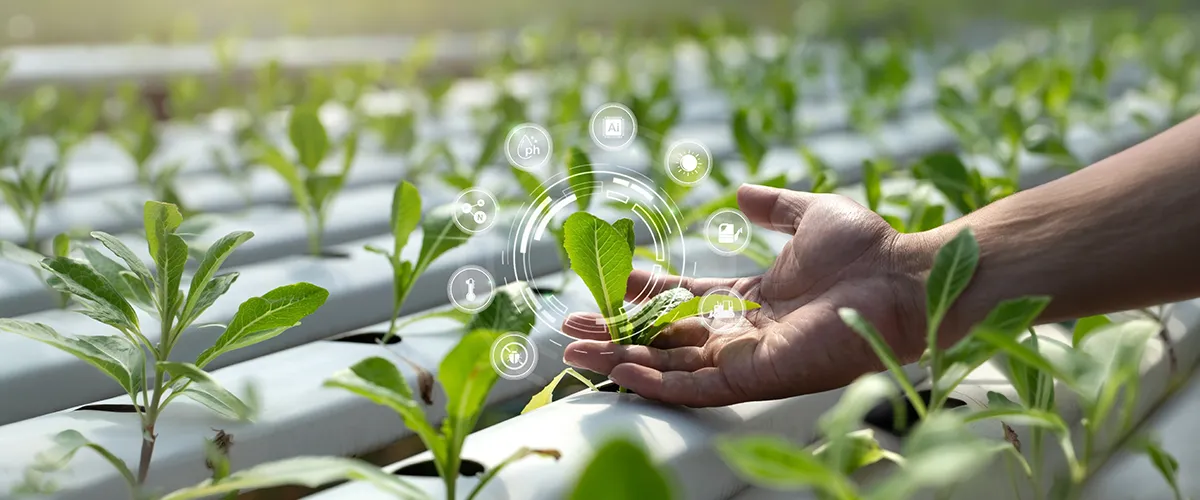
Beyond Temperature and Humidity: What Agricultural Sensors Are There? A Complete Guide from Soil, Weather and Water Quality to Environmental Monitoring
The First Step in Smart Agriculture Is to Let the Farm “See”
The first step in Smart Agriculture is not necessarily AI, nor necessarily automatic control, but first letting the farm see whether the soil is too dry, whether rainfall is sufficient, whether the temperature, humidity and light inside the greenhouse are suitable, and whether the dissolved oxygen in the fish pond is dropping. The source of all this data is the agricultural sensor. With the FarmerPack, Aqua Pack (Water Pack) and I/O Control Box, YenProtek Technology helps farms move all the way from monitoring and alerts to automatic control.
SOLUTION|Plan Your Agricultural Sensing ArchitectureTable of Contents
Article Summary|The first step in Smart Agriculture is to let the farm “see”: to see whether the soil is too dry, whether rainfall is sufficient, whether the temperature, humidity and light in the greenhouse are suitable, and whether the dissolved oxygen in the fish pond is dropping. The source of all this data is the agricultural sensor. Taiwan’s Ministry of Agriculture has noted that the most common application of the IoT in agriculture is collecting information such as the weather environment, soil, water quality, leaf temperature and humidity, livestock and poultry environments, and control systems; this shows that an agricultural sensor is not a single device, but a whole set of infrastructure that supports data-driven agricultural management.
Therefore, discussing Smart Agriculture cannot be only about “whether sensors are installed,” but must go further and ask: What problem do you want to monitor? What decisions will the data be used for? How often does it need to be reported back? Is there power and network on-site? Can the data be integrated by a platform? In the future, will you need to control water pumps, valves, aerators or other equipment? Starting from the four most common categories of sensors found at agricultural sites, this article introduces the purposes, suitable settings, key selection points and adoption considerations for soil, weather, water quality and environmental monitoring sensors.
What Is an Agricultural Sensor?
An agricultural sensor is a sensing device used to measure the various environmental, soil, water body, equipment or biological conditions at an agricultural site. It can convert on-site conditions that previously could only be judged by experience into data that can be recorded, compared and analyzed.
For example, “it feels hot today” can become air temperature data; “the soil looks dry” can become soil moisture data; “the fish seem to be gasping at the surface lately” can be judged together with dissolved oxygen and water temperature data; and “the crops in this zone are growing poorly” can be checked back against soil moisture, EC, pH, sunlight and irrigation records.
The sensor itself is only the data entry point. What truly has value is whether this data can be stably transmitted back to a platform and turned into management decisions. Therefore, a complete agricultural sensing system usually includes:
- The sensors.
- Data transmission equipment.
- A power supply system.
- A cloud platform or an on-premises platform.
- Data charts and alerts.
- Control equipment when necessary.
This is also why an agricultural sensor should not be seen merely as a single piece of hardware, but should be planned within the entire Smart Agriculture system.
What Are the Main Categories of Agricultural Sensors?
Agricultural sensors can be divided into many types according to the application scenario, but for most farms, schools and Smart Agriculture projects, the most common ones can first be grouped into four major categories: soil sensors, weather and microclimate sensors, water quality sensors, and environmental and equipment status sensors. These four categories of data each answer different questions.
- Soil sensors answer: Is the crop root environment suitable?
- Weather sensors answer: How do the external weather and microclimate affect growth?
- Water quality sensors answer: Is the water body suitable for irrigation or aquaculture?
- Environmental and equipment status sensors answer: Is the site safe, is the equipment operating normally, and has an anomaly occurred?
A literature review of Smart Agriculture technologies by the Ministry of Agriculture also notes that Smart Agriculture applications include the monitoring of air, soil, water bodies, plants and animals, as well as the control of irrigation, fertilization, pesticides and lighting, which precisely illustrates that sensors and control equipment usually need to be incorporated into Smart Agriculture planning together.
1. Soil Sensors: The First Layer of Data for Judging the Crop Root Environment
Soil is the main environment in which crop root systems grow. Many agricultural management problems that appear to occur on the leaves, fruit or plant surface may actually be related to soil moisture, pH, salinity, temperature or nutrient status. Therefore, soil sensors are the most common type of sensor in Smart Agriculture, and the type most easily linked to irrigation, fertilization and food-and-agriculture education.
In its soil health assessment materials, the USDA NRCS notes that soil health cannot be measured directly and is therefore assessed through indicators; among these, the chemical indicators include items such as electrical conductivity, nitrate, pH, and extractable phosphorus and potassium.
Soil Moisture Sensor
The soil moisture sensor is mainly used to observe the moisture state within the soil, and is often applied to smart irrigation, intermittent irrigation, campus vegetable gardens, orchard moisture management, greenhouse cultivation and open-field monitoring. Many people assume that watering only requires checking whether the soil surface is dry, but the surface state does not necessarily represent the moisture state of the root zone: sometimes the surface looks dry while there is still water at the roots, and sometimes the surface has just been wetted but the water has not truly entered the main absorption zone of the root system.
Through the soil moisture sensor, managers can observe when the soil begins to dry out, whether water truly enters the soil after watering, whether different zones are equally wet or dry, whether soil moisture recovers after rain, and whether automatic watering needs to be started. When paired with the I/O Control Box, soil moisture can also become a decision condition for automatic watering: starting the water pump or solenoid valve when moisture falls below the set value, and stopping automatically when moisture recovers or the watering time reaches its upper limit.
Soil Temperature Sensor
Soil temperature affects seed germination, root activity, microbial action and the rate at which nutrients are released. For seedling raising, greenhouses, protected agriculture and seasonal crops, soil temperature is very important reference data. Soil temperature is often observed together with air temperature: a high air temperature does not mean the soil temperature rises immediately, and a drop in air temperature at night does not mean the soil turns cold immediately. Soil temperature can therefore help judge the crop root environment rather than looking only at the external weather.
Soil pH Sensor
Soil pH is an acidity-alkalinity indicator that affects a crop’s ability to absorb nutrients. Some crops suit slightly acidic soil while others suit near-neutral soil; if the pH deviates from the suitable range for a long time, crops may not be able to absorb nutrients effectively even when the fertilizer amount is sufficient. A soil pH sensor can serve as a long-term trend-observation tool, but for formal fertilization recommendations, soil improvement or precise diagnosis, it is still advisable to combine it with laboratory soil testing or interpretation by a professional agricultural consultant.
Soil EC Sensor
EC is Electrical Conductivity, and is often used to observe changes in soil salinity or soluble ions. It is commonly used in fertigation management, salinity-accumulation observation, protected cultivation, high-frequency fertilization sites and substrate cultivation. The NRCS soil quality materials also note that EC in agriculture is mainly used as a measure of soil salinity; in non-saline soils, it may also serve as a reference for estimating soil moisture, depth and, in part, nutrient status. However, EC is not a single nutrient concentration and cannot be directly equated with “whether there is enough fertilizer”; it is better suited to observing trends in soil salinity, fertility changes and fertigation management.
Soil NPK Sensor
NPK refers to nitrogen, phosphorus and potassium, the main nutrients frequently discussed in crop growth. Soil NPK sensors are often used in precision fertilization, campus teaching or Smart Agriculture demonstration sites, but in practice special care is needed: field-type NPK sensors are usually better suited to trend observation and should not completely replace formal soil analysis. This is because soil nutrients are strongly affected by moisture, temperature, pH, organic matter, soil texture, fertilization method and sampling location; if a formal fertilization prescription is needed, it should still be combined with soil testing, crop type, growth stage and professional agricultural judgment.
2. Weather and Microclimate Sensors: Grasping the Environmental Changes Above the Farm
Weather data is very important to agriculture. Farmers have long relied on weather experience for management, but the data from a general weather station does not necessarily fully represent the microenvironment of a single farm. Within the same town, different field zones may have different microclimates because of elevation, terrain, shade, wind gaps, buildings, greenhouse structures or nearby water bodies. Therefore, many Smart Agriculture sites set up a small weather station or a microclimate sensing system to collect on-site farm data.
The Ministry of Agriculture’s introduction to sensor networks notes that sensors can reflect environmental changes; for example, meteorological instruments can monitor physical environmental information such as air temperature, humidity, rainfall, wind speed, wind direction, soil temperature, and the water level of the ground surface or streams.
Air Temperature Sensor
Air temperature affects crop growth rate, flowering and fruiting, pest and disease risk, transpiration and heat stress. In greenhouses, open fields, orchards and campus vegetable gardens, air temperature is the most basic monitoring item. Combined with historical data, managers can observe temperature changes throughout the day, high-temperature periods, cold-snap or low-temperature risks, the temperature difference between the inside and outside of a greenhouse, and the microclimate differences between different zones.
Air Humidity Sensor
Air humidity affects transpiration, disease, leaf wetness and greenhouse management. When humidity is too low, crop transpiration may intensify; when humidity is too high, the risk of certain diseases may increase. In protected agriculture, temperature and humidity are usually observed together to assess whether ventilation, shading, misting, dehumidification or fan control needs to be adjusted.
Rainfall Sensor
A rainfall sensor can record the actual amount of rainfall rather than relying only on the subjective judgment of “whether it rained,” which is very important for irrigation management. Light rain may only wet the surface, a short burst of heavy rain may form runoff, and continuous rain may cause the soil to become overly wet or create drainage problems. When combined with soil moisture data, rainfall data can help judge whether soil moisture truly increased after rain, whether irrigation needs to be paused, during which period the soil dries out fastest, and whether continuous rainfall poses a risk of over-wetness.
Wind Speed and Wind Direction Sensor
Wind speed and wind direction affect pesticide spraying, greenhouse ventilation, crop transpiration, facility safety and the installation of outdoor equipment. For example, spraying operations are not suitable when the wind speed is too high; greenhouse ventilation must take wind direction and the external climate into account; before a typhoon or strong winds, attention must be paid to the safety of brackets, shade nets, trellises and solar panels; and during periods of strong transpiration, soil moisture may drop faster. Wind speed and direction data can also be used for farm safety and equipment management, not only for the crops themselves.
Sunlight, Illuminance and Solar Radiation Sensors
Light is an important condition for crop growth. Insufficient sunlight may affect photosynthesis and growth rate, while excessive light may cause high temperatures, intensified transpiration or the risk of sunscald. Different applications use different light-related sensors, such as illuminance, sunlight, solar radiation or PPFD. In an ordinary campus vegetable garden or outdoor monitoring, illuminance and sunlight data can already support many teaching and management needs; in greenhouses, plant factories or crop physiology research, more precise light-quantity data such as PPFD may be needed.
CO₂ Sensor
CO₂ is especially important for greenhouses and protected agriculture because it is related to plant photosynthesis. When a greenhouse is relatively enclosed, the CO₂ concentration may change due to ventilation, crop growth, CO₂ enrichment or human activity. CO₂ sensors are often used in greenhouse environmental control, plant factories, protected cultivation and food-and-agriculture education on photosynthesis, but CO₂ management usually has to be viewed together with temperature, humidity, light and ventilation, and cannot rely on a single value alone.
Leaf Wetness Sensor
A leaf wetness sensor can be used to observe whether the leaf surface stays wet for a long time, and is often used in disease-risk assessment, greenhouse management or the observation of open-field crops. Many diseases are related to leaves staying wet for extended periods, so leaf wetness data can help managers assess ventilation, watering methods and disease-prevention strategies.
3. Water Quality Sensors: The Key to Smart Aquaculture and Irrigation Water Management
Water quality sensors are mainly used in fish ponds, shrimp ponds, recirculating aquaculture, aquavoltaics (fishery-electricity symbiosis), irrigation channels, reservoirs, greenhouse fertigation systems and farmland irrigation-related sites. For aquaculture, changes in water quality can directly affect the health of fish and shrimp and the risk of farming. FAO materials on aquaculture water quality point out that dissolved oxygen is one of the most critical and most limiting factors in intensive farming, that water temperature also affects the oxygen concentration in water, and that ammonia is the main waste product of nitrogen metabolism in fish and other aquatic organisms.
Dissolved Oxygen (DO) Sensor
DO is Dissolved Oxygen in water. For fish ponds and aquaculture, dissolved oxygen is one of the most important water quality indicators: when DO drops, fish and shrimp may gasp at the surface, reduce feeding, become stressed, and even face the risk of death. DO sensors can be used for fish pond water quality monitoring, shrimp pond management, recirculating aquaculture, aeration equipment control and risk management during the night and early morning. When paired with the I/O Control Box, DO data can serve as one of the conditions for starting an aerator or paddlewheel or for sending an alert.
Water Temperature Sensor
Water temperature affects the metabolism of fish and shrimp, the dissolved oxygen state, microbial activity and the rate of water quality change. When water temperature rises, the dissolved oxygen in the water usually decreases while the metabolism and oxygen demand of fish and shrimp may increase, which is why aquaculture risks during the hot season, at night and in the early morning require special attention. Water temperature data is usually interpreted together with data such as DO, pH and ammonia nitrogen.
Water pH Sensor
Water pH can be used to observe changes in the acidity and alkalinity of a water body. For both aquaculture and irrigation water, an abnormal pH can affect organism health, nutrient availability or water quality stability. In fish ponds, pH may also be affected by algae, photosynthesis, respiration, bottom sediment and the buffering capacity of the water body, so pH is suited to long-term trend observation rather than looking at a single point in time.
EC / Salinity Sensor
EC can be used to observe the electrical conductivity of water and, from there, to estimate changes in salinity or ion concentration. For brackish-water farming, shrimp ponds, fish ponds, irrigation water, recirculating water and fertigation systems, EC / salinity is a common monitoring item. In agricultural irrigation, the EC of the water body can help judge whether the water’s salinity may affect the soil and crops; in aquaculture, salinity affects the adaptation conditions of different fish and shrimp species.
Ammonia Nitrogen Sensor
Ammonia nitrogen is commonly monitored in aquaculture and recirculating water systems, and is related to feed, excretion, leftover feed, microbial decomposition and the metabolism of the water body. Ammonia nitrogen risk usually cannot be viewed in isolation and needs to be judged together with pH, water temperature, dissolved oxygen and the conditions of the water body; in particular, in saltwater or brackish-water environments, some electrode-type sensors may be subject to ion interference, so the sensor’s applicable water conditions, measurement range and calibration method should be confirmed in advance. This kind of sensor is well suited as a trend-monitoring and risk-alert tool, but if high-precision determination is required, it is still advisable to combine it with reagent methods or laboratory analysis.
ORP Sensor
ORP is the oxidation-reduction potential, and is often used in water treatment, aquaculture water bodies and disinfection-related settings to observe the oxidation-reduction state of the water. In aquaculture or water treatment applications, ORP can serve as an auxiliary reference for changes in water quality, but it is usually not used alone as the sole basis for management decisions.
Turbidity, Chlorophyll and Blue-Green Algae Sensors
Turbidity can be used to observe changes in suspended solids in water; chlorophyll can be used to observe changes in algae; and blue-green algae sensors can be used to monitor the algal risk of a water body. These kinds of sensors more often appear in reservoirs, lakes, aquaculture, rivers or large water-body monitoring sites. When applied in fish ponds or outdoor water bodies, issues such as sensor fouling, biofilm, aquatic plants, sediment and cleaning maintenance must also be considered.
4. Environmental and Equipment Status Sensors: Look Not Only at the Crops but Also at Whether the Site Is Safe
An agricultural site needs to monitor not only soil, weather and water quality but also environmental safety and equipment status. This is because many agricultural losses do not come from a single abnormal environmental reading, but from equipment failing to start, a power outage going unnoticed, a sudden surge in water level, a pump failure, a communication breakdown, or staff learning of an anomaly too late.
Water Level Sensor
A water level sensor can be used for fish pond water levels, reservoirs, irrigation channels, drainage ditches, and flood warnings for basements or low-lying areas, as well as for monitoring standing water at agrivoltaic or aquavoltaic sites. The point of water level monitoring is not merely to know how high the water is, but to be able to notify managers immediately when the water level is abnormal, so that staff can handle pumping and drainage, equipment protection or disaster response in advance.
Rainfall and Flood Warning Sensing
For low-lying farmland, fish ponds, greenhouses, warehouses, underground spaces or photovoltaic sites, rainfall and flood warnings can help grasp weather risks early. When paired with a platform, you can set water level thresholds, cumulative rainfall alerts and anomaly notifications, so that managers do not have to wait until an on-site patrol to learn of a problem. For related applications, see the Flood Alert System.
Power Outage Detection and Equipment Operation Status
Many agricultural and aquaculture devices depend on electricity, such as water pumps, solenoid valves, aerators, paddlewheels, fans, control panels and communication equipment, so power outage detection and equipment status monitoring are very important. Especially in aquaculture, a power outage can cause aeration equipment to stop, monitoring to be interrupted and alerts to fail. If the Power Outage Alert Module has independent backup power, it can retain its alerting capability even when the main power is cut off, notifying the owner immediately, and, when necessary, pairing with the I/O Control Box to switch in backup power or emergency equipment.
Air Quality and Gas Sensors
In livestock barns, greenhouses, composting sites, enclosed agricultural facilities or spaces where people work, it may be necessary to monitor concentrations of CO₂, NH₃, H₂S, PM2.5, PM10 or other gases. This kind of sensing data is related not only to crop or animal growth but also to personnel safety, ventilation management and environmental quality.
How Should You Choose Agricultural Sensors? Look at the Purpose First, Not the Specifications
When choosing agricultural sensors, the most common mistake is to start by comparing specifications, such as which one is more accurate, which one has a larger measurement range, which one is cheaper, or which one can measure the most items. These questions are of course important, but they are not the first step. What you should really ask first is: What management problem do you want to solve?
If the Goal Is Smart Irrigation
We recommend prioritizing the evaluation of soil moisture, rainfall, air temperature, air humidity, sunlight or solar radiation, and the status of water pumps or valves. This is because smart irrigation is not about turning on the water at fixed times, but about understanding whether the soil is truly short of water, whether the weather is changing, whether irrigation needs to be paused after rain, and whether watering was effective.
If the Goal Is Precision Fertilization
We recommend prioritizing the evaluation of soil pH, soil EC, soil moisture, soil temperature, NPK trends, and irrigation and fertilization records. Precision fertilization is not about applying more fertilizer, but about knowing whether the soil conditions are suitable for absorption, whether salinity is accumulating, whether the data changes after fertilization, and whether different zones need different management strategies.
If the Goal Is Smart Aquaculture
We recommend prioritizing the evaluation of dissolved oxygen (DO), water temperature, pH, EC / salinity, ammonia nitrogen, ORP and water level, as well as the status of aerators or paddlewheels and power outage alerts. For aquaculture, water quality sensing and equipment safety should be viewed together: knowing the water quality data alone is not enough; you also need to know whether the aerator, paddlewheel or pump that should have started actually operated.
If the Goal Is Greenhouse Environmental Control
We recommend prioritizing the evaluation of air temperature, air humidity, CO₂, light or PPFD, soil or substrate moisture, soil or substrate EC, and the status of fans, roll-up screens, shading, supplemental lighting and irrigation equipment. The point of greenhouse environmental control is to keep the environmental conditions within a range suitable for crop growth, so sensors usually need to be planned together with control equipment.
If the Goal Is Food-and-Agriculture Education or a Campus Vegetable Garden
We recommend starting with data that students can easily understand and teachers can easily teach: soil moisture, air temperature, air humidity, rainfall, sunlight and automatic watering status. This data can be directly linked to the plant changes that students see every day, and is well suited to designing observation journals, watering experiments, plant phototropism, sunny-versus-rainy-day comparisons and automatic watering rule design.
More Sensors Is Not Better; What Matters Is Whether the Data Can Be Used
Many Smart Agriculture projects want to install a lot of sensors at the start, but more sensors does not mean a more effective system. What truly matters is whether the data can be used. A good agricultural sensing system should let users answer: Is the current status normal? Which reading is abnormal? How long has the anomaly been going on? Do staff need to be notified? Does equipment need to be started? How does this reading compare with the past? Can the data be used to improve management next time?
If the data only sits on a platform with no one looking at it, no one understanding it, no alerts and no follow-up action, then the sensor is merely a display device. The true value of Smart Agriculture is turning data into action, such as starting irrigation when soil moisture is low, pausing watering when rainfall reaches a threshold, notifying the owner or starting aeration when dissolved oxygen drops, issuing a flood alert when the water level rises, launching a safety-review procedure when equipment loses power, and starting fans or shading when the greenhouse is too hot. This is also why sensors need to be planned together with communication, platforms, alerts and control equipment.
What Should You Pay Attention to Before Adopting Agricultural Sensors?
1. The Sensor’s Installation Location Matters More Than Its Specifications
The same sensor can produce completely different data when installed in different locations. For soil sensors, pay attention to root-zone depth, soil contact, irrigation position and representativeness; for weather sensors, pay attention to height, shielding, ventilation, sunlight and surrounding obstacles; for water quality sensors, pay attention to water flow, depth, sediment, algae, biofilm and ease of maintenance; and for water level sensors, pay attention to measurement blind spots, wave height, foam, the fixing method and a safe height. If the installation location is incorrect, even the best sensor can produce misleading data.
2. Outdoor Sites Must Consider Waterproofing, Sun Protection, Lightning Protection and Maintenance
Agricultural sensors are mostly installed outdoors, where they face conditions such as sun exposure, high temperatures, rain, humidity, sediment, insects, birds, collisions with farm machinery and typhoons. Therefore, when evaluating the equipment, you should look not only at the sensing element but also at enclosure protection, connector waterproofing, cable protection, bracket strength, solar power supply, battery life, lightning protection and grounding, and the way it will be maintained afterward. The truly difficult part of outdoor IoT is often not whether the sensor can take a measurement, but whether it can operate stably over the long term.
3. The Communication Method Should Be Chosen According to the Site
Agricultural sites may be indoors, in greenhouses, on campuses, in fields, at fish ponds, in mountainous areas or in remote outdoor locations, so the communication method should be chosen according to site conditions. Wi-Fi suits sites that have an existing network, concentrated equipment and easy maintenance; LoRa suits sensing points that are numerous, dispersed and low in data volume, and where you want to reduce long-term communication costs; NB-IoT suits fixed devices with low data volume, low power consumption and a need for deep coverage; and 4G suits applications involving video, large volumes of data, remote maintenance, or situations where it is inconvenient to use the site’s internal network. For a related comparison, see Comparison of IoT Communication Technologies.
4. Sensors Require Calibration and Maintenance
Many sensors are not accurate forever once installed. For example, a pH sensor needs calibration, a DO sensor needs maintenance, a water quality sensor may become covered with algae or biofilm, a soil sensor may deviate due to poor soil contact, a rain gauge may be affected by fallen leaves, insects or dirt, and a solar panel may suffer reduced charging efficiency because of dust or shading. Therefore, when adopting agricultural sensors, you should incorporate the maintenance cycle, calibration method and consumable replacement into the plan.
5. Data Format and Platform Integration Should Be Thought Through First
If sensor data resides on different platforms separately, subsequent management becomes very troublesome. The Ministry of Agriculture has explained that at Taiwan’s Smart Agriculture sites, the specifications, communication technologies and data formats of different vendors’ environmental sensors and control devices are not all the same, which increases the difficulty of collecting, analyzing and reusing data; therefore, the standardization of data formats, device categories and APIs is an important issue in the development of Smart Agriculture. For those actually adopting the technology, this means confirming from the outset: Can the data be exported? Is there an API? Can it connect to an existing platform? Are the units and time formats consistent? Can equipment status and sensor data be viewed together? Can new sensors be added in the future? Otherwise, the more sensors you install, the harder the data becomes to manage.
How Does YenProtek Technology Help with Agricultural Sensor Adoption?
When YenProtek Technology helps farms, schools, aquaculture operations and outdoor sites adopt a sensing system, it does not start only from the specifications of a single sensor, but first returns to the site’s needs: what problem to solve, what data to monitor, how often the data is reported back, whether there is power on-site, whether the communication method is stable, whether alert notifications are needed, whether it is necessary to control water pumps, valves, aerators or other equipment, and whether expansion will be needed in the future. It then plans the sensors, communication, platform and control architecture according to those needs.
FarmerPack: Suitable for Soil, Weather and Campus Vegetable Garden Monitoring
The FarmerPack can be configured with soil, weather and environmental sensing items according to site needs, such as temperature and humidity, rainfall, wind speed and direction, sunlight, soil moisture, soil temperature, soil pH and soil EC, making it suitable for smart irrigation, precision agriculture, campus food-and-agriculture education, greenhouses and open fields, orchards and demonstration sites, agrivoltaics and outdoor environmental monitoring. For users, the value of the FarmerPack is not simply collecting numbers, but turning the farm environment into data that can be observed, tracked and compared.
Aqua Pack (Water Pack): Suitable for Water Quality and Smart Aquaculture Monitoring
The Aqua Pack (Water Pack) can be configured with water quality sensing items according to need, such as DO, pH, water temperature, EC / salinity, ammonia nitrogen, ORP and water level, making it suitable for fish ponds, shrimp ponds, recirculating aquaculture, aquavoltaics, reservoirs, irrigation water monitoring, water treatment and outdoor water quality sites. When paired with alert and control equipment, it can further support dissolved oxygen anomaly alerts, aeration equipment management, water level anomaly notifications and power outage safety reviews.
I/O Control Box: Turning Sensor Data into On-Site Action
Sensors are responsible for seeing the site, while the I/O Control Box is responsible for turning conditions into equipment actions, such as starting the water pump when soil moisture is too low, pausing irrigation when rainfall reaches a threshold, starting aeration equipment when dissolved oxygen is too low, sending an alert or starting pumping when the water level is too high, and launching a backup response procedure when a power outage occurs. This allows Smart Agriculture to move beyond monitoring and further into automated control and anomaly response.
Cloud Platform and App: Making Data Visible, Traceable and Manageable
The platform and app can help users view real-time data, historical trends, equipment status, alert records and control records. For farms, this helps managers grasp anomalies faster; for schools, it lets teachers turn data into course material; and for demonstration sites, it lets the sensing system show not just hardware but a complete data flow and management process.
Quick Comparison Table of Agricultural Sensors
| Category | Common Sensing Items | Main Purpose | Suitable Settings |
|---|---|---|---|
| Soil sensors | Soil moisture, soil temperature, pH, EC, NPK | Irrigation decisions, fertilization management, root-zone environment observation | Fields, orchards, greenhouses, campus vegetable gardens |
| Weather sensors | Air temperature and humidity, rainfall, wind speed and direction, sunlight, solar radiation | Microclimate monitoring, irrigation decisions, disaster early warning | Open fields, orchards, agrivoltaics, demonstration sites |
| Greenhouse environmental control sensors | Temperature and humidity, CO₂, light, leaf wetness, soil/substrate data | Ventilation, shading, supplemental lighting, irrigation and disease-risk management | Greenhouses, plant factories, protected agriculture |
| Water quality sensors | DO, pH, water temperature, EC / salinity, ammonia nitrogen, ORP, water level | Aquaculture safety, water quality trends, aeration and anomaly alerts | Fish ponds, shrimp ponds, recirculating aquaculture, aquavoltaics |
| Environmental safety sensors | Water level, flooding, power outage, equipment status, air quality | Site safety, equipment anomalies, remote alerts | Aquaculture farms, farms, outdoor equipment, underground spaces |
| Control and feedback signals | Water pump, valve, fan, aerator, control panel status | Automatic control, anomaly review, equipment interlocking | Smart irrigation, aquaculture, greenhouse environmental control |
Conclusion: The Value of Agricultural Sensors Is Not the Numbers They Measure, but Helping You Make Better Management Decisions
The agricultural sensor is the data entry point of Smart Agriculture. It lets a farm no longer rely solely on experience-based judgment, but instead understand what is happening on-site through soil, weather, water quality and environmental data. But the sensor itself is not the answer; what truly matters is whether this data can be correctly installed, stably transmitted, clearly presented and continuously tracked, and, when necessary, turned into alerts or control actions.
For smart irrigation, soil moisture, rainfall and pump control must be viewed together; for precision fertilization, pH, EC, soil moisture and fertilization records must be viewed together; for smart aquaculture, DO, water temperature, pH, ammonia nitrogen, power outages and aeration equipment status must be viewed together; and for food-and-agriculture education, sensors let students move from observing plants to learning how to raise questions using data. Therefore, when adopting agricultural sensors, you should not ask only “which sensor should I install,” but rather whom the data is meant to help make decisions, what on-site problem it should solve, how the data is reported back, how anomalies are notified, whether automatic control will be needed afterward, and whether the system can keep expanding in the future. Only when sensors, communication, platforms, alerts and control equipment are integrated into one complete system does the agricultural sensor truly move from being a “measurement tool” to becoming the foundation of Smart Agriculture management.
FAQ|Common Questions About Agricultural Sensors
Q1: What agricultural sensors are there?
Common agricultural sensors include soil moisture, soil temperature, soil pH, soil EC, NPK, air temperature and humidity, rainfall, wind speed and direction, sunlight, CO₂, leaf wetness, water quality DO, pH, water temperature, EC / salinity, ammonia nitrogen, ORP, water level, power outage detection and equipment status monitoring.
Q2: Does Smart Agriculture have to install a lot of sensors?
Not necessarily. More sensors is not better; they should be chosen according to your management goals. If the goal is smart irrigation, you can start with soil moisture, rainfall and pump control; if the goal is aquaculture, you can prioritize monitoring DO, water temperature, pH, ammonia nitrogen and equipment status.
Q3: Can a soil moisture sensor directly control watering?
Yes, but it usually needs to be paired with a platform and I/O control equipment. The soil moisture sensor is responsible for measuring data, the platform or control logic is responsible for judging whether the watering conditions are met, and the I/O Control Box then starts the water pump or solenoid valve.
Q4: What is soil EC?
Soil EC is electrical conductivity, often used to observe changes in soil salinity or soluble ions. It can serve as a reference for fertigation management and soil-state observation, but it cannot be directly equated with the concentration of any particular fertilizer or nutrient.
Q5: Can an NPK sensor replace soil testing?
It is not advisable to replace it entirely. Field-type NPK sensors are better suited to trend observation and teaching applications; if you need formal fertilization recommendations or soil improvement planning, it is still advisable to combine them with laboratory soil testing and professional interpretation.
Q6: What is the most important water quality sensor for a fish pond?
You would usually prioritize dissolved oxygen (DO), water temperature, pH, EC / salinity and ammonia nitrogen. For high-density farming or sites with higher nighttime risk, it is also advisable to add aeration equipment status monitoring and power outage alerts.
Q7: Which sensors are suitable for school food-and-agriculture education?
Schools can start with sensors that students easily understand, such as soil moisture, air temperature, air humidity, rainfall and sunlight, then add automatic watering control according to course needs. This data is the easiest to link with plant growth, watering experiments, sunny-versus-rainy-day comparisons and STEM teaching.
Q8: What is the most important thing before adopting agricultural sensors?
The most important thing is to first confirm the site’s problems and the purpose of the data. Different goals require different sensor combinations; irrigation, fertilization, aquaculture, greenhouse environmental control, food-and-agriculture education and environmental monitoring all have different data needs. The sensor is only the first step; you also need to plan power supply, communication, the platform, alerts, maintenance and subsequent control together.
Further Reading
- What Is Smart Agriculture? A Complete Analysis from Traditional Agriculture to Data-Driven Management
- Comparison of IoT Communication Technologies: How to Choose Between Wi-Fi, LoRa, NB-IoT and 4G?
- What Is an Automatic Sprinkler System? Stop Watering by Guesswork and Let Irrigation Start and Stop Automatically Based on the Environment
- What Is Precision Agriculture? Low-Cost, Data-Driven Tools That Small Farms Can Use Too
- How to Make Food-and-Agriculture Education Fun? From Growing Vegetables to Smart Agriculture, Building a Campus Vegetable Garden That Thinks
References
- Ministry of Agriculture, “Agricultural Information Technology Application Development Newsletter, 2023, Second Issue.”
- Agricultural Science and Technology Project Service Network, Ministry of Agriculture, “A Literature Review of Smart Agriculture Technologies and Their Applications (Part 2).”
- USDA NRCS, Soil Health Assessment.
- FAO, Importance of Water Quality Parameters and Monitoring Activities.
- Agriculture Knowledge Portal, “Introduction to Real-Time Transmission Equipment for Monitoring Station Sensor Data.”
Author

AIoT System Architecture and Smart Industry Application Planning
Long dedicated to AIoT, IoT system integration and Smart Industry application planning, with over 15 years of experience focused on Smart Agriculture, smart fisheries, industrial IoT, edge computing, cloud platforms and AI application adoption. With hands-on experience in sensor integration, equipment connectivity, data transmission, platform architecture and on-site application implementation, he helps different industries turn on-site equipment and data into usable management systems and decision-making bases.